
Every Christmas, we tell the story of Mary. Young, favored, blessed among women. We sing about her willingness, her purity, her joy. And we should.
But there’s another woman in the Christmas story, one whose grief we rarely acknowledge and whose miracle we quickly skip past on our way to Bethlehem. Her name was Elizabeth, and she waited decades for what Mary received in an instant.
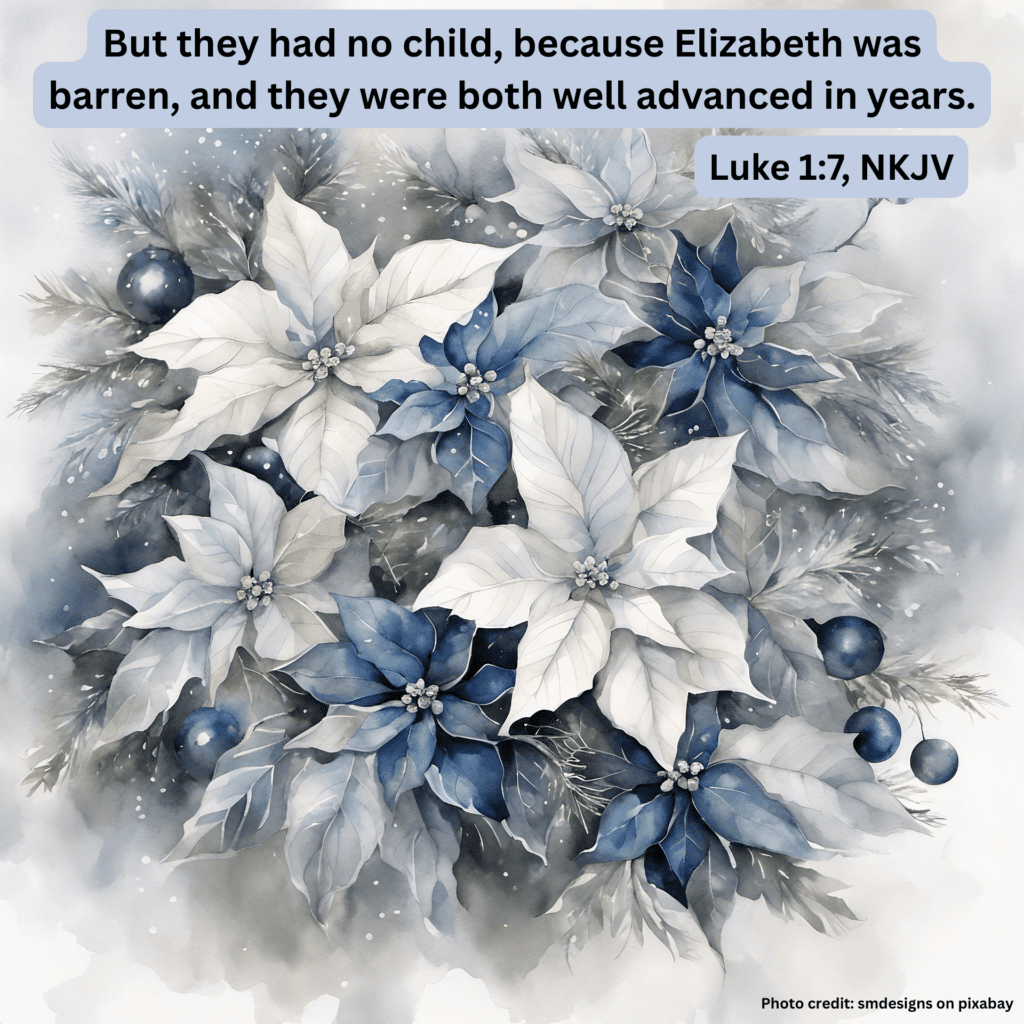
The gospel of Luke tells us she was barren, and that this was “a disgrace among the people.” Those six words contain an ocean of pain that modern readers often miss. In first-century Jewish culture, childlessness wasn’t just a private sorrow. It was a public shame, a theological question mark, a daily reminder that something was wrong.
And Elizabeth had carried that shame for decades.
The Long Wait No One Talks About
We romanticize waiting during Advent. We light candles week by week, count down the days, savor the anticipation. It’s sweet and manageable because we know exactly when it ends. December 25th is circled on the calendar in red.
But what about the waiting that has no end date? The kind Elizabeth knew?
What about the couple who has been trying to conceive for five years, attending baby showers with forced smiles and fielding intrusive questions at family gatherings? What about the woman who has walked through multiple miscarriages, each loss deepening the ache? What about those who desperately want to adopt but face closed doors, empty bank accounts, or years-long waiting lists?
For them, Christmas isn’t always merry. It’s a season that glorifies motherhood, celebrates families, and can make the absence of children feel even more acute. Every nativity scene is a reminder of what they don’t have. Every Christmas card featuring someone else’s growing family is a fresh wound.
Elizabeth understood this pain intimately. Scripture doesn’t tell us how many years she and Zechariah prayed for a child. But we know they were both “very old” when the angel finally appeared. That means decades of disappointment. Decades of wondering why God said yes to other women but not to her. Decades of well-meaning friends offering advice, making assumptions, or worse, falling silent around her entirely.
When God’s Timing Doesn’t Match Ours
Here’s what makes Elizabeth’s story so powerful and so painful: God always intended to give her a son. John the Baptist was planned before the foundation of the world. He had a specific purpose, a divine calling, a crucial role in redemption history.
But Elizabeth didn’t know that during the waiting years. She just knew the emptiness, the shame, the silence from heaven.
Why did God wait so long? Why did He allow her to endure decades of disgrace when He could have answered her prayers at twenty-five, or thirty, or forty?
The honest answer is: we don’t fully know. But Elizabeth’s story suggests that God’s delays aren’t denials, and His timing serves purposes we can’t see while we’re in the waiting room.
If Elizabeth had conceived in her younger years, John would have been just another prophet. But born to elderly, “impossible” parents? That made his arrival an undeniable miracle. It made people pay attention. It prepared the way for an even greater miracle—a virgin giving birth to the Messiah.
Elizabeth’s long wait wasn’t wasted. It was the setup for something bigger than her personal happiness.
That doesn’t make the waiting hurt less. But it does mean the waiting wasn’t meaningless.
The Gift of Shared Understanding
One of the most beautiful moments in the Christmas story happens when Mary, newly pregnant with Jesus, hurries to Elizabeth’s house in the hill country. When she arrives, Elizabeth’s baby leaps in her womb, and Elizabeth—filled with the Holy Spirit—proclaims: “Blessed are you among women, and blessed is the child you will bear!”
Think about what’s happening here. Mary is an unwed, pregnant teenager facing potential disgrace and danger. She needs someone who will believe her impossible story. And God sends her to the one person who would understand completely: a woman who is six months into her own impossible pregnancy.
Elizabeth doesn’t ask skeptical questions. She doesn’t need convincing. She sees Mary and immediately recognizes the fingerprints of God, because she’s been watching Him work the impossible in her own body for half a year.
The two women spend three months together—two unlikely mothers carrying two miracle babies, bearing witness to each other’s joy and fear, reminding each other that God keeps His promises even when they arrive in shocking, unexpected ways.
For those walking through infertility, miscarriage, or the grief of childlessness, this scene offers something precious: the reminder that you need witnesses. You need people who won’t minimize your pain with platitudes or rush you through your grief with toxic positivity. You need an Elizabeth—someone who has walked through her own impossible situation and can say, “I see you. I believe you. You’re not alone.”
When the Miracle Comes Late
Elizabeth finally conceived at an age when conception should have been impossible. Her miracle came in what seemed like the worst timing—when she was too old, too tired, when society had already written her off as barren.
But that’s often how God works. He waits until our situation is impossible so that when breakthrough comes, there’s no mistaking who gets the credit.
For some reading this, the miracle will come. The positive pregnancy test. The adoption finalization. The child you’ve prayed for. And when it does, after years of waiting, you’ll understand Elizabeth’s response: she hid herself for five months, processing the magnitude of what God had done before she was ready to share it with others.
That’s okay. After a long wait, you’re allowed to hold your miracle close before you display it to the world. You’re allowed to need time to let joy replace the scar tissue of disappointed hope.
When the Miracle Doesn’t Come
But we also need to acknowledge the harder truth: for some, the miracle doesn’t come. Not in this lifetime. Some couples never conceive. Some adoptions fall through. Some people want children desperately but circumstances, health, or singleness mean that desire remains unfulfilled.
Elizabeth’s story isn’t a guarantee that everyone who waits will eventually receive what they’re asking for. Faith isn’t a formula, and God doesn’t operate a cosmic vending machine where enough prayer and patience inevitably produce our desired outcome.
But here’s what Elizabeth’s story does promise: God sees you in your waiting. Your pain isn’t invisible to Him. Your prayers aren’t bouncing off the ceiling. And the purpose He’s working out in your life is real and significant, even if it looks different than you imagined.
Some people’s calling is to wait well, to grieve honestly, and to find meaning and purpose beyond biological or adoptive parenthood. That’s not a consolation prize. It’s a legitimate and valuable path, though our family-obsessed culture rarely affirms it as such.
Making Room for the Childless at Christmas
If you’re reading this and you have children, here’s a gift you can give this Christmas season: acknowledge that this time of year is complicated for many people.
Don’t ask invasive questions about family planning. Don’t offer unsolicited advice about fertility, adoption, or “just relaxing.” Don’t suggest that childlessness is a sign of selfishness or lack of faith. Don’t assume everyone finds Christmas magical.
Instead, make space for grief alongside joy. Invite the Elizabeth and Zechariahs in your life into your celebrations without making them feel like outsiders. Remember that family comes in many forms, and that God’s purposes extend far beyond biological reproduction.
The Bigger Story
Elizabeth’s story reminds us that the Christmas narrative isn’t just about babies. It’s about a God who sees the overlooked, remembers the forgotten, and brings life out of barrenness in all its forms.
Mary gets the spotlight, and rightly so. But Elizabeth stands in the wings as a testament to everyone who has waited too long, grieved too deeply, and wondered if God had forgotten their name.
He hasn’t. He sees you. And whether your wait ends with a miracle baby like Elizabeth’s, or with a different calling altogether, your story matters. Your pain is real. Your faith in the darkness counts. Your waiting isn’t wasted.
This Advent, as we light candles and count down days to a promised arrival, may we remember those for whom waiting has stretched far beyond four weeks. May we hold space for complicated emotions. May we be Elizabeth to someone’s Mary—a safe place to bring impossible news, unprocessed pain, and fragile hope.
And may we trust that the God who gave Elizabeth a son after decades of barrenness is still in the business of bringing life where there seemed to be only death, hope where there seemed to be only despair, and purpose where there seemed to be only pain.
The wait is long. But God is faithful. And sometimes the miracle that arrives late is the one that changes everything.
For those walking through infertility, miscarriage, or childlessness this season: your pain is valid, your grief is real, and you are seen. May you find your Elizabeth—someone who gets it, who won’t rush you, who will simply say, “Blessed are you.” You are not forgotten.



Here are links to my blog indexes, so please click one and keep reading!
My Books, Workbooks, and Fun Books
Knowing the Unknowable One
Opening the Treasure Chest
Walking Heart-to-Heart with God
Walking Heart-to-Heart with Each Other
Fighting the Good Fight of Faith
Christian Mysteries: Why I Love Them!
List of Some Nonfiction Books You Don’t Want to Miss
Index of Assorted Topics