
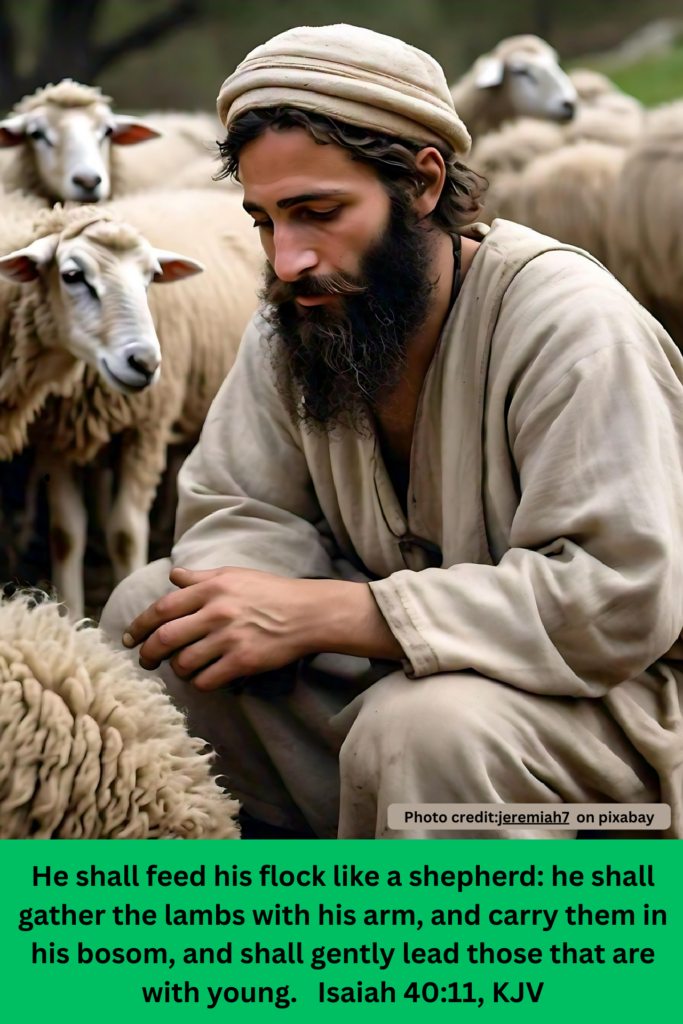
We’ve romanticized them beyond recognition. In nativity sets, they wear clean robes and carry pristine staffs. In Christmas pageants, they’re played by adorable children wrapped in bathrobes. In carols, they’re serene figures kneeling peacefully beside the manger.
But the real shepherds—the ones who heard the angels that first Christmas night—were nothing like our sanitized versions.
They were the ancient equivalent of migrant farm workers. Day laborers. The people who did the dirty, thankless jobs that kept society running but earned them no respect. They worked the graveyard shift in dangerous conditions for low pay and even lower social status.
And they were the first people God told about the birth of His Son.
That wasn’t an accident. It was a statement.
The Reality of Shepherding
In first-century Jewish culture, shepherds occupied one of the lowest rungs on the social ladder. This wasn’t the romanticized pastoral life we imagine—a peaceful existence tending fluffy sheep in green meadows while composing psalms.
This was hard, dirty, dangerous work.
Shepherds lived outdoors for months at a time, sleeping in fields, exposed to weather and wildlife. They worked overnight shifts—the most dangerous hours—because that’s when predators hunted. They were constantly on alert for wolves, bears, lions, and thieves. Their job was to literally put their bodies between the sheep and whatever threatened them.
The work left them ritually unclean according to Jewish law. They couldn’t keep the ceremonial washings and Sabbath regulations that maintained religious purity. They couldn’t attend synagogue regularly. They were cut off from the religious and social life of their communities, doing necessary work that simultaneously made them ceremonially unacceptable.
They smelled like sheep—a smell that doesn’t wash off easily when you live with animals 24/7. Their hands were rough, their clothes were filthy, their appearance was wild. They were poorly educated, if educated at all. Many were hired hands working for wealthy landowners, with no security and no prospects for advancement.
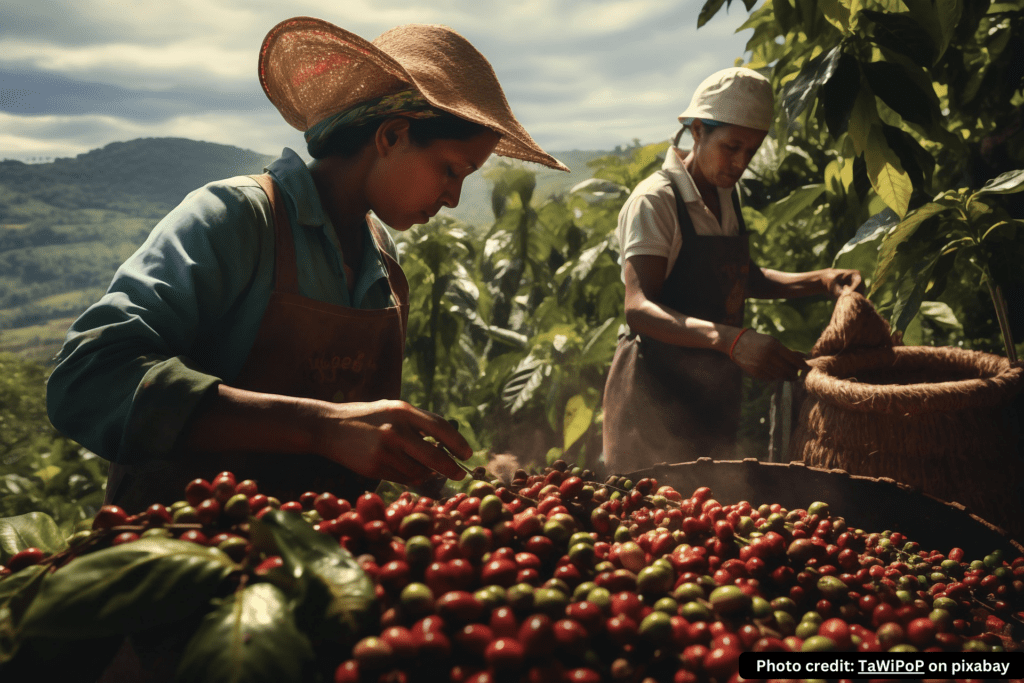
Think migrant agricultural workers. Think overnight security guards at dangerous warehouses. Think the people who process our meat, clean our office buildings after hours, pick our vegetables in brutal heat—essential workers who keep society functioning but remain largely invisible and undervalued.
That’s who the shepherds were.
Why Shepherds Were Despised
But it wasn’t just the dirt and the smell that made shepherds social outcasts. Their profession carried moral suspicion.
Because shepherds grazed their flocks on open land, they were often accused of letting their sheep graze on other people’s property—essentially, of being thieves. They couldn’t be in one place long enough to establish their character or build community trust. Their testimony wasn’t accepted in court because they were considered inherently unreliable.
They represented the kind of people that respectable society avoided. Not necessarily because they were bad people, but because their circumstances made them suspect. They were poor, transient, uneducated, ritually unclean, and socially isolated.
If you wanted to maintain your reputation as a righteous Jew, you didn’t associate with shepherds.
Yet this was the profession God chose for King David before He made him king. And these were the people God chose to receive the first gospel announcement.
The Night the Angels Came
Picture the scene: It’s the middle of the night. A group of shepherds are working their shift, staying awake while the sheep sleep, watching for predators and thieves. It’s cold. It’s dark. It’s lonely. It’s just another night of thankless work that no one will notice or appreciate.
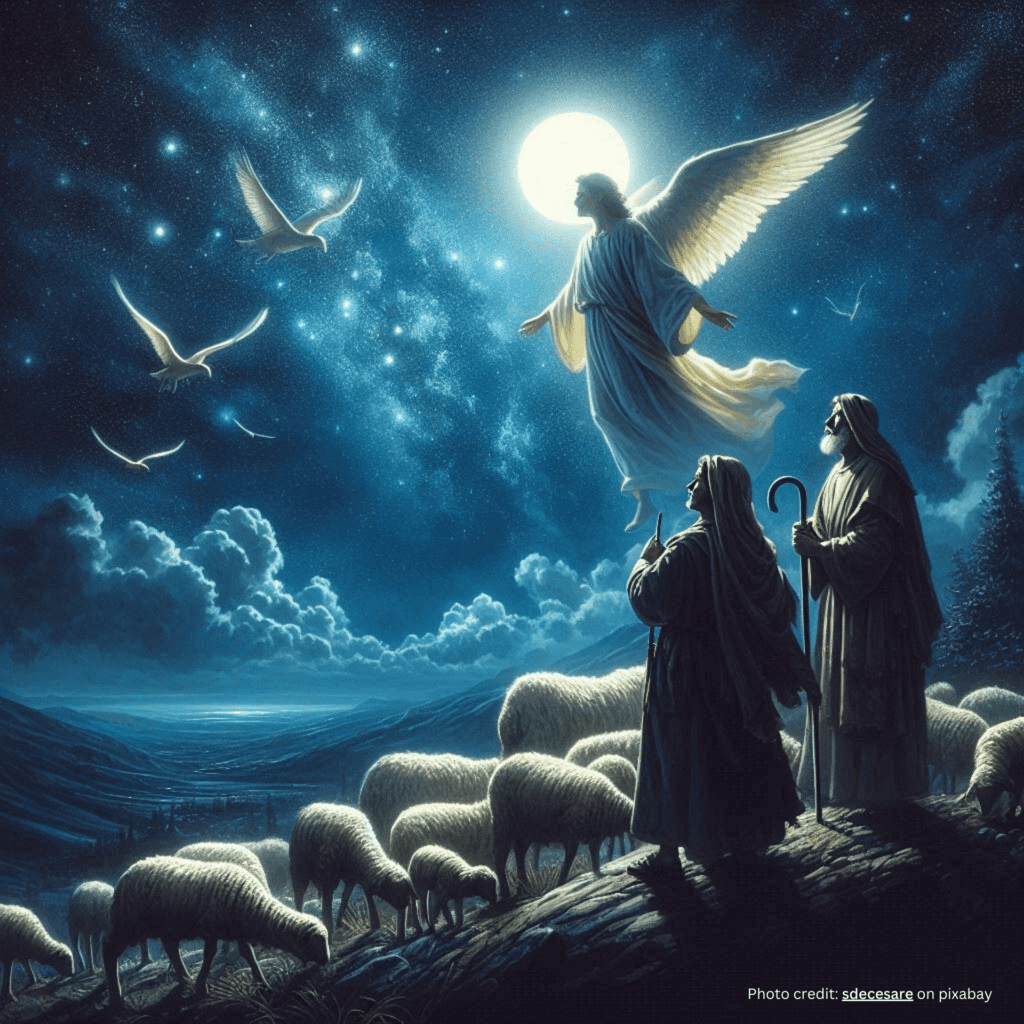
And suddenly the sky explodes with glory.
An angel appears—not to the priests in the temple, not to the scholars studying Scripture, not to the wealthy and powerful in Jerusalem. To night-shift workers in a field.
“Do not be afraid,” the angel says—which suggests they were, understandably, terrified. “I bring you good news that will cause great joy for all the people.”
Not just for some people. Not just for the religious elite or the educated or the wealthy. For all people.
“Today in the town of David a Savior has been born to you; he is the Messiah, the Lord.”
And then—in one of the most spectacular moments in Scripture—the sky fills with angels, a multitude of the heavenly host, praising God: “Glory to God in the highest heaven, and on earth peace to those on whom his favor rests.”
When the angels left, the shepherds looked at each other and said, “Let’s go to Bethlehem and see this thing that has happened, which the Lord has told us about.”
They didn’t ask permission. They didn’t question whether they were worthy or clean enough or respectable enough. They went immediately. They left their flocks—an economically risky decision—and went to find the baby.
Why Them?
So why shepherds? Why did God choose to announce the most important birth in human history to these particular people?
Because God’s kingdom operates by different values than human kingdoms. Human societies honor the powerful, the educated, the wealthy, the influential. God’s kingdom honors the overlooked, the marginalized, the working poor, the people who labor invisibly to keep society functioning.
The shepherds weren’t important by worldly standards. But they were important to God. Important enough to receive the first announcement. Important enough to be written into the gospel story forever.
Because the gospel is for people who work hard and still struggle. The shepherds weren’t lazy. They were working—working overnight, working in dangerous conditions, working jobs nobody else wanted. Yet they remained poor and despised despite their labor.
How many people today work multiple jobs and still can’t make ends meet? How many put in long hours at essential but undervalued work? How many are doing necessary labor that society depends on but doesn’t respect?
The shepherds represent everyone who is told, directly or indirectly, that they don’t matter because they’re not successful enough, educated enough, important enough. And God says: You matter to Me. I’m bringing you good news first.
Because God delights in choosing the unlikely. Throughout Scripture, God has a pattern of choosing the unexpected. He chose the younger son over the elder. The shepherd boy over the military commander. The barren woman over the fertile. The Gentile over the Jew. The slave over the free.
He consistently bypasses the people who seem qualified and chooses the people who seem impossible. Not because the qualified are bad, but because when God uses the “unqualified,” everyone knows it’s God doing the work, not human merit.
Because the gospel is good news specifically for the weary. “Come to me, all you who are weary and burdened,” Jesus would later say. Who were more weary than night-shift workers in the fields? Who carried heavier burdens than people doing backbreaking labor for survival wages?
The angels didn’t go to people who had it all together. They went to people who were tired, cold, dirty, and forgotten. People who needed good news because their circumstances weren’t good.
Because God wanted to dignify overlooked labor. By making shepherds the first witnesses and evangelists of the incarnation, God was making a statement about the dignity and value of their work and their lives.
The religious establishment might consider them unclean. Society might consider them unimportant. But God considered them worthy to be the first preachers of the gospel. Their testimony might not be accepted in court, but it would be accepted in the gospel accounts and read by billions of people for thousands of years.
What the Shepherds Did Next
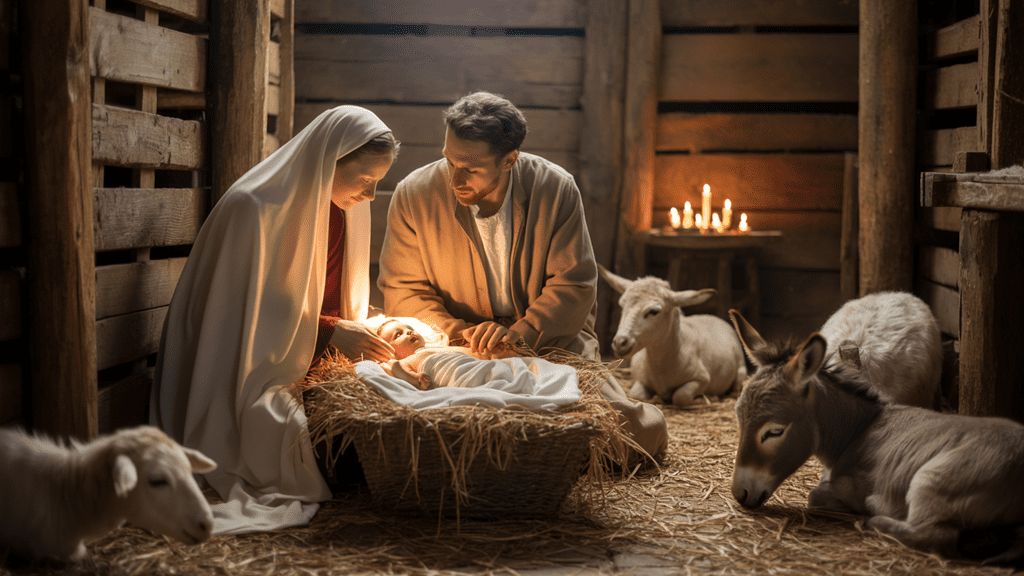
After they found Mary, Joseph, and the baby lying in a manger—exactly as the angel had described—the shepherds didn’t keep the news to themselves.
“They spread the word concerning what had been told them about this child.”
These men whose testimony was considered worthless in court became the first evangelists. These men who were excluded from religious life became the first to proclaim the Messiah’s arrival. These men who were invisible to society became impossible to ignore.
And people were amazed at what the shepherds told them.
Then the shepherds returned to their fields, “glorifying and praising God for all the things they had heard and seen.”
Notice what didn’t happen: Their circumstances didn’t immediately change. They went back to the same fields, the same flocks, the same overnight shifts, the same low-status work. The economic and social systems that marginalized them were still in place.
But they returned different. They’d been included in the most important event in history. They’d been chosen as witnesses. They’d heard angels sing. They’d seen the Savior with their own eyes.
Their dignity didn’t come from a change in their circumstances. It came from being seen, valued, and included by God Himself.
The Challenge for Us
The story of the shepherds poses uncomfortable questions for modern Christians, especially those of us who are comfortable, educated, and respectable.
Do we believe the gospel is really for everyone, or do we subtly assume it’s primarily for people like us? Do we make space in our churches for people who work nights and can’t make Sunday morning services? For people who smell like hard labor? For people whose life circumstances don’t fit our middle-class norms?
Do we honor the dignity of essential workers—the people who clean our buildings, deliver our packages, process our food, care for our elderly, work our overnight shifts? Or do we treat them as invisible, as the first-century world treated shepherds?
Do we trust that God might speak through unlikely people? Or do we only listen to the educated, the credentialed, the respectable?
Jesus could have been announced by priests in the temple. Instead, He was announced by angels in a field and proclaimed by shepherds to anyone who would listen. That was intentional. That tells us something about the kingdom Jesus came to establish.
The God Who Sees Night Shifts
If you’re reading this and you’re working a job that doesn’t get respect, that doesn’t pay enough despite how hard you work, that leaves you exhausted and overlooked—the shepherd story is for you.
God sees you. He saw the shepherds on the night shift in the fields, and He sees you on your night shift, whatever form it takes. Your labor matters. Your dignity isn’t determined by your tax bracket or your job title or whether society considers your work prestigious.
You are not invisible to God. You are not unimportant to God. You are not excluded from God’s story.
In fact, you might be exactly the kind of person God chooses to entrust with His most important messages. The shepherds’ testimony wasn’t accepted in human courts, but it was recorded in Scripture and has been proclaimed for two thousand years. What the world dismisses, God preserves.
The Gospel Came to Bethlehem’s Fields First
Before the wise men arrived with their expensive gifts and scholarly credentials, the shepherds came with nothing but their testimony. Before the news reached Jerusalem’s elite, it was proclaimed in the fields by working-class men with dirt under their fingernails and the smell of sheep on their clothes.
That’s the gospel. It doesn’t wait for the right people or the right circumstances. It comes first to the tired, the overlooked, the undervalued, the people doing essential work in the middle of the night.
It comes with a message that’s radically inclusive: “Good news of great joy for all people.”
Not just some people. Not just the qualified people. Not just the comfortable people.
All people.
The angels’ message to the shepherds is God’s message to everyone who has ever felt too poor, too uneducated, too unimportant, too unclean, too tired, or too overlooked to matter in God’s story:
You matter. You are seen. You are included. This good news is for you—not after you clean up your life, not after you achieve more, not after you become respectable.
Right now. Right where you are. On your night shift. In your field. In your ordinary, hard, overlooked life.
The Savior has been born. And you’re invited to come and see.
Who are the “shepherds” in your community—the essential workers who labor invisibly to keep things running? How might God be inviting you to see them, honor them, and recognize that the gospel is for them first, not as an afterthought?



Here are links to my blog indexes, so please click one and keep reading!
My Books, Workbooks, and Fun Books
Knowing the Unknowable One
Opening the Treasure Chest
Walking Heart-to-Heart with God
Walking Heart-to-Heart with Each Other
Fighting the Good Fight of Faith
Christian Mysteries: Why I Love Them!
List of Some Nonfiction Books You Don’t Want to Miss
Index of Assorted Topics