
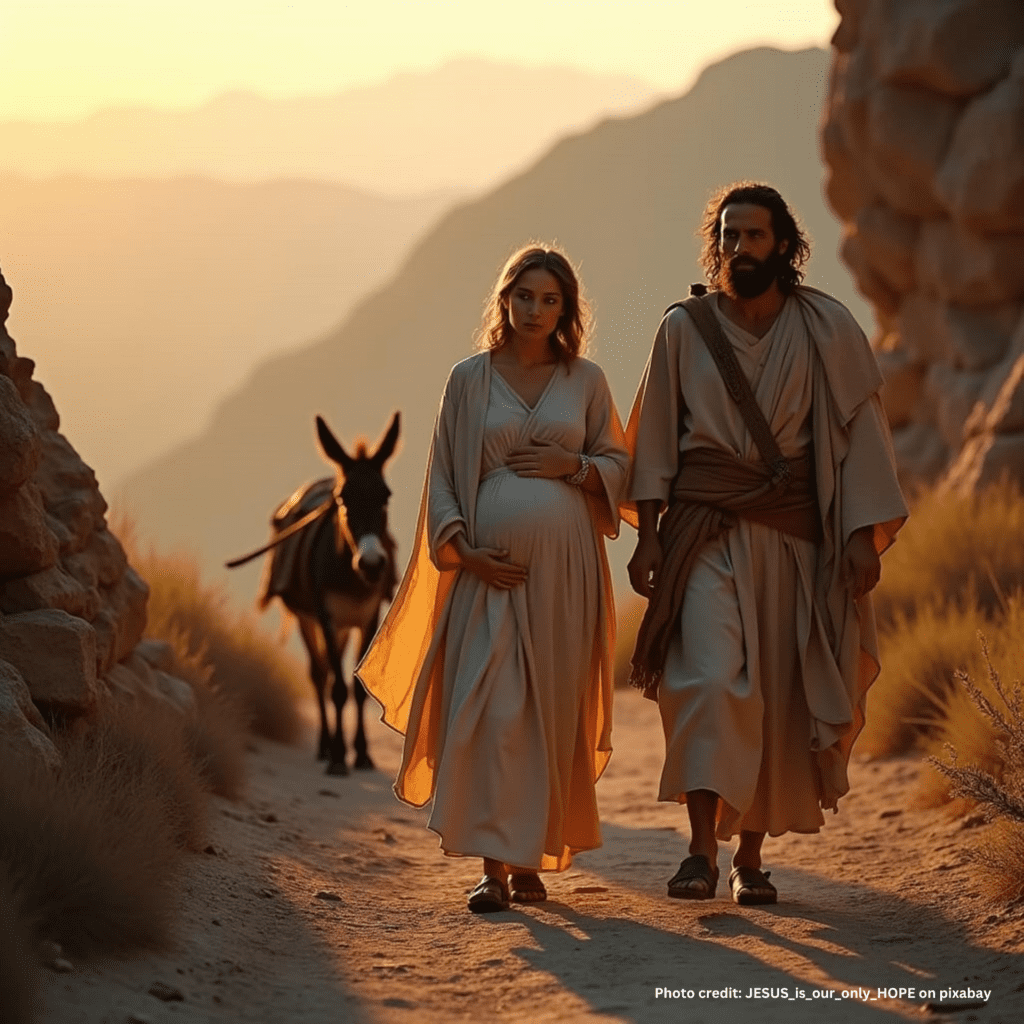
In all four gospels, across hundreds of verses about Jesus’ life and ministry, Joseph never speaks a single word.
Not one.
We hear from Mary at the annunciation, at the visitation with Elizabeth, in the Magnificat. We hear from Zechariah, from Simeon, from Anna in the temple. We hear from angels, from wise men, from shepherds. Everyone connected to Jesus’ birth story gets quoted—except Joseph.
He’s there. He’s present in the narrative. He makes crucial decisions that save his family’s life. But Scripture never records him saying anything.
This isn’t an oversight. It’s a portrait. And hidden in Joseph’s silence is one of the most powerful models of faith in the entire Bible.
The Carpenter Who Didn’t Argue
When the angel appeared to Joseph in a dream, the message was impossible: “Joseph son of David, do not be afraid to take Mary home as your wife, because what is conceived in her is from the Holy Spirit. She will give birth to a son, and you are to give him the name Jesus, because he will save his people from their sins.”
Put yourself in Joseph’s sandals for a moment. You’re engaged to a young woman, and she turns up pregnant. She offers an explanation that defies biology and sounds like the oldest excuse in history. An angel appears to you in a dream—not face to face, not with witnesses, but in a dream—and tells you this impossible story is true.
Every rational instinct would scream: This is ridiculous. This is delusional. This is exactly what someone would claim if they were trying to hide an affair.
But Joseph doesn’t argue. He doesn’t demand more proof. He doesn’t bargain with God. He doesn’t ask for clearer signs or easier circumstances.
Matthew 1:24 simply says: “When Joseph woke up, he did what the angel of the Lord had commanded him and took Mary home as his wife.”
No recorded questions. No recorded doubts. Just quiet obedience to an impossible instruction.
The Man Who Chose Disgrace
Consider what Joseph was agreeing to. By taking Mary as his wife under these circumstances, he was accepting public shame. Everyone in Nazareth would count the months. Everyone would whisper. Everyone would assume either that he had been immoral before the wedding or that he was a fool for marrying a woman pregnant with another man’s child.
In a culture built on honor and shame, Joseph was choosing to be shamed. For the rest of his life, people would look at Jesus and do the math. They would know. Or they would think they knew.
Joseph had an out. Matthew tells us he was planning to divorce Mary quietly before the angel appeared. He was “faithful to the law, yet did not want to expose her to public disgrace.” He could have protected his reputation. He could have explained that the child wasn’t his and he was righteous to end the engagement. He could have found another woman with an unblemished reputation and started over.
Instead, he chose to bear the shame. He chose to let people think the worst of him. He chose to protect Mary and the child at enormous personal cost.
And he never defended himself. Never explained. Never insisted that people understand the truth. He just lived with the whispers and suspicions and moved forward in faithful obedience.
The Father Who Fled
When the wise men’s visit alerted Herod to a potential rival, an angel appeared to Joseph again—again in a dream, again with urgent, life-disrupting instructions: “Get up, take the child and his mother and escape to Egypt. Stay there until I tell you, for Herod is going to search for the child to kill him.”
This time Joseph had even less information. He didn’t know how long they’d be in Egypt. He didn’t know how they’d survive there. He didn’t know if they’d ever be able to return home. He didn’t know what had become of the other families in Bethlehem.
But again, Scripture records no hesitation: “So he got up, took the child and his mother during the night and left for Egypt.”
Middle of the night. Foreign country. No plan except “go” and “stay until I tell you otherwise.” This isn’t the kind of faith that needs all the details mapped out in advance. This is the faith that moves in the dark with nothing but a dream to go on.
Joseph took his small family into exile—into refugee status—because God said so. He became a migrant worker in a foreign land, dependent on the kindness of strangers, separated from his support system, doing whatever work he could find to keep his family alive.
And still, Scripture records no complaints. No questions. No recorded words at all.
The Father Who Panicked—Silently
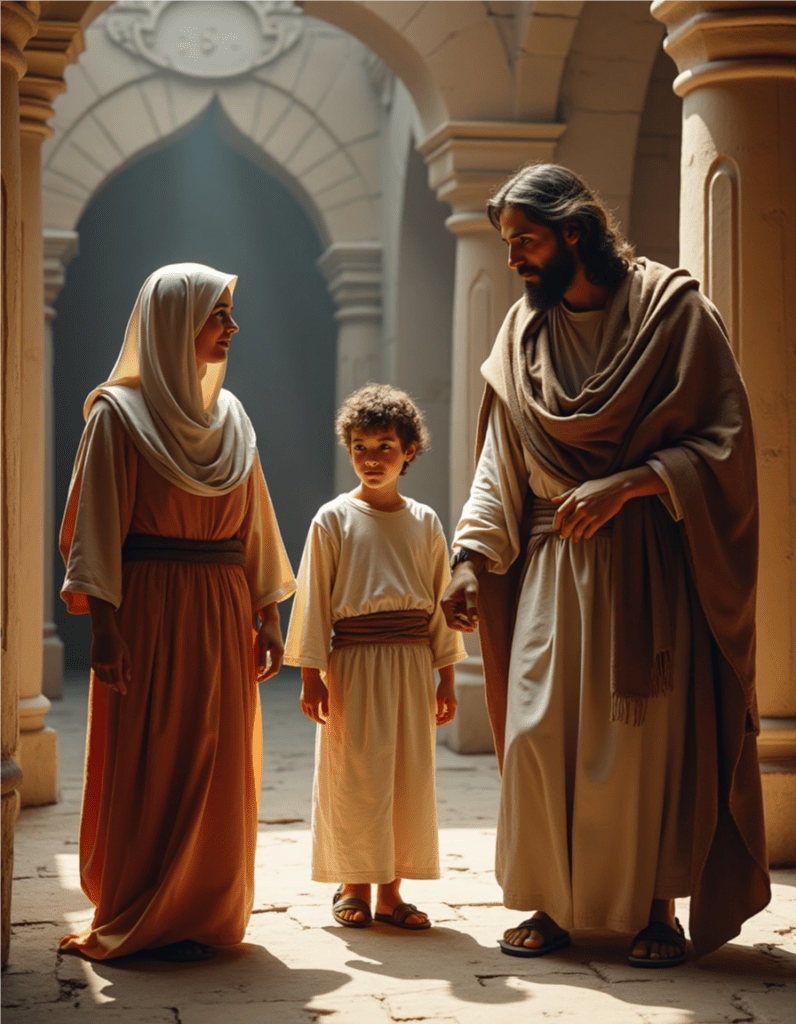
When Jesus was twelve, the family traveled to Jerusalem for Passover. On the return journey, Mary and Joseph realized Jesus wasn’t with their group. They searched frantically for three days before finding Him in the temple, sitting among the teachers.
Mary spoke—the only time we hear her express anything like frustration with Jesus: “Son, why have you treated us like this? Your father and I have been anxiously searching for you.”
Jesus’ response is telling: “Why were you searching for me? Didn’t you know I had to be in my Father’s house?”
It’s the first recorded indication that Jesus understood His unique relationship with God the Father. And the text notes: “But they did not understand what he was saying to them.”
Mary spoke her anxiety. Jesus spoke His purpose. And Joseph? Joseph said nothing. But he was there. He’d been searching for three days. He’d been anxious. He’d been worried about the boy he’d been entrusted to protect and raise.
His silence doesn’t mean he didn’t care. It means his love was expressed through presence and action, not words.
What We Don’t Know About Joseph
After the temple incident when Jesus was twelve, Joseph disappears from the gospel narrative. We never hear about him again. He’s not mentioned at the wedding in Cana. He’s not mentioned during Jesus’ ministry. He’s not at the crucifixion with Mary.
The implication is that Joseph died sometime between Jesus’ childhood and His public ministry. Which means that for most of Jesus’ life, Joseph was there—teaching Him carpentry, modeling faithful masculinity, providing for the family, protecting them through dangerous times—all while the mystery of Jesus’ true identity slowly unfolded.
Joseph raised a son who was not biologically his. He worked to provide for a family living under the shadow of scandal. He protected a child destined to save the world from a king determined to kill Him. He guided Jesus through childhood and adolescence into manhood, preparing Him for a mission Joseph himself probably didn’t fully understand.
And he did it all without any recorded fanfare, any speeches, any recognition. He did it in the silence of faithful, everyday obedience.
The Masculinity of Silence
Joseph’s silence stands in stark contrast to our culture’s obsession with men who are loud, assertive, dominant, and always ready to defend themselves and their honor.
Joseph was strong—strong enough to make an eight-day journey to Egypt with a young child and his mother. Strong enough to work as a refugee in a foreign land. Strong enough to bear public shame without defending himself. Strong enough to obey without arguing.
But his strength was quiet. It showed up in action, not in words. In faithfulness, not in fame. In protection, not in self-promotion.
He represents a kind of masculinity that’s deeply countercultural: the man who doesn’t need to prove himself, doesn’t need the last word, doesn’t need credit or recognition. The man who serves faithfully in the background, who makes enormous sacrifices without announcing them, who leads through humble obedience rather than loud assertion.
This is biblical manhood at its finest—not domineering, not self-centered, not demanding attention, but steady, faithful, sacrificial, and quiet.
When Actions Speak Louder
Joseph’s life demonstrates that the most important spiritual truths aren’t always spoken. Sometimes they’re lived.
He never preached a sermon, but he modeled what it looks like to trust God in impossible circumstances. He never wrote a theological treatise about the incarnation, but he protected and provided for the incarnate Word. He never gave eloquent testimony, but his life testified to what obedient faith looks like day after day, year after year.
Every time he chose to stay with Mary despite the shame, he preached a sermon about sacrificial love. Every time he worked to provide for his family in exile, he demonstrated what faithfulness looks like when circumstances are hard. Every time he listened to divine guidance and obeyed, he modeled what it means to trust God’s word even when it doesn’t make sense.
His silence wasn’t emptiness. It was the canvas on which his obedient actions painted a vivid picture of faith.
The Questions Joseph Never Asked
Imagine the questions Joseph must have wrestled with, even if he never voiced them:
Why me? Why did God choose a simple carpenter for such an enormous responsibility?
What if I fail? What if I can’t protect them? What if I make a wrong decision?
How do I raise a child who is the Son of God? How do I discipline the Messiah? How do I teach carpentry to the Creator of the universe?
When will this make sense? When will the mystery be explained? When will people know the truth?
These are human questions. Joseph was human. He must have thought them. But Scripture shows us a man who didn’t let his questions paralyze him or become demands that God answer before he obeyed.
He moved forward in faithfulness despite the questions. He trusted despite the uncertainty. He obeyed despite not understanding everything.
That’s not blind faith. That’s mature faith—the kind that doesn’t need all the answers before it says yes to God.
What Joseph’s Silence Teaches Us
Obedience doesn’t require eloquence. You don’t have to have all the right words or perfect theology to follow God faithfully. You just have to say yes—even if you say it quietly, even if you say it only through your actions.
Faith is often lived in the mundane. Joseph’s greatest acts of faith weren’t dramatic moments of public heroism. They were the day-to-day decisions to stay, to work, to protect, to provide, to trust. Most of faithfulness is ordinary obedience stretched over a lifetime.
God uses quiet people. Our culture rewards the loud, the visible, the self-promoting. But God’s kingdom has always had a place—often a crucial place—for people who serve faithfully without seeking recognition. Joseph never sought the spotlight, but he’s honored in Scripture forever as the earthly father of Jesus.
Doubt doesn’t disqualify you. Joseph’s silence doesn’t mean he never doubted or struggled. It means he didn’t let those struggles become excuses for disobedience. You can have questions and still move forward in faith.
Love is proven through presence and action, not just words. Joseph loved Mary and Jesus not by making grand declarations but by staying, by working, by protecting, by sacrificing. His love was demonstrated in a thousand small, faithful choices.
Sometimes the most important thing you can do is simply be present. Joseph was there—through the scandal, through the exile, through the uncertainty, through the everyday challenges of raising a family. Presence matters. Showing up matters. Being there, even when you don’t know what to say, matters enormously.
The Silent Witness at Christmas
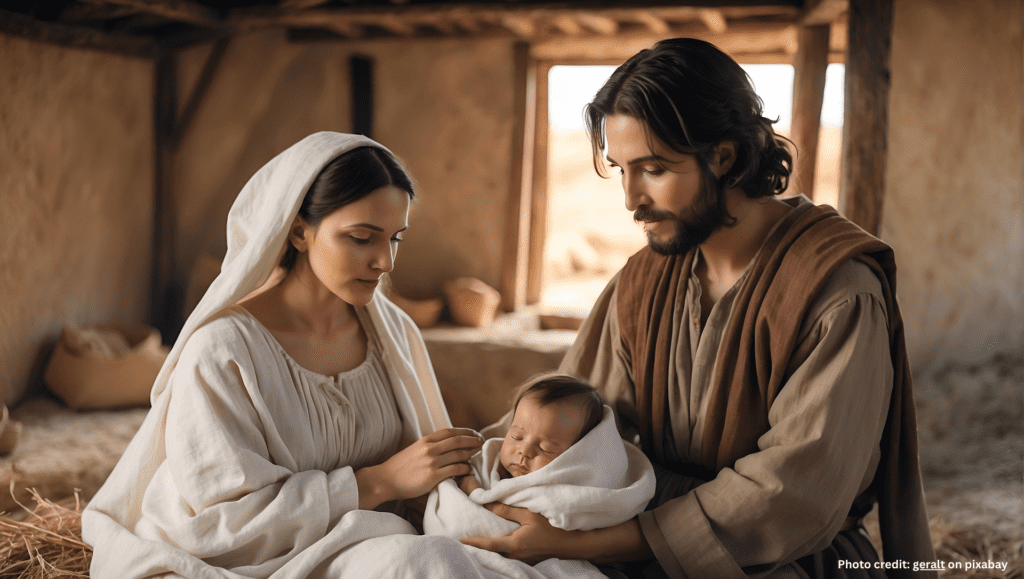
This Christmas, as we tell the story of Jesus’ birth, let’s not overlook Joseph. Yes, he never spoke. But his life speaks volumes.
He speaks to every man who has wondered if he’s enough—strong enough, wise enough, eloquent enough—to do what God is calling him to do. Joseph was a simple craftsman entrusted with the most important task in history. If God could use him, God can use you.
He speaks to everyone who has had to make hard choices with limited information. Joseph repeatedly acted on nothing but dreams and faith. You don’t need perfect clarity to move forward in obedience.
He speaks to anyone bearing shame or misunderstanding for following God’s call. Joseph was willing to be misunderstood, to let people think the worst, to bear disgrace for the sake of protecting what God had entrusted to him.
He speaks to those who feel like their quiet faithfulness goes unnoticed. Joseph served in the shadows, but his service was eternally significant. God sees. God honors. And sometimes the most important work is done by people nobody’s watching.
He speaks to fathers, stepfathers, adoptive fathers, and men who pour themselves into the lives of children who aren’t biologically theirs. Joseph loved Jesus as his own son and raised Him faithfully, modeling what fatherhood looks like at its best.
The Legacy of a Silent Man
Joseph raised Jesus. Think about that. The Son of God learned carpentry from Joseph. He learned to work with His hands from Joseph. He observed how Joseph treated Mary, how he handled conflict, how he dealt with injustice, how he responded to hardship.
When Jesus taught about faithful stewardship, humble service, and quiet obedience, He was drawing on lessons learned in Joseph’s workshop. When He spoke about loving your enemies and not defending yourself, He was reflecting what He’d seen modeled in Joseph’s life.
The silent carpenter from Nazareth shaped the Savior of the world—not through speeches but through example, not through words but through presence.
That’s the power of lived faith. That’s the impact of quiet obedience. That’s the legacy of a man who never said a word that Scripture recorded but who said everything that needed to be said through the way he lived.
This Advent, as we light candles and sing carols and tell the Christmas story, let’s remember Joseph. Let’s honor the silent father who said yes to God when it cost him everything, who protected Jesus when it meant becoming a refugee, who raised the Messiah with faithful, humble love.
And let’s remember that God still uses people like Joseph—people who aren’t the loudest or the most eloquent, people who serve faithfully without seeking recognition, people who say yes to God even when it’s costly and confusing and impossible to explain.
Your faithful, quiet obedience matters. Your presence matters. Your willingness to say yes—even when you can’t find the words to express what you’re feeling—matters to God.
Joseph never spoke. But his life echoes through eternity.
What will your silence say?
In what area of your life is God calling you to faithful obedience even though you don’t have all the answers? What would it look like to move forward like Joseph—not with eloquent explanations, but with quiet, decisive action?


a
The story of Ruth is also the story of Boaz, who, like Joseph, was a man of strength and dignity. In Ruth: Finding My True Love, you can hear Ruth tell about her romance with this godly man who made her the great-grandmother of King David and an ancestor of the Jewish Messiah, Jesus Christ.
Choose the ebook version or the audiobook version.
a
a
Here are links to my blog indexes, so please click one and keep reading!
My Books, Workbooks, and Fun Books
Knowing the Unknowable One
Opening the Treasure Chest
Walking Heart-to-Heart with God
Walking Heart-to-Heart with Each Other
Fighting the Good Fight of Faith
Christian Mysteries: Why I Love Them!
List of Some Nonfiction Books You Don’t Want to Miss
Index of Assorted Topics