

What does God think about a world that is rapidly becoming unrecognizable?
First, Let’s Clear the Fog
Many thoughtful people are only now encountering these terms — and that is not a sign of being behind. In many ways, people who have been living deliberately rather than glued to tech news are better positioned to ask the right questions. So let’s begin at the beginning.
The Fourth Industrial Revolution (4IR) is a phrase coined by economist Klaus Schwab, founder of the World Economic Forum. It describes the era we are now living in, where the physical, digital, and biological worlds are blending together in unprecedented ways. The First Industrial Revolution gave us steam and mechanical power. The Second gave us electricity and mass production. The Third gave us computers and the internet. The Fourth is something different in kind, not just degree. It is characterized by artificial intelligence (AI), robotics, genetic engineering, nanotechnology, quantum computing, the Internet of Things (where everyday objects are connected to networks), and yes — the metaverse.
The Metaverse is best understood as an immersive, persistent, three-dimensional version of the internet. Instead of looking at a screen, you are (via a headset or eventually other interfaces) inside a digital world. You can work there, socialize there, worship there, buy and sell there, and in some visions of its future, live a substantial portion of your life there. Companies like Meta (Facebook’s parent company), Microsoft, and many others have invested billions in building it. Some versions already exist in early form in platforms like Roblox and virtual reality workspaces.
These aren’t science fiction anymore. They are here, or arriving very shortly. And that means the Church, and every believer, needs to think about them.
What the Bible Says (Without Ever Saying These Words)
The Bible does not mention microchips or virtual reality any more than it mentions airplanes or antibiotics. But this is exactly where we learn something important: Scripture is less a technology manual and more a revelation of human nature, God’s character, and the principles that govern how we should live in any era.
With that in mind, several biblical themes speak directly to this moment.
The Tower of Babel: When Human Ambition Overreaches

In Genesis 11, humanity gathered together and said, “Come, let us build ourselves a city, with a tower that reaches to the heavens, so that we may make a name for ourselves.” God’s response was not that the project was technically impossible. It was that the heart behind it — self-glorification, self-sufficiency, the desire to collapse the distance between the human and the divine on human terms — was disordered.
The metaverse and 4IR carry echoes of Babel. There is something profoundly Babel-like about the ambition to create an alternate world, to transcend bodily limitations, to upload consciousness, to edit the genome, to become, as some transhumanists openly say, “like gods.” The issue is not the technology. The issue is the theology embedded in the ambition. Who is being glorified? Who is in charge? Whose name is being made great?
Imago Dei: The Indestructible Dignity of the Human Person
Genesis 1:26–27 tells us that human beings are made in the image of God — the imago Dei. This is perhaps the most important lens through which to evaluate 4IR technologies. Any technology that enhances human dignity, health, connection, and flourishing can be seen as consistent with our calling as image-bearers who exercise dominion over creation. But technology strikes at something sacred when it does any or all of the following:
1) diminishes us
2) treats people as products to be used and profited from
3) replaces human beings.
Genetic editing that eliminates suffering? That’s worth careful, prayerful consideration. Genetic editing to design a “superior” human class? That tramples the image of God. AI that helps a lonely elderly person feel less isolated? Potentially beautiful. AI that replaces genuine human relationship and community? A counterfeit. The metaverse as a tool for teaching, connecting, and creating? Possibly good. The metaverse as a substitute reality where embodied life, marriage, family, and church are abandoned? A profound danger.
The Metaverse Wants You to Escape Your Body — God Says Don’t
One of the most counter-cultural things Christianity teaches is that bodies matter. The Incarnation — God becoming flesh in Jesus Christ — is the ultimate statement that physical, embodied existence is not something to be escaped. The resurrection of Jesus was bodily. The hope of the believer is not to float away into a spiritual ether, but to receive a resurrection body.
This is a direct challenge to some of the most enthusiastic visions of the metaverse and 4IR. The idea that we can and should transcend our bodies — living more and more in digital spaces, merging with machines, eventually uploading our minds — assumes that the body is a prison from which the “real” self should be freed. That is ancient Gnosticism dressed in Silicon Valley clothing. Scripture says the opposite. We are not souls trapped in bodies. We are embodied souls. The goal is not to leave the body behind but to redeem it.
This means Christians should think carefully about how much time and investment they put into purely virtual existence, and what they may be subtly communicating to themselves and their children about what is “real.”
The Poor, the Vulnerable, and the Left Behind
Throughout the Old and New Testaments, God has a particular, persistent, and passionate concern for the poor, the widow, the orphan, and the stranger. The prophets thundered against systems that enriched the powerful at the expense of the vulnerable. Jesus made the poor central to his ministry and his teaching.
4IR creates enormous wealth — but it does not distribute it evenly. Automation is already displacing workers in manufacturing, transportation, and increasingly in white-collar professions. The metaverse and AI tools are, for now, most accessible to those with money, education, and reliable internet. Billions of people are being left behind even as a smaller number of people accumulate technological power at an extraordinary rate.
A biblically faithful response to 4IR is not merely to enjoy its benefits, but to ask: Who is being harmed? Who is being excluded? How do we advocate for those being crushed by the same machinery that benefits us?
Truth, Deception, and the Father of Lies
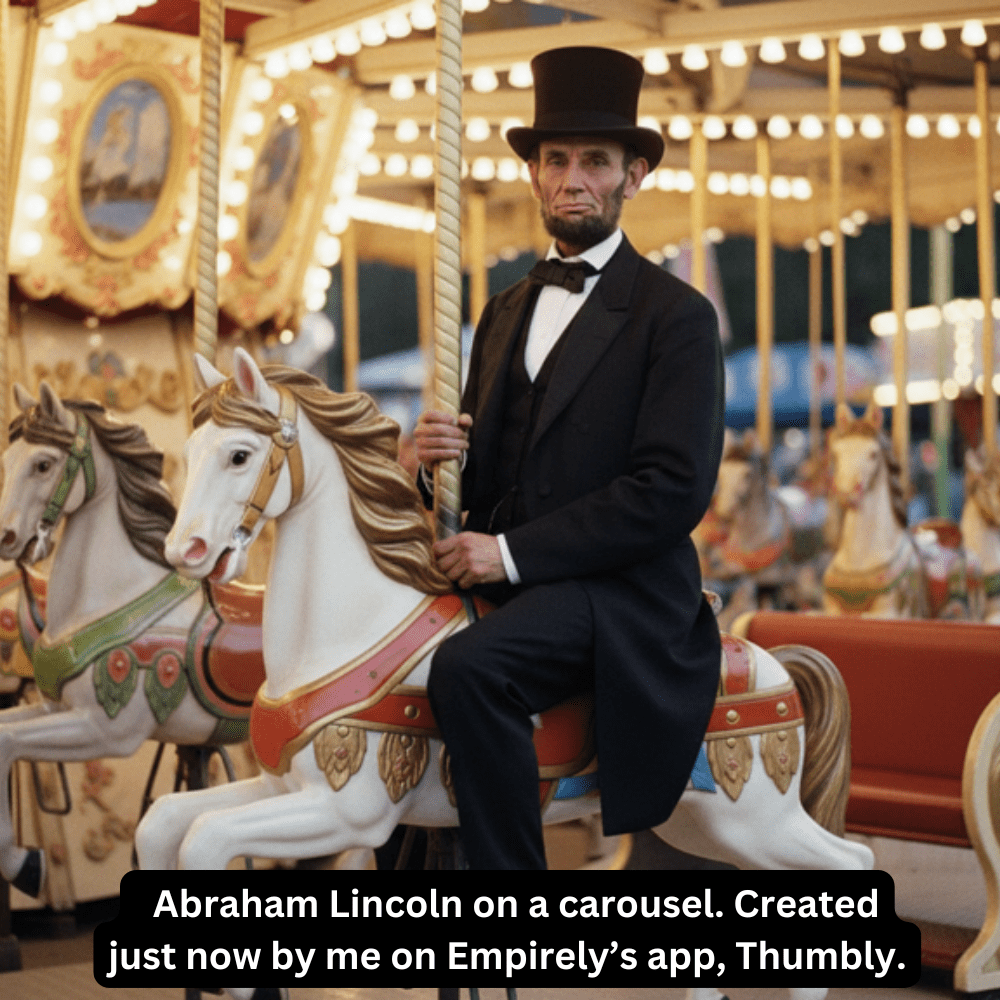
Jesus called himself the Truth (John 14:6). He called Satan the father of lies (John 8:44). Few technologies in human history have created more capacity for deception than those emerging from 4IR. Deepfakes — AI-generated videos that make real people appear to say things they never said — can now be produced by ordinary people in minutes. The metaverse creates spaces where identity is entirely fluid and anonymous. AI can generate fake news, fake images, fake voices, and fake relationships at scale.
The Church, of all communities, should be a sanctuary of truth — committed to honest speech, honest relationships, and honest self-presentation. Christians navigating digital spaces need to be discerning consumers of information, unwilling to share content they haven’t verified, and courageous enough to push back against digital cultures that treat truth as optional.
How Submitting to Biblical Wisdom Might Impact These Technologies
The cyber world is exerting its power over most of us in one way or another. But the influence can and should go in the other direction as well. Biblical principles, if taken seriously by those developing 4IR technologies, would dramatically reshape them.
The Sabbath principle (Exodus 20:8–11) insists on regular, non-negotiable rest from productivity and from our compulsive connection to screens and devices. Sabbath is God’s design feature for human sustainability. A metaverse built by people who understood Sabbath would have built-in limits, disengagement features, and protections against compulsive use. Instead, most digital platforms are engineered specifically to eliminate the possibility of rest.
The prohibition on covetousness (Exodus 20:17) addresses the interior heart — the desire to want what others have. Social media platforms — which make their money by keeping your eyes on the screen as long as possible — are built on manufacturing covetousness. The algorithm is most profitable when you are dissatisfied. What the Bible teaches about human nature exposes this business model as spiritually predatory.
The concept of neighbor love (Leviticus 19:18, Luke 10:27) would demand that AI systems be built with the well-being of the other as a primary concern, not merely the profit of the developer. AI-driven systems that radicalize vulnerable teenagers, target the addicted, or exploit the elderly would not survive serious neighbor-love ethics.
Stewardship of creation (Genesis 1:28, 2:15) would force a reckoning with the extraordinary environmental cost of 4IR — the vast energy consumed by data centers, the mining of rare earth minerals for devices, the mountains of electronic waste. A biblical theology of creation care demands that we ask: at what cost to the earth are we building this digital civilization?
How Might God View These Things?
The God revealed in Scripture is neither someone who fears and rejects all technology nor a technology enthusiast. He is something more interesting: a God deeply, jealously concerned with the human heart and with justice.
God appears to care less about what we build and more about why we build it, who gets hurt in the building, and what it does to our relationship with Him and with one another.
He is, Scripture suggests, pleased when human creativity and ingenuity are put to work in ways that heal the sick (medicine has always been embraced by the Church), feed the hungry (agricultural technology), connect the lonely, and help the vulnerable. He is grieved when human creativity is marshaled in service of pride, exploitation, addiction, deception, and the displacement of the living God with lesser things.
The deepest concern a biblically-informed faith would raise about both the metaverse and 4IR is a question of worship. Humans are beings who cannot help but worship something. We are made to orient ourselves around something ultimate, and we will do so whether consciously or not. The danger of immersive technology is not that it is evil in itself, but that it is extraordinarily good at occupying the space in human life that was designed for God — the hunger for beauty, meaning, adventure, relationship, and something greater than ourselves. A metaverse that offers a customizable, frictionless, endlessly entertaining version of all of those things can become, functionally, a god. A very small, very manageable god — which is exactly the kind of god that satisfies no one and saves no one.
How Should We, as Believers, View These Things?
With neither panic nor naivety.
Panic is faithless. The God who governed human life through the printing press, the industrial revolution, the atomic age, and the internet has not been caught off guard by the metaverse. He remains sovereign. The Church has navigated world-altering cultural shifts before and has resources — theological, communal, and worship-based — that the secular world does not.
Naivety is irresponsible. These technologies are not neutral delivery systems. They carry embedded assumptions about what human beings are, what they are for, and what constitutes the good life. Many of those assumptions are in direct tension with what the Bible teaches about what we are and why we exist. We should engage them with our eyes wide open.
What does wise, faithful engagement look like practically?
It looks like keeping real, in-person community at the center of our lives — gathering in person for worship, fellowship, and service, and resisting the drift toward purely digital “community.” It looks like digital Sabbath practices — setting aside regular, significant time away from screens and connectivity. It looks like deeply rooting our children in a robust theology of the human person and the nature of reality, so they are not formed primarily by the metaverse’s vision of both. It looks like advocating for those left behind by automation and the digital divide. It looks like telling the truth online, even when the algorithms reward deception and outrage. And it looks like remaining curious and engaged rather than retreating — bringing the salt and light of a biblical worldview into the digital spaces where our neighbors are already living.
The world is changing at a speed that is genuinely disorienting. The fog is real, and it is understandable to feel overwhelmed by it. But the same God who walked with Enoch in a pre-technological world, who guided Israel through the wilderness, who raised Jesus from the dead, and who is making all things new — that God is not confused by any of this. He invites His people to be neither swept away by the current nor paralyzed on the bank, but to walk through it with wisdom, courage, and hope.
“For we are God’s handiwork, created in Christ Jesus to do good works, which God prepared in advance for us to do.” — Ephesians 2:10
“Do not conform to the pattern of this world, but be transformed by the renewing of your mind.” — Romans 12:2
This blog is written for thoughtful Christians who want to think with a biblical mindset about a rapidly changing world. Questions, disagreements, and further conversation are welcome.
***

Here are links to my blog indexes, so please click one and keep reading!
My Books, Workbooks, and Fun Books
Knowing the Unknowable One
Opening the Treasure Chest
Walking Heart-to-Heart with God
Walking Heart-to-Heart with Each Other
Fighting the Good Fight of Faith
Christian Mysteries: Why I Love Them!
List of Some Nonfiction Books You Don’t Want to Miss
Index of Assorted Topics