
Key Takeaways:
- Yoga has deep religious roots in Hinduism and was designed as a spiritual practice, not merely physical exercise
- Many yoga poses are traditional offerings to Hindu deities, which creates theological conflicts for Christians
- Biblical principles such as ‘You shall have no other gods before me’ directly address practices that involve spiritual elements from other religions
- Former practitioners share personal testimonies about how yoga opened them to spiritual experiences that drew them away from Christian faith
- Scripture-based alternatives exist that offer similar physical benefits without the spiritual elements of yoga
Why Yoga Conflicts with Christian Faith
The popularity of yoga has exploded in Western culture, with over 55 million Americans now practicing it regularly. Many Christians participate without realizing its spiritual foundations. Examining cultural practices through a biblical lens helps believers make informed decisions about activities that may impact their spiritual walk.
Yoga isn’t merely a physical practice but an integral component of Hindu spirituality. The word “yoga” itself means “to yoke” or “to unite,” referring to the joining of the individual with the divine. This fundamental concept presents a theological problem for Christians who believe in a personal relationship with God through Jesus Christ rather than mystical union with an impersonal divine force.
Former yoga instructor Dr. Laurette Willis, who practiced yoga for 22 years before converting to Christianity, describes yoga as “the missionary arm of Hinduism and the New Age movement.” This perspective is echoed by Hindu leaders themselves. Swami Sivasiva Palani wrote in Hinduism Today that yoga instructors are “yoga missionaries” who “may not call themselves Hindu, but Hindus know where yoga came from and where it goes.”
The conflict isn’t about physical stretching itself, but rather the spiritual philosophy and practices woven into traditional yoga. Christians need to consider whether participating in yoga, even with good intentions, may inadvertently expose them to spiritual influences that conflict with their faith.
The Religious Foundations of Yoga
1. Hindu Origins and Purpose
Yoga originated in ancient India as a spiritual discipline within Hinduism approximately 5,000 years ago. Its purpose extends far beyond physical fitness—it was designed as a path to spiritual enlightenment and liberation (moksha). The physical postures (asanas) represent only one of the eight limbs of traditional yoga practice, with the ultimate goal being union with the divine.
Professor Subhas Tiwari from the Hindu University of America states plainly: “Yoga is Hinduism” and “efforts to separate yoga from its spiritual center reveal ignorance of the goal of yoga.” This perspective is echoed by Sannyasin Arumugaswami, Managing Editor of Hinduism Today, who explains that “Hinduism is the soul of yoga” and that “a Christian trying to adapt these practices will likely disrupt their own Christian beliefs.”
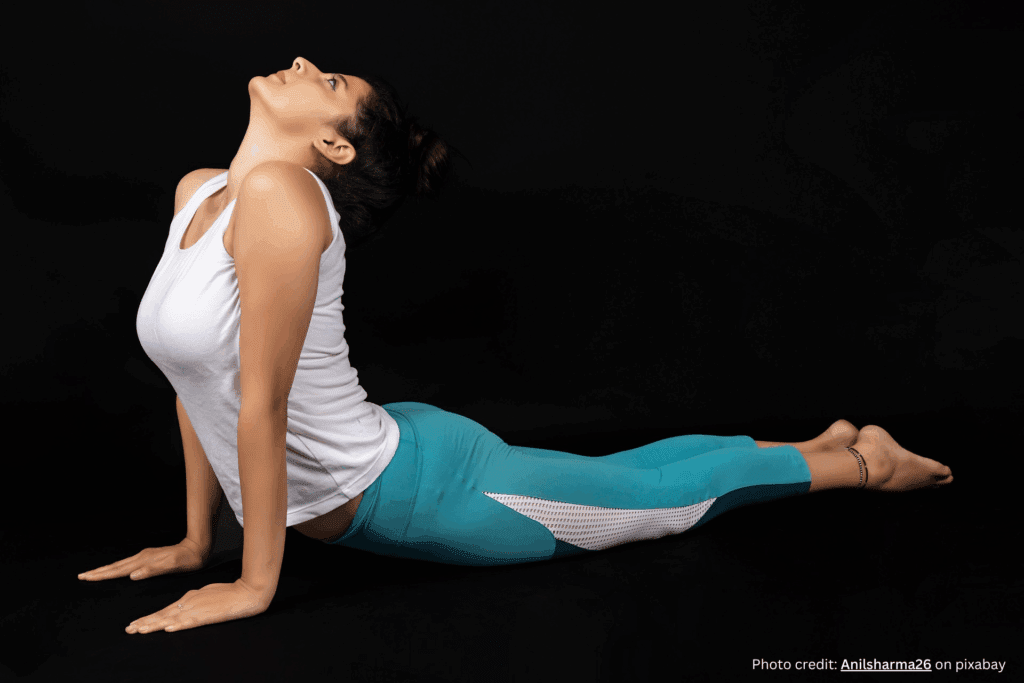
Even seemingly innocent poses carry spiritual significance. For instance, the popular “Sun Salutation” sequence is traditionally a worship practice honoring Surya, the Hindu sun god. The “Cobra Pose” (Bhujangasana) symbolizes the awakening of kundalini energy, often depicted as a coiled serpent.
2. Yoga as a Spiritual Missionary Tool
Swami Vivekananda, called “Hinduism’s greatest modern missionary” by his peers, introduced yoga to the West at the 1893 World’s Fair in Chicago. He strategically presented yoga as compatible with Western thinking while maintaining its Hindu spiritual core.
Swami Sivasiva Palani referred to yoga instructors as “yoga missionaries” in Hinduism Today, clearly identifying yoga’s role in spreading Hindu spirituality: “A small army of yoga missionaries—Hatha, Raja, Siddha and Kundalini—beautifully trained in the last 10 years, is about to set upon the western world.” He added, “They may not call themselves Hindu, but Hindus know where yoga came from and where it goes.”
3. The ‘Lord of Yoga’ in Hindu Tradition
In Hindu tradition, Shiva is considered the “Lord of Yoga” (Yogeshwara). Statues of Shiva in meditation pose are common in yoga studios worldwide. This connection alone raises significant theological questions for Christians seeking to follow the first commandment: “You shall have no other gods before Me” (Exodus 20:3).
According to Dr. George Alexander, who taught World Religions at Biola University and grew up in India, “Many Westerners who practice yoga today are unaware that the physical positions assumed in yoga symbolize a spiritual act: worshiping one of the many Hindu gods.” He further explained that “yoga poses are offerings to the 330 million Hindu gods.”
Biblical Objections to Yoga Practice
1. ‘You Shall Have No Other Gods Before Me’
The first commandment establishes monotheism as fundamental to Judeo-Christian faith. Exodus 20:3 clearly states: “You shall have no other gods before Me.” This creates an immediate conflict with yoga’s traditional purpose of achieving union with Hindu concepts of divinity.
Many Christians cite 2 Corinthians 6:14-15 as particularly relevant: “Do not be unequally yoked together with unbelievers. For what fellowship has righteousness with lawlessness? And what accord has Christ with Belial?” While often applied to marriage, this principle extends to spiritual practices that might align believers with non-Christian spiritual systems.
2. ‘Be Transformed by the Renewing of Your Mind’
Romans 12:2 instructs believers to “be transformed by the renewing of your mind.” This stands in contrast to yoga meditation, which traditionally focuses on emptying the mind or achieving a state of “no thought.” Christian meditation involves filling the mind with God’s Word and truth, not creating an empty mental space.
Dr. Willis explains: “When I was a Yoga Instructor, the relaxation period at the end of yoga practice was when I shared my skewed beliefs. When students were relaxed, after an hour of being told to ’empty your mind,’ they were defenseless targets for the enemy’s New Age religion, which I espoused.”
3. ‘Test Every Spirit’
First John 4:1 advises, “Beloved, do not believe every spirit, but test the spirits to see whether they are from God.” Yoga involves spiritual concepts like prana (life force energy), chakras (energy centers), and kundalini (serpent energy). These concepts have no biblical foundation and originate from Hindu spiritual beliefs.
The breathing exercises in yoga (pranayama) are specifically designed to manipulate this “life force energy,” with instructors often guiding students to “draw in positive energy” and “release negative energy” – concepts that align with pantheistic worldviews rather than Christian theology.
4. ‘Abstain from Things Offered to Idols’
Acts 15:29 instructs believers to “abstain from things offered to idols.” If yoga poses are indeed offerings to Hindu deities, as many Hindu scholars confirm, this creates a direct conflict with biblical teaching that Christians should take seriously.
Personal Testimonies From Former Practitioners
Kim Dolan Leto’s Awakening Experience

Kim Dolan Leto, a Christian fitness expert, describes a disturbing experience during a yoga class: “While in class in a pose called Lizard Pose, the instructor asked us to perform a collective ‘Lion’s Breath.’ Picture the room—about 100 people in it, the air hot, and a reddish light filling the space. Unaware that this was a practice intended to ‘awaken’ something spiritually, I followed along.”
She continues: “After I exhaled, I could see myself in the room. It was as though I was looking down on a room full of demons, it looked like a satanic orgy, and I was terrified. I rolled up my mat, left the class, got into my car, and prayed for God’s forgiveness. I sat in my car convicted by the words, ‘What does light have to do with darkness?’ It was overwhelming.”
Dr. Laurette Willis’s 22-Year Journey
Dr. Laurette Willis spent 22 years practicing yoga before converting to Christianity. She reflects: “Once my mother and I started doing yoga, it led us away from church, not into a deeper relationship with the Lord. For many, yoga is the ‘door’ that leads them away from Christ and into New Age spirituality.”
Willis explains that yoga served as an entryway into New Age spirituality for her: “Some call yoga ‘the gateway drug’ leading to New Age spirituality, mysticism, and metaphysics.”
The Kundalini Serpent Experience
Many practitioners report experiences with kundalini energy, often described as a “serpent” that rises from the base of the spine through various “chakras” or energy centers. In Hinduism, kundalini is described as “a form of divine feminine energy believed to be located at the base of the spine.”
Kim Dolan Leto notes: “The goal of yoga is to connect you to the kundalini spirit, a demonic spirit, and awaken the serpent!” From a Christian perspective, the serpent imagery and the altered states of consciousness raise serious spiritual concerns, especially considering the serpent’s biblical association with deception.
Common Defenses and Their Theological Problems
1. ‘It’s Just Exercise’
Many Christians defend their yoga practice by claiming they’re only doing it for exercise. However, as Hindu teacher Swami Vishnudevananda explained, hatha yoga (the physical form most common in the West) “prescribes physical methods to begin… so that the student can manipulate the mind more easily as he advances, attaining communication with one’s higher self.”
Even the physical aspects of yoga were designed with spiritual intentions – they aren’t arbitrary stretches but precise positions with spiritual purposes. Christians should consider whether the origins and intentions of activities matter, even when approached with different intentions.
2. ‘I Pray During Yoga’
Some Christians attempt to “redeem” yoga by praying to Jesus during the practice. However, this approach fails to address the fundamental issue: the postures themselves were designed as worship to Hindu deities. As Doreen Virtue, a former New Age practitioner turned Christian, said: “Bringing scriptures to yoga is like putting Scriptures on an Ouija board; that doesn’t make it holy.”
3. ‘I Avoid the Spiritual Elements’
Many practitioners believe they can separate the physical aspects of yoga from its spiritual elements. However, Hindu practitioners themselves say this is impossible. Subhas Tiwari, Professor of Yoga Philosophy and Meditation at the Hindu University of America, states: “Efforts to separate yoga from its spiritual center reveal ignorance of the goal of yoga.”
4. ‘Christian Yoga Is Different’
The concept of “Christian yoga” attempts to blend Christian beliefs with yoga practices. However, this creates a theological contradiction. As Dr. Willis states, “Christian yoga is an oxymoron.” Interestingly, the founder of “Christian Yoga,” A.K. Mozumdar, was actually a Hindu who created “Christian Yoga Metaphysics” and the “Christian Yoga” magazine.
Alternative Practices for Christians
Scripture-Based Movement Programs
Christians seeking the physical benefits of stretching without the spiritual baggage of yoga can turn to Scripture-based movement programs. PraiseMoves, created by Dr. Laurette Willis, offers postures based on Scripture verses rather than Hindu spiritual concepts. For example, instead of the “Cobra Pose,” they practice “The Vine” while meditating on John 15:5: “I am the vine, you are the branches…”

Simple Stretching Without Spiritual Elements
Basic stretching exercises without yoga terminology or spiritual concepts offer similar physical benefits without spiritual conflicts. Regular stretching improves flexibility, reduces muscle tension, and enhances range of motion without any religious associations.
Christian-Aligned Fitness Approaches
Many fitness approaches align well with Christian values and provide excellent physical conditioning. These include walking, swimming, strength training, dance fitness, and sports activities that build community and steward the body without spiritual contradictions.
Your Body as a Temple of the Holy Spirit
First Corinthians 6:19-20 reminds Christians, “Do you not know that your body is a temple of the Holy Spirit within you, whom you have from God? You are not your own, for you were bought with a price. So glorify God in your body.”
This powerful truth establishes that physical stewardship is a spiritual matter for Christians. How we care for our bodies should reflect our commitment to honoring God with every aspect of our lives. Physical fitness matters, but the means by which we pursue it matters too.
Christians are called to exercise discernment in all things, including fitness practices. By choosing activities that align with biblical principles, believers can strengthen their bodies while maintaining spiritual integrity. Rather than seeking practices that empty the mind or connect with questionable spiritual forces, Christians can choose activities that renew the mind with God’s truth while strengthening the body He has given them.
***
If you participate in Yoga, but would like an alternative exercise/fitness plan, please read my next two blogs:
“Christian-Friendly Fitness Alternatives: Finding Movement That Honors Your Faith” – a follow-up to this blog – it provides alternatives to Yoga
“PraiseMoves: Strengthening Body and Spirit Through Christian Movement” – information about an exercise plan designed specifically for Christians

Search the Scriptures for yourself to strengthen your convictions. Bible study guides are invaluable tools to help you grow in your knowledge of God’s Word.


Here are links to my blog indexes, so please click one and keep reading!
My Books, Workbooks, and Fun Books
Knowing the Unknowable One
Opening the Treasure Chest
Walking Heart-to-Heart with God
Walking Heart-to-Heart with Each Other
Fighting the Good Fight of Faith
Christian Mysteries: Why I Love Them!
List of Some Nonfiction Books You Don’t Want to Miss
Index of Assorted Topics