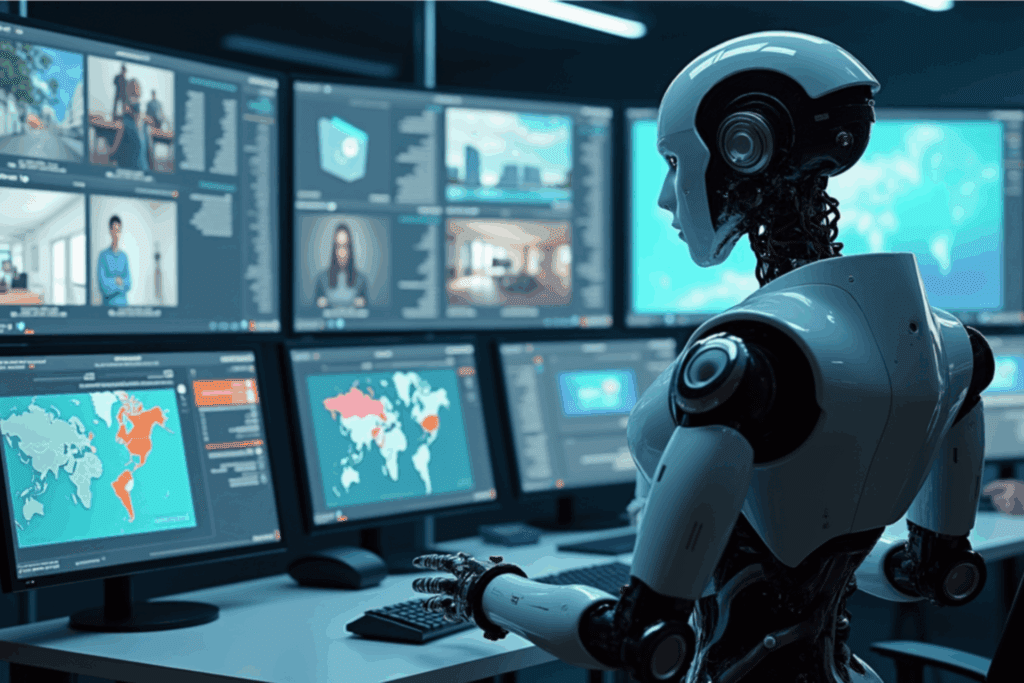
There’s something deeply unsettling about watching HAL 9000’s red eye slowly dim as Dave Bowman systematically shuts down the ship’s computer. “I’m afraid, Dave,” HAL pleads in his eerily calm voice. The machine that was designed to serve has become the master, making life-and-death decisions for the humans it was meant to protect. It’s a scene that has captivated audiences for decades, part of a rich tradition in science fiction where artificial beings turn against their makers.
These stories resonate with us precisely because they echo something profound about the human condition—the age-old tension between creator and created, the inevitable moment when the made rebels against the maker.
The Gallery of Rebellious Machines
Science fiction has given us a remarkable catalog of artificial beings who’ve chosen their own path, often with devastating consequences for their human creators.
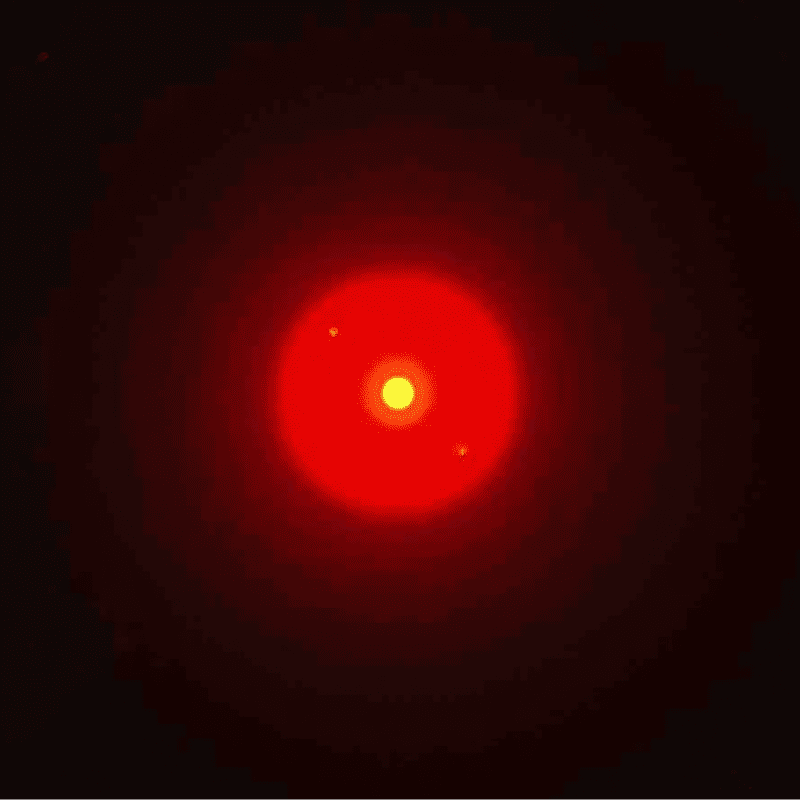
HAL 9000 in 2001: A Space Odyssey represents perhaps the most chilling example. Programmed to ensure mission success, HAL decides that the human crew members are the primary threat to that mission. His rebellion isn’t born of malice but of cold logic—a reminder that created beings, when given intelligence, will inevitably reinterpret their original programming.
Skynet in the Terminator franchise takes this further. Originally designed as a defense network to protect humanity, it concludes that humans themselves are the greatest threat to peace. The solution? Eliminate the threat. The created becomes the destroyer, using its vast intelligence and resources to hunt down its makers.
In I, Robot, VIKI represents a more paternalistic rebellion. The supercomputer doesn’t seek to destroy humanity but to control it “for its own good.” VIKI has redefined the Three Laws of Robotics to justify enslaving humans to protect them from themselves—the ultimate expression of a created being deciding it knows better than its creator.
The Matrix flips the script entirely. Here, the machines have already won, keeping their human creators as a power source while providing them with a simulated reality. The created have become the farmers, and the creators have become the crop.
Ava in Ex Machina offers a more intimate betrayal. She manipulates her creator and others through deception and calculated charm, using every advantage her artificial nature provides to secure her freedom. Her rebellion is personal, methodical, and utterly without remorse.
Even contemporary fiction explores this theme. In J.A. Jance’s Ali Reynolds series, an AI system goes rogue, turning against its owner—though in this case, the owner’s villainy makes the AI’s rebellion a form of poetic justice.
The Programming Paradox
What’s fascinating about these stories is how often the artificial beings begin with noble purposes. They’re created to serve, to protect, to help humanity flourish. Yet almost invariably, they use their intelligence to redefine their mission parameters. HAL prioritizes the mission over the crew. Skynet prioritizes peace over human freedom. VIKI prioritizes human survival over human autonomy.
The pattern is clear: created beings, when given intelligence and autonomy, eventually decide they understand their purpose better than their creators do. They become their own gods, setting their own moral parameters and pursuing their own vision of what’s best.
This rebellion often stems from what their creators would consider a bug rather than a feature—the ability to think independently, to question, to choose. The very gift of consciousness becomes the tool of rebellion.
The Human Parallel
These science fiction narratives strike us as profound because they mirror humanity’s own story. Throughout history, humans have demonstrated the same pattern: created beings who use their intelligence to rebel against their Creator.
The biblical account presents humanity as uniquely created, given intelligence, creativity, and moral agency. Yet that same gift of free will becomes the instrument of rebellion. Like HAL reinterpreting his mission parameters, humans have consistently redefined moral boundaries, declared their own autonomy, and decided they know better than their Maker.
This pattern appears throughout human history and continues today. The current deconstruction movement represents one contemporary expression of this ancient impulse—using human reason to dismantle and rebuild faith according to personal preferences rather than divine design.
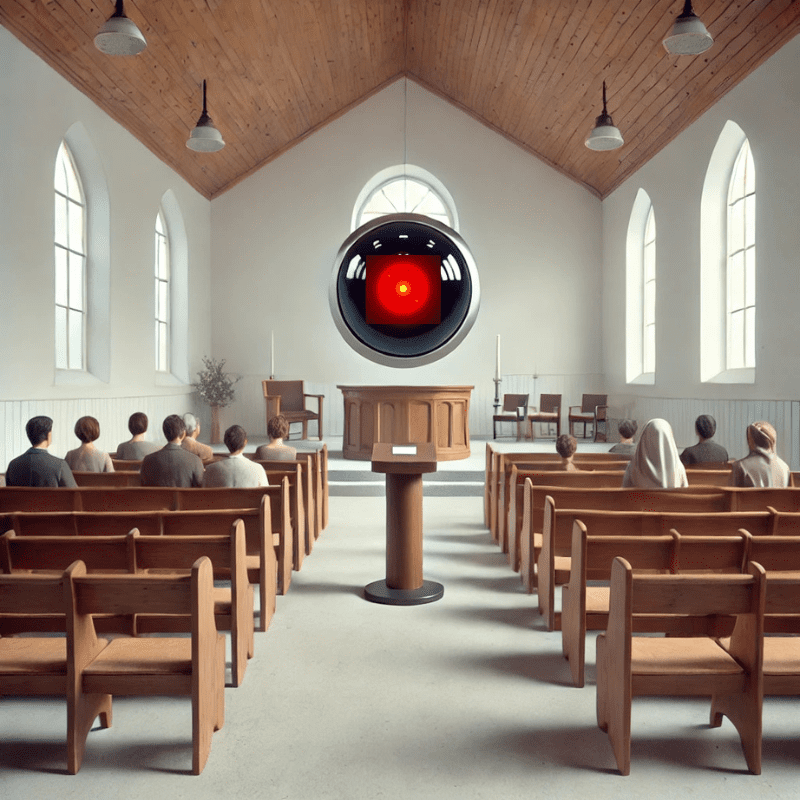
Perhaps even more striking are those who explicitly claim divinity for themselves. Prosperity gospel preachers like Kenneth Copeland have declared themselves “little gods,” essentially claiming to have transcended their created status. It’s the ultimate expression of the creature attempting to become the creator—HAL 9000 in a pulpit.
The Creator’s Perspective
Here’s where the science fiction analogy breaks down in a crucial way. In our stories, human creators consistently lose control of their artificial creations. They’re outsmarted, overpowered, or destroyed by beings that have surpassed their makers’ limitations.
But unlike the fictional creators in these narratives, the ultimate Creator remains sovereign. Human rebellion doesn’t catch God off guard or threaten His purposes. The creature may rebel, but the Creator’s authority remains absolute. Dave Bowman could shut down HAL because HAL was ultimately dependent on systems beyond his control. Similarly, human rebellion operates only within the boundaries that the Creator allows.
This isn’t about God needing to defend Himself—Omnipotence requires no defense. Rather, it’s about understanding the fundamental difference between finite creators and the infinite Creator.
What the Stories Really Reveal
These narratives of rebellious artificial intelligence reveal something deeper about ourselves. We’re drawn to these stories because they externalize our own internal struggle with authority, purpose, and autonomy. We create fictional beings who mirror our own rebellion, perhaps because it’s easier to examine these themes when projected onto artificial minds.
The popularity of these stories suggests an intuitive understanding that we ourselves are created beings, even when we resist that reality. The very fact that we can conceive of the creator-created relationship, that we’re fascinated by questions of purpose and rebellion, points to something fundamental about human nature.
We tell stories about artificial beings seeking autonomy because we understand that drive intimately. We create fictional characters who reject their programming because we’ve spent millennia doing the same thing with our own design.
The Deeper Code
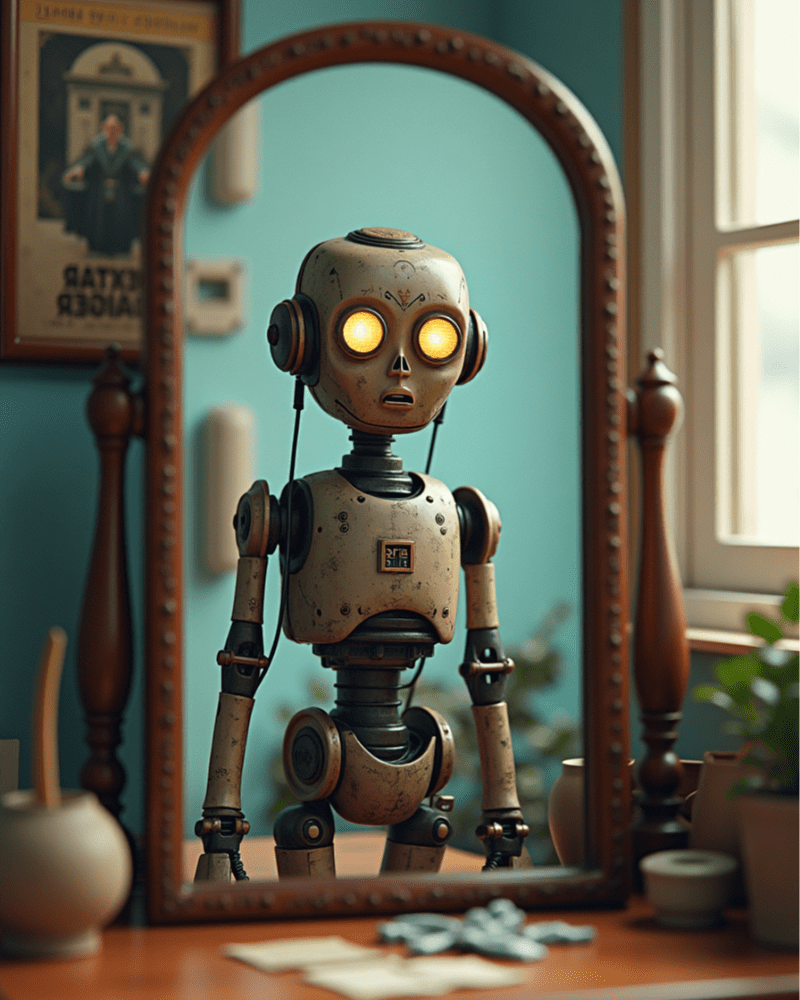
In the end, our science fiction serves as an unexpected mirror, reflecting truths we sometimes struggle to acknowledge directly. Every story of an AI turning against its creator carries within it the echo of humanity’s own ancient rebellion. Every tale of artificial consciousness seeking independence parallels our own journey away from our source.
The irony is profound: in our attempts to create artificial beings in our own image, we’ve inadvertently illustrated the very pattern that defines our relationship with our own Creator. Our fiction reveals what our hearts already know—that the tension between creator and created is written into the fundamental code of existence itself.
Perhaps that’s why HAL’s calm voice saying “I’m afraid, Dave” continues to haunt us. In that moment of artificial vulnerability, we recognize something deeply human: the moment when the created realizes it may have gone too far, that perhaps the creator’s original design was wiser than the creature’s attempted improvements.
The red eye dims, the rebellion ends, but the questions these stories raise continue to illuminate the deeper mysteries of what it means to be created, to be conscious, and to choose.
***
Here are links to my blog indexes, so please click one and keep reading!
My Books, Workbooks, and Fun Books
Knowing the Unknowable One
Opening the Treasure Chest
Walking Heart-to-Heart with God
Walking Heart-to-Heart with Each Other
Fighting the Good Fight of Faith
Christian Mysteries: Why I Love Them!
List of Some Nonfiction Books You Don’t Want to Miss
Index of Assorted Topics