

In a recent blog, I closed with a haunting question that many of you have probably wrestled with: “When my child dies, my spouse leaves me, or cancer strikes, how does a relationship with an invisible God help me?” It’s easy to speak of walking with God when life is manageable and our theology fits neatly into Sunday morning boxes. But what happens when tragedy doesn’t just knock on your door—it kicks it down and destroys everything you thought you knew about faith?
I don’t want to offer empty platitudes or theoretical comfort. Instead, I want to share the story of someone who faced the unthinkable and found that walking with God wasn’t just a nice concept—it became his lifeline back from the abyss.
The Man Behind the Story
Dr. W. Lee Warren is a neurosurgeon, a man accustomed to precision, control, and saving lives. He’s also a man of faith who thought he understood what it meant to trust God. Then, in an instant, his world shattered. His son Mitch was murdered—not in some distant tragedy we read about in headlines, but in the brutal, senseless way that leaves parents asking why they’re still breathing when their child isn’t.
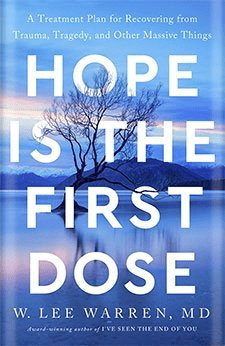
Warren’s story matters because he didn’t retreat into denial or wrap his pain in religious clichés. In his book Hope Is the First Dose: A Treatment Plan for Recovering from Trauma, Tragedy, and Other Massive Things, he gives us something far more valuable: an honest account of what it looks like when faith collides with devastation, and somehow, miraculously, survives.
When Walking with God Feels Like Stumbling in Darkness

The initial impact of Mitch’s murder left Warren feeling like his faith had been amputated. Everything he had believed about God’s goodness, about prayer, about walking in relationship with the Almighty, seemed to crumble under the weight of this senseless tragedy. He found himself angry—not just hurt, but furious with the God he had served faithfully.
This is where Warren’s story becomes so crucial for the rest of us. He didn’t pretend that his theological training prepared him for this moment. He didn’t quote Romans 8:28 and move on. Instead, he sat in the wreckage of his assumptions and wrestled with the invisible God who felt more absent than ever.
Here’s what makes his account so powerful: Warren shows us that there’s a difference between intellectual belief and experiential faith under fire. You can know all the right verses, understand all the doctrines, and still find yourself gasping for air when real tragedy strikes. This isn’t a failure of faith—it’s the beginning of a deeper kind of walking with God.
Hope as the First Dose—What This Means
Warren’s central metaphor is brilliant in its simplicity: hope isn’t a cure, it’s medicine. When you’re dealing with a massive trauma, hope doesn’t make everything better overnight. Instead, it becomes the first small dose in a long treatment process.
This hope isn’t the chirpy optimism that tells you everything happens for a reason. It’s not the flimsy promise that time heals all wounds. Warren’s hope is grittier, more honest. It’s the kind that says, “I don’t understand this, I can’t fix this, but somehow I’m going to take the next breath, and then the next one after that.”
In his darkest moments, Warren discovered that hope often came in doses so small he almost missed them—a friend’s embrace, a moment of peace while reading scripture, the simple act of choosing to get out of bed. These weren’t dramatic interventions; they were tiny infusions of grace that slowly, gradually began to heal what felt irreparable.
The Invisible God Becomes Tangible
One of the most profound aspects of Warren’s journey is how he began to experience God’s presence not despite his tragedy, but through it. The invisible God became tangible in ways Warren had never experienced during his comfortable years of faith.

God showed up in the community that surrounded the Warren family, refusing to let them grieve alone. He appeared in scripture passages that Warren had read hundreds of times before but that suddenly carried new weight and meaning. Sometimes God’s presence was found in the simple act of surgical precision—Warren’s hands remaining steady in the operating room even when his heart was shattered.
Walking with God in tragedy looked nothing like walking with God in ordinary life. There were no mountain-top experiences, no clear answers to the “why” questions. Instead, there was something quieter but perhaps more profound—the steady, inexplicable sense that he was not alone in his pain.
Warren learned that God doesn’t always calm the storm, but He will walk with you through it. His relationship with the Almighty didn’t prevent the tragedy, but it became the foundation that kept Warren from being completely destroyed by it.
Lessons for the Rest of Us
Warren’s journey teaches us several crucial truths about authentic faith in the face of massive tragedy:
First, it’s okay to be angry with God. Wrestling with the Almighty isn’t a sign of weak faith—it’s often the beginning of a stronger one. Warren’s relationship with God became more honest, more real, precisely because he stopped pretending everything was fine.
Second, walking with God in tragedy means accepting help from His people. Warren discovered that community isn’t just nice to have—it’s essential for survival. God often shows up through the hands and hearts of others who refuse to let us walk through darkness alone.
Third, hope really is medicine, not magic. Recovery from massive tragedy is a process, not an event. Warren learned to measure progress in small doses, celebrating tiny victories that might seem insignificant to others but were monumental in his healing.
Finally, the invisible God becomes most real when everything visible fails us. When all our human resources are exhausted, when our own strength gives out, when the future looks impossible—that’s often when we discover that walking with God isn’t just a nice metaphor, it’s a literal lifeline.
The Answer to the Hard Question
So let me return to that question from my previous blog: How does a relationship with an invisible God help when your child dies, your spouse leaves, or cancer strikes?
Dr. Warren’s story gives us an answer that’s both simple and profound: God doesn’t promise to prevent your tragedy, but He promises to walk through it with you. The relationship with the Almighty doesn’t make the pain go away, but it provides a foundation that can’t be destroyed, even when everything else crumbles.
Walking with God in tragedy means discovering that hope really is the first dose of healing, that community is God’s prescription for isolation, and that the invisible God becomes most visible in our darkest hours.
Warren’s journey reminds us that faith isn’t about having all the answers—it’s about continuing to walk with God and trusting that His presence is enough even when His purposes remain mysterious.
In my last blog, “Our Walk with God: Rediscovering Humanity’s Purpose,” I expressed my belief that one of God’s purposes in creating humanity was His desire for fellowship with us. The Bible says that God walked with Adam and Eve, with Enoch, and with Noah. I’m confident that it is His desire to walk with you and me, too.
In my next blog, we’ll explore further what this walking with God looks like in everyday life, when the tragedy isn’t massive but the struggles are real. Because if God can sustain us through the unthinkable, surely He can guide us through the ordinary challenges of being human.
Until then, remember: if you’re facing your own tragedy, hope really is the first dose. And sometimes, that’s enough to help you take the next step forward.
If you would like to purchase this compelling book, click on it, and you will be taken to Dr. Warren’s website.
***
My Walking with God Series
“A Precious Promise: God’s Greatest Gift” – God’s sweetest gift to humanity is Himself.
“Our Walk with God: Rediscovering Humanity’s Purpose” – a follow-up to the previous blog, describing the incomparable wonder of walking with God
” ‘Hope Is the First Dose’: Recovering from Massive Tragedy” – this blog
“When Walking with God Looks Like Washing Dishes” – how to develop a close, daily relationship with God
“When Walking with God Becomes Rewriting God: The Deconstruction Detour” – tragically, sometimes, instead of walking WITH God, people walk AWAY from Him
“Walking with the True God: Navigating the Sacred Path Without Losing Your Way” – when our zeal for God overflows, we must be sure we are walking with the true God, not a deceiving spirit
If you would like to “go” to the mountains for strength, comfort, or refreshment, check out my “Mountains of Praise Coloring Book.”

Here are links to my blog indexes, so please click one and keep reading!
My Books, Workbooks, and Fun Books
Knowing the Unknowable One
Opening the Treasure Chest
Walking Heart-to-Heart with God
Walking Heart-to-Heart with Each Other
Fighting the Good Fight of Faith
Christian Mysteries: Why I Love Them!
List of Some Nonfiction Books You Don’t Want to Miss
Index of Assorted Topics
Very informative and well-explained article! It clearly helps readers understand how to find the best neurosurgeon in Greater Noida for expert neurological care.
I’m glad you liked the article, and I agree with you that Dr. Warren is an outstanding neurosurgeon. However, according to his website, he lives in Nebraska, not India. Thank you for taking the time to comment.