
The book of Ruth tells a beautiful story of love, loyalty, and redemption. But beneath its surface lies something even more profound: a preview of the greatest redemption story ever told. Boaz, the kinsman redeemer who rescues Ruth and restores Naomi’s family line, is a striking picture of Christ – the ultimate Kinsman Redeemer who would buy back what humanity lost in the Garden of Eden.
The Theft in Eden

To understand the depth of what Christ redeems, we must return to the beginning. In Genesis, God gave Adam dominion over the earth. “Fill the earth and subdue it,” God commanded, granting humanity authority over all creation. But with the serpent’s cunning deception, Adam surrendered that authority. When he chose rebellion over obedience, he didn’t just lose his innocence. He lost his inheritance.
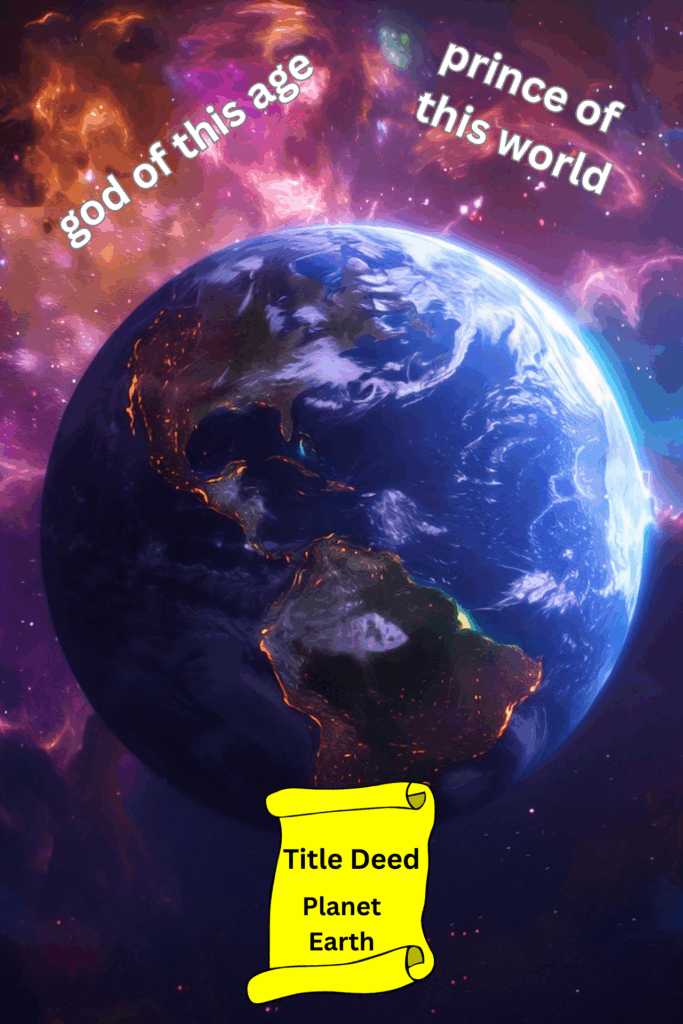
Satan, through deception and man’s willing disobedience, usurped the authority that belonged to humanity. Jesus Himself would later call Satan “the prince of this world” (John 12:31), and Paul would refer to him as “the god of this age” (2 Corinthians 4:4). The earth and everything in it had been stolen, and humanity was left spiritually bankrupt, enslaved, and unable to buy back what was lost.
The Law of the Kinsman Redeemer
This brings us to the fields of Bethlehem and a nearly forgotten provision in the Law of Moses. According to Leviticus 25, when an Israelite fell into poverty and had to sell their family land, a kinsman redeemer – a close relative – could buy it back. This redeemer had to meet specific qualifications: he must be a blood relative, he must be willing to pay the price, and he must be able to pay the price.
When we meet Boaz in the book of Ruth, we find him working in his fields during barley harvest. Ruth, a Moabite widow who has chosen to follow the God of Israel, catches his eye. But there’s more at stake than romance. Naomi’s family has lost their land, and Ruth needs not just a husband but a redeemer who can restore what was forfeited.
Boaz is that redeemer. He is a near kinsman. He is willing to pay the redemption price. And he is able – he has the resources necessary to complete the transaction. At the city gate, before witnesses, Boaz purchases both the land and the right to marry Ruth, redeeming what was lost and restoring the family line.
Christ: Our Greater Kinsman Redeemer
Every detail of Boaz’s redemption points forward to Jesus Christ.
He became our kinsman. Just as Boaz had to be a blood relative to redeem Naomi’s inheritance, Jesus had to become human to redeem humanity. And He did: “The Word became flesh and made his dwelling among us” (John 1:14). The eternal Son of God took on human nature, becoming our Brother, our Kinsman, so He could legally act on our behalf.
He was willing. Boaz could have walked away. There was even another kinsman who had the right to redeem but refused when he learned the cost. Jesus, by contrast, willingly laid down His life. “No one takes it from me, but I lay it down of my own accord” (John 10:18). In the Garden of Gethsemane, facing the full weight of redemption’s price, He prayed, “Not my will, but yours be done” (Luke 22:42).
He was able. Boaz had the wealth to redeem. Christ had the righteousness, the sinless perfection, to pay a price no one else could pay. “You were bought at a price,” Paul writes (1 Corinthians 6:20). That price was the precious blood of Christ, “a lamb without blemish or defect” (1 Peter 1:19). Only One who was fully human yet without sin could satisfy divine justice and purchase our freedom.
The Scroll in Revelation
The climax of this redemption story unfolds in Revelation 5. The Apostle John sees a scroll in the right hand of God – sealed with seven seals. An angel proclaims with a loud voice, “Who is worthy to break the seals and open the scroll?” This scroll represents the title deed to the earth, the authority that was stolen in Eden.
And no one could open it. Not in heaven, not on earth, not under the earth. John weeps bitterly because no one is found worthy. No one can redeem what was lost.
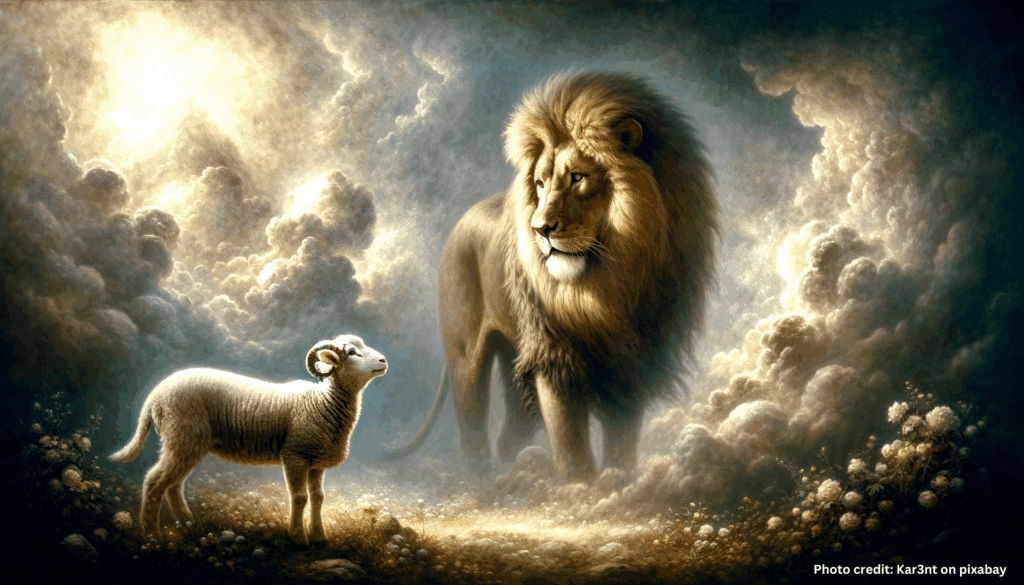
Then one of the elders says, “Do not weep! See, the Lion of the tribe of Judah, the Root of David, has triumphed. He is able to open the scroll and its seven seals” (Revelation 5:5).
When John looks, he sees a Lamb “looking as if it had been slain” standing at the center of the throne. The Lamb takes the scroll, and heaven erupts in worship: “You are worthy to take the scroll and to open its seals, because you were slain, and with your blood you purchased for God persons from every tribe and language and people and nation” (Revelation 5:9).
This is the cosmic redemption. Jesus Christ, the Kinsman Redeemer, has purchased back the authority that Adam forfeited. He has bought back the earth from the thief who stole it. And when He opens those seals, He is asserting His rightful ownership, reclaiming what is His by right of creation and by right of redemption.
From Bethlehem to the Throne
The connection is stunning. Boaz completed his redemption in Bethlehem; Jesus was born in Bethlehem. Boaz redeemed a Gentile woman into the family of God; Jesus redeems people from every nation. Boaz’s redemption led to the birth of King David; Jesus is the Son of David who reigns forever.
But where Boaz could only redeem a small plot of land and restore one family line, Jesus redeems the entire earth and restores all who believe in Him. Where Boaz’s redemption was a beautiful picture, Jesus’ redemption is the ultimate reality.
Satan may be called “the god of this age,” but his lease has expired. The Kinsman Redeemer has paid the price. The title deed is in His hand. And one day soon, when every seal is broken and every enemy is defeated, Jesus will return to claim full possession of what He has purchased.
Our Part in the Story
Like Ruth, we were outsiders – alienated from God, without hope, impoverished in our sin. But our Kinsman Redeemer noticed us, pursued us, and paid the price we could never pay. He didn’t just buy back the Earth; He bought us back from slavery to sin and death.
And now we wait, like Ruth waiting for Boaz to complete the transaction at the city gate, for the day when our Redeemer will return. We live in the “already but not yet” – already redeemed by His blood, but not yet seeing the fullness of all He has purchased.
The story that began in a barley field in Bethlehem echoes through eternity. From Ruth to Revelation, from a widowed Moabite woman to a ransomed multitude no one can count, the theme remains the same: we have a Kinsman Redeemer, and He has bought back what was lost.
The earth belongs to Jesus Christ. He paid for it with His blood. And one day, every knee will bow and every tongue confess that He is Lord – the worthy Lamb, the Lion of Judah, the Kinsman Redeemer who purchased us and the world we live in.
The theft in Eden has been answered. The price has been paid. And the title deed is in the hands of the One who was willing, able, and worthy to redeem it.
***
Featured image photo credits:
Planet Earth: wolfofart on pixabay
Scroll: Clker-Free-Vector-Images on pixabay
Here are links to my blog indexes, so please click one and keep reading!
My Books, Workbooks, and Fun Books
Knowing the Unknowable One
Opening the Treasure Chest
Walking Heart-to-Heart with God
Walking Heart-to-Heart with Each Other
Fighting the Good Fight of Faith
Christian Mysteries: Why I Love Them!
List of Some Nonfiction Books You Don’t Want to Miss
Index of Assorted Topics