
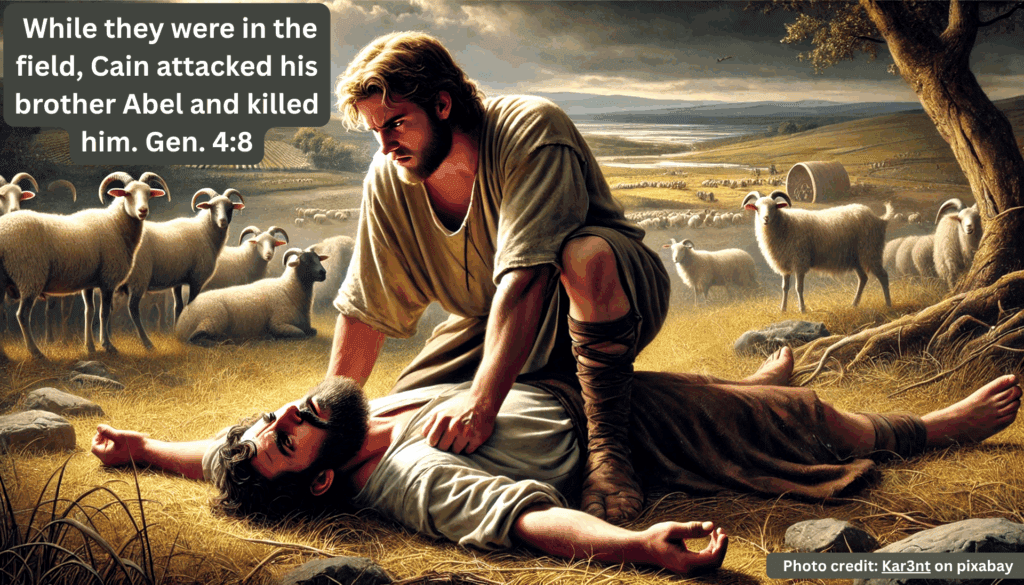
The language of election makes us uncomfortable. Chosen people. Rejected brothers. Birthright blessings passed over one son to land on another. It all sounds so arbitrary, so unfair – creating insiders and outsiders, the favored and the forgotten.
But what if we’ve been reading the story wrong? What if being chosen was less like winning a divine lottery and more like being conscripted into permanent, uncomfortable visibility?
The Uncomfortable Categories
The pattern begins early and repeats throughout Scripture. Ishmael and Esau seem rejected – or at least not chosen – from birth, while Isaac and Jacob receive the blessing. Cain and King Saul face direct rejection as consequences of their sinful actions, while Abel and King David are accepted despite their flaws. In the realm of human relationships, Leah experiences the bitter pain of being the unloved wife compared to her sister Rachel, and Joseph’s ten older brothers seethe with resentment at their father’s blatant favoritism.
And then there’s the big one: God chooses Israel, and in that act of election, the rest of the world seems, in some sense, to be passed over. Of course, the story is more nuanced than simple rejection. Gentiles could become Jews in Old Testament times, and in the New Testament era, the pattern appears to reverse as Gentiles flood into the church in far greater numbers than Jews. Paul speaks of Gentiles being “grafted in” to the cultivated olive tree (Romans 11:17), suggesting the categories were never as rigid as they first appeared.
Still, the question haunts us: What does it mean that God chooses some and not others?
The Plot Twist: Being Chosen Wasn’t Such a Privilege
Here’s where the story takes an unexpected turn. Let’s look at what actually happened to the chosen ones:
Abel was murdered by his rejected brother. His righteousness earned him a grave.
Isaac had to lie on an altar and submit to becoming a human sacrifice, spared only at the last possible moment.
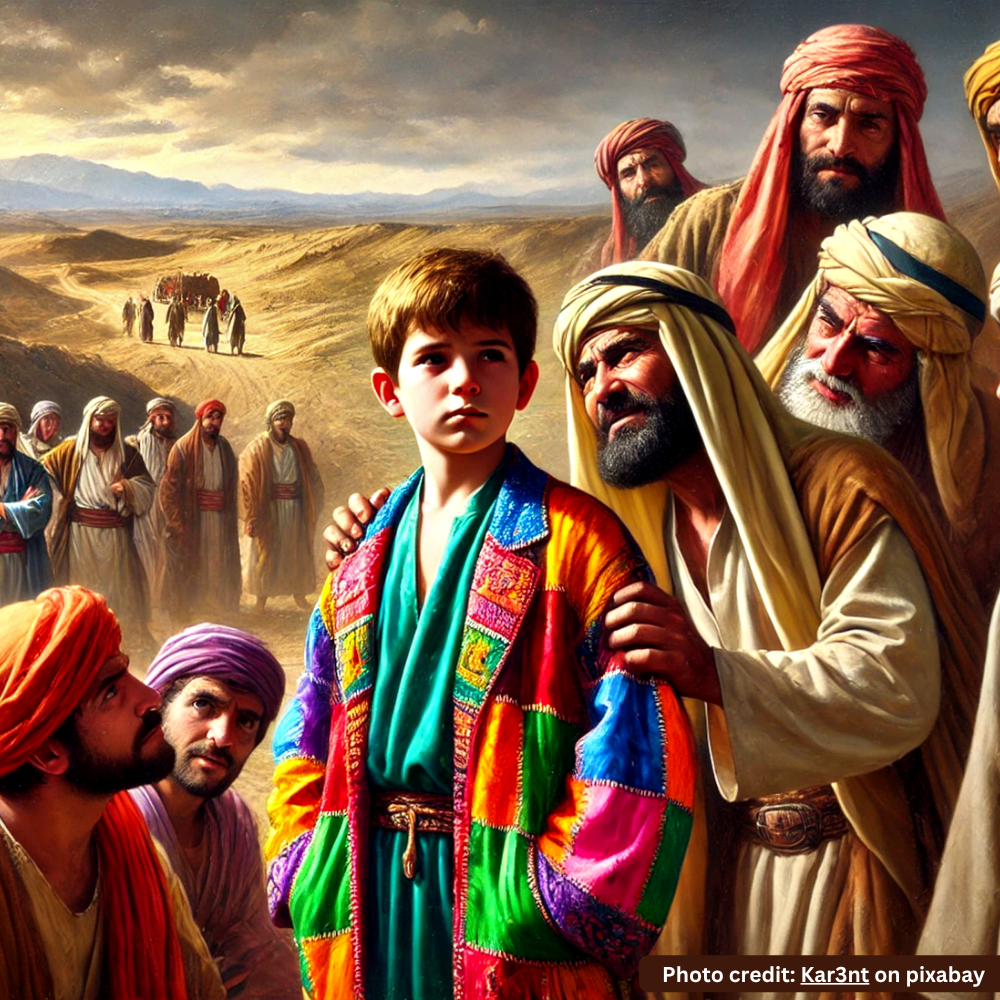
Jacob received the blessing, yes, but then spent years fleeing, working, being deceived, and wrestling – literally – with God.
Joseph spent years in slavery and in prison, simply because his father favored him.
David was hunted like an animal for years by the jealous King Saul, despite being God’s anointed.
Rachel, the beloved wife, suffered years of barrenness before finally dying in childbirth.
And Israel? God’s treasured possession, His chosen people? They became the permanent case study for all humanity. Every conversation, every failure, every shameful moment – preserved, examined, dissected, criticized for millennia.
Think about it: If you were Abraham, would you want the whole world to know that you tried to “help” God by fathering Ishmael through Hagar? That you twice pretended your wife was only your sister to save your own skin? If you were Jacob, would you want your scheming and favoritism broadcast across human history? If you were David, would you want every generation to know about Bathsheba and Uriah, about your abuse of power and orchestrated murder? If you were Jonah, would you want eternal documentation of the fact that God had to arrange for a fish to swallow you just to coerce your obedience?
Being chosen meant living in a glass house. It meant your failures became teaching moments for all humanity. It meant carrying impossible standards and suffering the consequences when you failed to meet them, which you inevitably would, because you were human.
The Question of Merit
Here’s another unsettling observation: none of the chosen ones were selected for their virtue. Jacob was a deceiver. David was an adulterer and murderer. Abraham was a coward (twice). Isaac was passive. Moses was a murderer with a temper. Peter denied Christ three times.
This suggests something crucial: election isn’t about deserving. It’s not a reward for goodness or a recognition of superior character. If anything, being chosen often revealed how deeply flawed the chosen ones were, because their lives were lived under such intense scrutiny.
This levels the ground between the chosen and the unchosen in a way we might not expect. If the chosen ones weren’t chosen for merit, then the unchosen ones weren’t rejected for lack of it.
The Dignity of the Unchosen
So how should the “rejected” ones respond? What models do we have for those who find themselves outside the circle of obvious divine favor?
Leah offers one example. We don’t know much about how she handled her husband’s preference for her sister, but we see hints in the names she gave her sons. Despite being unloved, she kept loving. Despite being second choice, she showed spiritual growth, reaching a point where she named her fourth son Judah “praise,” simply because she wanted to praise the Lord. No more striving for her husband’s attention, just gratitude to God.
Hagar provides another model. Cast out, rejected, sent into the wilderness with her son, she had every reason for bitterness. But God saw her. God spoke to her. God promised her son a future. She gave God a name: “the God who sees me.” In her rejection, she experienced a direct encounter with the divine.
Ruth was a Moabite from a nation that was itself “rejected,” excluded from the assembly of the Lord. Yet she chose loyalty over bitterness, love over resentment. She clung to Naomi and to Naomi’s God, and became an ancestor of David and, ultimately, of Jesus himself.
The Canaanite woman in the New Testament accepted Jesus’s shocking statement comparing Gentiles to dogs under the table, but she didn’t let it stop her. She persisted with dignity and wit, and Jesus commended her faith, faith that exceeded what he’d found in “chosen” Israel.
The repentant thief on the cross beside Jesus had been unchosen his entire life. Criminal, outcast, dying in shame. Yet in his final moments, he received the promise of paradise. His whole life was rejection; his final moment was acceptance.
The Great Reversal
Jesus told a parable about a wedding feast where the invited guests – the chosen ones – refused to come. So the king sent his servants into the highways and hedges to bring in anyone who would come. The outsiders filled the banquet hall while the insiders stayed away.
This theme of reversal runs throughout the gospel story. Tax collectors and prostitutes enter the kingdom while religious leaders remain outside. The first become last; the last become first. The Gentiles pour in while many Jews reject their Messiah. The older brother, who stayed faithful, resents his father’s lavish welcome of the wayward son – he’s been chosen, stayed home, remained obedient, yet he experiences it as rejection.
The categories, it turns out, are fluid. Mysterious. Not quite what they seemed.
The Ultimate Chosen One
And here’s the final, crucial piece: Jesus himself was the ultimate chosen one – God’s beloved Son, in whom He was well pleased. And what happened to him?
He was rejected. Despised. He had no place to lay his head. His own people handed him over to be crucified. He died between two criminals, crying out about being forsaken.
The most chosen one became the most rejected one.
But in that rejection, somehow, the doors flew open for everyone else. His rejection became the path to acceptance for all who would receive it.
What This Means
Perhaps the biblical narrative ultimately deconstructs the insider/outsider binary rather than reinforcing it. The chosen suffer under the weight of exposure and expectation. The rejected are seen and spoken to by God in their wilderness moments. The insiders resent and miss their invitation. The outsiders sometimes show the greatest faith.
Maybe being chosen was never about comfort or privilege. Maybe it was about being used as a demonstration model – flaws and all – for what it means to be human in relationship with God. Maybe the unchosen were spared that particular burden, while being offered other paths to the same divine presence.
Or maybe – and this is what the whole sprawling, complicated biblical story seems to suggest – the categories themselves are less fixed than we imagine. God sees Hagar in the wilderness. Ruth the Moabite becomes an ancestor of the Messiah. A thief enters paradise. And the chosen people of Israel, despite all their failures lovingly documented for posterity, remain beloved.
The invitation, it seems, has always been wider than the visible circle of election suggested. And the burden of being chosen has always been heavier than those outside imagined.
Perhaps that’s the point: to make us all look at election with less envy and more compassion, with less certainty about who’s in and who’s out, and with more wonder at a God who uses both choosing and not-choosing to accomplish the same mysterious purposes.
In the end, maybe we’re all both chosen and rejected in different ways, at different times, for different purposes. But the message of the Cross is that anyone CAN be chosen for all eternity. If we reach out to Jesus, we will find that He is already reaching out to us. We can be, as Paul says in Ephesians 1:6…
“…accepted in the beloved.”

***
Footnote: Have you noticed that the Bible doesn’t record any warm, fuzzy moments between Cain, Esau, or King Saul and the Almighty? If those moments didn’t happen, the choice was Cain’s, Esau’s, and King Saul’s. God is not willing that any should perish. (II Peter 3:9) He so loves the world that He allowed His Son to die in order to save us. (John 3:16) He would have welcomed Cain, Esau, and King Saul back into relationship. But – and here’s the catch – they would have had to come on His terms. They refused, so they lost fellowship with God.
What were God’s terms in the Old Testament? I believe those terms can be distilled into two statements: 1) They had to acknowledge the God of Israel as the only God and serve only Him. 2) They had to believe in a coming Savior.
Since Jesus came, the terms are different. Let’s put it this way: If you should be one of those who feel like you’re on the outside looking in, you don’t have to be. You can be one of the chosen because the choice is yours! If you choose to be chosen, please read my blog “Highway to Heaven.” It will explain how you can leap into God’s arms and stay in His heart forever.



Here are links to my blog indexes, so please click one and keep reading!
My Books, Workbooks, and Fun Books
Knowing the Unknowable One
Opening the Treasure Chest
Walking Heart-to-Heart with God
Walking Heart-to-Heart with Each Other
Fighting the Good Fight of Faith
Christian Mysteries: Why I Love Them!
List of Some Nonfiction Books You Don’t Want to Miss
Index of Assorted Topics
An attention-grabbing discussion is worth comment. I feel that you need to write more on this matter, it might not be a taboo subject however generally people are not sufficient to talk on such topics. To the next. Cheers
Thank you for taking the time to comment. So many things in the Bible require a second look. I believe acceptance vs. rejection is one of those. God’s grace is available to all of us, even though we may feel like rejects. May God’s blessings be upon you!
Keep working ,remarkable job!
Thanks!