
Key Takeaways
- Today’s surveillance and digital identity technologies mirror the control mechanisms described in Revelation’s “mark of the beast” prophecy
- Cashless financial systems and biometric identification are creating unprecedented abilities to monitor and restrict buying and selling
- The Biblical prophecy in Revelation 13:16-17 describes a system where economic participation requires a specific mark
- Various interpretations exist across Christian denominations about whether the mark is literal or symbolic
- Understanding these technologies without succumbing to fear helps believers navigate an increasingly digitized world
The line between technological advancement and Biblical prophecy grows thinner by the day. As our world races toward complete digitization, the parallels between modern surveillance systems and ancient warnings become increasingly difficult to ignore.
For centuries, scholars and believers have pondered the mysterious “mark of the beast” described in Revelation. Today, we’re witnessing the emergence of technologies that could potentially fulfill these prophecies in ways previous generations couldn’t imagine. Biblical scholars at Israel My Glory have been documenting these parallels, noting how rapidly advancing technologies align with ancient prophetic texts.
Digital Control: The Modern Parallel to Revelation 13
The digital infrastructure being built around us creates possibilities for control and surveillance that were unimaginable just decades ago. Every aspect of modern life is increasingly monitored, tracked, and potentially controlled through digital systems that know where you go, what you buy, who you communicate with, and what you believe.
Current Surveillance Technologies That Track Everything You Do
Today’s surveillance capabilities extend far beyond simple cameras. Your smartphone tracks your location constantly. Your browsing history creates a detailed profile of your interests, beliefs, and intentions. Social media algorithms analyze your connections, preferences, and even emotional states. License plate readers record your vehicle movements. Facial recognition systems identify you in public spaces. Together, these technologies create an unprecedented capacity for monitoring human behavior that aligns disturbingly with prophetic warnings about end-time control systems.
Global Digital Identity Systems Being Implemented Now
Digital identity frameworks are rapidly being implemented worldwide, creating systems in which your ability to function in society depends on digital verification. India’s Aadhaar system has already enrolled over 1.3 billion citizens, linking fingerprints, iris scans, and facial recognition to essential services. The European Digital Identity framework aims to provide every EU citizen with a digital wallet. The World Economic Forum’s Known Traveller Digital Identity initiative seeks to reshape international travel around digital identity verification. These systems, while offering convenience, also create the technical infrastructure necessary to implement the restrictions described in ancient texts.
What makes these developments particularly noteworthy is how they’re being presented as necessary innovations rather than concerning control mechanisms. Citizens are being conditioned to accept increasingly invasive tracking in exchange for convenience, security, or efficiency.
How Financial Transactions Are Already Being Restricted
The ability to restrict financial transactions based on compliance with various standards is no longer theoretical. Banks and payment processors already freeze accounts of individuals deemed problematic. China’s social credit system directly restricts purchasing options for citizens with low scores. Western financial institutions have demonstrated their willingness to deplatform organizations and individuals for ideological reasons. The technical capability to prevent someone from “buying or selling” without proper authorization now exists at scale, precisely mirroring the economic control described in Revelation 13:17.
What’s particularly concerning is how quickly these restrictions can be implemented with no practical recourse for affected individuals. In a fully digital financial system, exclusion means complete economic isolation.
The Biblical Prophecy Explained: What Is the Mark?
To understand the connection between modern technology and Biblical prophecy, we must first examine what the ancient text actually says. The concept of the “mark of the beast” comes specifically from the Book of Revelation, written approximately 2,000 years ago.
Revelation 13:16-17 – The Original Text and Context

“It [the second beast] also forced all people, great and small, rich and poor, free and slave, to receive a mark on their right hands or on their foreheads, so that they could not buy or sell unless they had the mark, which is the name of the beast or the number of its name.” – Revelation 13:16-17 (NIV)
This passage describes a system where economic participation requires receiving a specific mark. The text indicates this mark serves multiple purposes: identification, allegiance to the beast system, and economic access. Most significantly, it creates a mechanism of control through economic exclusion for non-compliance. The specific mention of buying and selling privileges being contingent upon having this mark aligns precisely with the capabilities of today’s developing digital identity and financial systems.
Different Interpretations Across Christian Denominations
Christian denominations vary widely in their interpretations of the mark of the beast. Premillennial dispensationalists often interpret the mark as a literal, physical identifier that will emerge during a seven-year tribulation period. Amillennialists tend to view the mark more symbolically, representing allegiance to secular powers opposed to God throughout church history. Catholic and Orthodox traditions have historically viewed Revelation through a more allegorical lens, seeing the mark as representing spiritual corruption rather than a specific technology.
These differing viewpoints reflect broader hermeneutical approaches to prophetic literature. However, many scholars across denominational lines are now acknowledging how modern technology creates unprecedented potential for systems matching the text’s description, regardless of whether the mark itself is ultimately physical, spiritual, or both.
Literal vs. Symbolic Understanding of the Mark
The debate between literal and symbolic interpretations has existed for centuries. Those favoring a literal interpretation point to the specific details in the text – placement on the right hand or forehead, the connection to buying and selling, and the numerical identification. They see modern technologies like RFID implants, digital wallets, and biometric IDs as potential fulfillments of this prophecy. Those favoring symbolic views note that “mark” language appears elsewhere in scripture (e.g., God’s seal on believers) and argue that the mark represents ideological allegiance rather than physical technology.
The reality may involve both perspectives. A technological system could serve as the mechanism for enforcing allegiance to a particular worldview or ideology. In this understanding, the technology itself is not the mark, but rather the means through which a spiritual choice is manifested and enforced.
Historical Attempts to Identify the Mark Throughout Church History
Christians throughout history have attempted to identify the mark with contemporary developments. Early believers saw it in Roman emperor worship and commerce restrictions for Christians. Medieval Christians identified various systems and leaders as fulfillments. During the Reformation, many Protestants identified papal systems as the beast’s mark. More recent interpretations have focused on barcodes, credit cards, Social Security numbers, and other modern identifiers.
This pattern demonstrates both the enduring significance of the prophecy and the danger of premature identification. What distinguishes current technological developments, however, is their unprecedented alignment with the specific economic control mechanisms described in Revelation – something previous generations couldn’t even conceive.
5 Modern Technologies That Mirror Mark of the Beast Capabilities
Several current technologies provide the precise capabilities described in Revelation 13, in which economic participation depends on system compliance. These technologies aren’t merely similar to the prophesied system – they potentially constitute its actual infrastructure. For more insights, explore how technology in Revelation 13 is shaping our world today.
1. Digital Currency and the End of Cash
The global move toward Central Bank Digital Currencies (CBDCs) represents perhaps the most significant enabler of economic control systems. Unlike traditional cash, which enables anonymous transactions, CBDCs create fully trackable money that authorities can program, control, and restrict. China has already implemented its Digital Yuan, while the Federal Reserve, European Central Bank, and Bank of England are developing their own versions. These currencies enable unprecedented financial surveillance and the ability to instantly freeze assets or prevent specific purchases.
The elimination of cash creates a system where all transactions must pass through approved digital channels – precisely the environment needed for the buying and selling restrictions described in Revelation. Once physical currency disappears entirely, economic participation becomes impossible without using the approved digital system.
2. Biometric ID Systems Tied to Financial Access
Biometric identification systems – using unique biological traits such as fingerprints, facial features, and iris patterns – are increasingly becoming mandatory for accessing financial services. India’s Aadhaar system, used by over a billion citizens, links biometric data to banking, welfare, and telecommunications. Similar systems are being implemented worldwide, creating environments where biological identification becomes necessary for economic participation.
The specific mention in Revelation of a mark on the “right hand or forehead” aligns remarkably with the primary biometric identifiers in use today – fingerprints (hand) and facial recognition (forehead). These systems create a direct link between your physical body and your ability to access economic systems, precisely as prophesied.
3. Implantable Microchips for Human Tracking
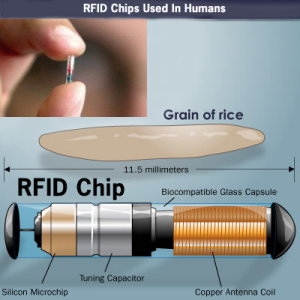
RFID and NFC microchips small enough for human implantation now exist and are being voluntarily adopted by thousands of people worldwide. Companies like Sweden’s Biohax International have implanted chips in employees for building access, payments, and identification. These chips, typically implanted in the hand between the thumb and forefinger, can store identification data, medical records, cryptocurrency wallets, and access credentials.
While currently voluntary and limited, this technology demonstrates how physical implants could feasibly be used for identification and economic access on a mass scale. The normalization of such technology, particularly in workplace settings, creates a pathway toward wider adoption and potential mandates.
4. Facial Recognition and AI Surveillance Networks
Facial recognition systems capable of identifying individuals in crowds with remarkable accuracy have been deployed globally. China’s network of over 600 million surveillance cameras can identify citizens and track their movements throughout cities. Similar systems are expanding rapidly in Western nations, with law enforcement, retail establishments, and public transportation increasingly adopting this technology.
These systems enable the tracking of individuals without their knowledge or consent, enabling monitoring of compliance with various mandates. When connected to digital payment systems, facial recognition creates frictionless payment options – but also the ability to deny economic access based on identity.
5. Social Credit Systems That Control Behavior
China’s social credit system represents perhaps the most complete real-world implementation of the control mechanisms described in Revelation. This comprehensive scoring system monitors citizen behavior across multiple domains – from financial transactions and social media posts to minor infractions like jaywalking – and assigns consequences accordingly. Low scores result in restrictions on travel, access to education, internet speeds, and even the ability to make certain purchases.
What makes this system particularly relevant to prophetic analysis is its explicit tie between economic privileges and compliance with government-approved behavior. Citizens who fall out of favor with authorities face direct restrictions on their ability to buy and sell, precisely the mechanism described in Revelation 13:17.
China’s Social Credit System: The Blueprint for Global Control

China’s implementation of social credit scoring provides a functioning model of how comprehensive digital control systems can operate at a national scale. This system uses a vast network of surveillance cameras, artificial intelligence, data collection points, and centralized databases to monitor virtually every aspect of citizen behavior.
How the System Restricts Buying and Selling
The economic consequences of low social credit scores in China are severe and expanding. Citizens with low scores are blocked from purchasing airline tickets, high-speed train tickets, and even restricted from buying property. Some luxury goods and services become inaccessible. Financial penalties include higher interest rates, denial of loans, and restricted access to premium financial services. The system directly fulfills the prophecy’s description of economic participation being contingent on compliance with the dominant system.
Punishment for Non-Compliance
Beyond financial restrictions, social credit punishments extend to nearly every aspect of life. Children of low-scoring parents may be denied access to prestigious schools. Internet connections may be throttled. Employment opportunities become restricted. Public shaming occurs through mandatory notifications when calling low-scoring individuals. The comprehensive nature of these punishments creates powerful incentives for compliance with government directives, forcing citizens to choose between loyalty to the system and personal hardship.
The Rapid Spread of This Model to Other Nations
Elements of China’s social credit system are now appearing in Western democracies, albeit in more fragmented forms. Credit scores increasingly factor in social connections and non-financial behaviors. ESG (Environmental, Social, Governance) scores determine which businesses receive investment and favorable treatment. Insurance companies monitor lifestyle choices through apps and devices. Some governments are implementing citizen scores for accessing services. These systems, while not yet as comprehensive as China’s, are evolving rapidly and creating the technical and social foundations for similar control mechanisms worldwide.
The Great Reset and Digital ID: Framework for Worldwide Implementation
The World Economic Forum’s “Great Reset” initiative explicitly advocates for a complete restructuring of global systems following the COVID-19 pandemic. Central to this vision is the implementation of universal digital identity systems that would connect individuals’ physical, digital, and financial lives through centralized frameworks.
World Economic Forum’s Vision for Digital Identity
The WEF has published detailed roadmaps for implementing comprehensive digital identity systems that would encompass health records, financial information, social connections, travel history, carbon footprint, and even ideological affiliations. These systems are designed to track and influence behavior through a range of incentives and penalties. While presented as tools for efficiency and progress, these frameworks create unprecedented possibilities for controlling access to economic and social participation, the very capability described in Revelation.
How COVID Accelerated Digital ID Adoption

The COVID-19 pandemic dramatically accelerated global adoption of digital identification and tracking systems. Vaccine passports normalized the concept of showing digital credentials to access basic services and venues. Contact-tracing apps established precedents for continuous location monitoring. Remote work and education pushed daily activities into trackable digital spaces. These rapid changes accomplished in months what might otherwise have taken decades – creating both technical systems and public acceptance for digital identity verification as a prerequisite for social participation.
The Push for Universal Digital Identity by 2030
Multiple global organizations, including the United Nations, the World Bank, and the World Economic Forum, have set 2030 as the target for implementing universal digital identity systems worldwide. This aligns with the UN’s Sustainable Development Goals, which explicitly call for legal identity for all, including birth registration. These systems are developing rapidly, with particular focus on the approximately 1 billion people globally who currently lack formal identification. The infrastructure being created could potentially serve as the technical foundation for the exact system of control described in Biblical prophecy.
Big Tech’s Role in Building the Infrastructure
The technological infrastructure required to implement global control systems isn’t being built solely by governments. Major technology companies are creating the essential components that would enable such systems, often motivated by profit rather than explicit control objectives.
How Tech Giants Are Creating the Systems for Mass Control
Companies like Google, Facebook, Amazon, Microsoft, and Apple have built unprecedented data collection systems that track billions of people across multiple dimensions of their lives. Their artificial intelligence systems can predict behavior, identify dissent, and potentially manipulate decisions. Their payment systems increasingly dominate commerce. Their cloud infrastructure provides the computational capacity needed for massive surveillance operations. While not necessarily built with prophetic fulfillment in mind, these systems create precisely the technical capabilities needed for implementing the economic control mechanisms described in Revelation.
The Merging of Corporate and Government Power
The line between government authority and corporate power has become increasingly blurred. Governments now routinely request or require corporations to enforce policies through their platforms. Social media companies regulate speech in accordance with government guidelines. Financial services companies block transactions to entities deemed problematic. This public-private partnership approach to governance creates systems where government objectives can be enforced through corporate infrastructure, circumventing traditional limitations on government power and creating unprecedented possibilities for controlling economic participation.
5G and Beyond: The Technical Requirements for Global Surveillance
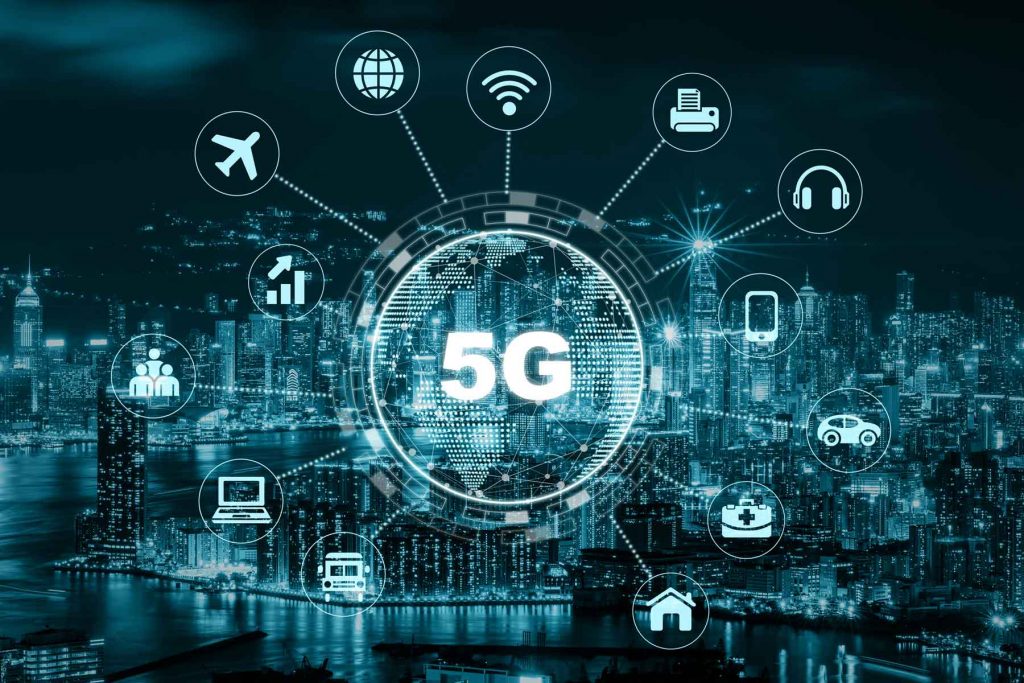
The rollout of 5G networks and the coming 6G revolution provide the connectivity backbone required for comprehensive surveillance systems. These high-speed, high-capacity networks enable real-time monitoring of billions of connected devices, seamless facial recognition, and continuous biometric verification. They create the technical capacity to track and process the movements, behaviors, and transactions of entire populations simultaneously. Without this connectivity infrastructure, the systems of control described in Revelation would remain technically impossible; with it, they become entirely feasible.
Resistance and Alternatives for the Concerned
As these systems develop, many people of faith and others concerned about liberty are seeking ways to maintain independence from potentially controlling technologies. Various communities are developing alternative approaches that preserve freedom while navigating an increasingly digitized world.
Local Communities Building Independence
Some communities are developing local resilience systems that reduce dependence on centralized control structures. Local food production, energy microgrids, community skills exchanges, and local currencies create frameworks for meeting needs outside mainstream systems. Faith communities in particular are strengthening internal support networks that could provide alternatives if mainstream economic access becomes contingent on compromising beliefs. These parallel structures don’t reject technology entirely, but rather implement it in ways that preserve independence and align with community values.
Alternative Financial Systems
Decentralized financial technologies offer potential alternatives to centrally controlled monetary systems. Properly implemented cryptocurrencies can enable peer-to-peer transactions without centralized oversight. Physical precious metals offer a store-of-value option outside digital systems. Barter networks and community credit arrangements create frameworks for exchange that don’t depend on outside authorization. While none of these alternatives can fully replace the mainstream economy, they provide potential fallback options for those concerned about controls being implemented through central financial systems.
Practical Steps to Reduce Your Digital Footprint

Individuals concerned about technological control systems can take practical steps to reduce vulnerability. Using privacy-focused technologies like encrypted messaging, VPNs, and alternative search engines reduces data collection. Minimizing social media usage limits behavioral profiling. Maintaining cash reserves helps preserve transaction privacy. Diversifying information sources counters algorithm-driven thought control. While complete digital disengagement is unrealistic for most people, strategic reduction of digital dependence can significantly decrease vulnerability to potential control systems.
Balancing Technology Use Without Becoming Enslaved
- Adopt technology intentionally, not by default, evaluating each tool against your values
- Implement regular digital sabbaths—designated periods completely free from screens and connectivity
- Cultivate analog skills that function without digital systems (navigation, communication, record-keeping)
- Practice transactions using alternative methods like cash, barter, or community exchange
- Maintain physical copies of essential documents rather than relying solely on digital versions
The goal isn’t technological rejection but thoughtful engagement that preserves independence. By using technology as a tool rather than submitting to it as a necessity, individuals maintain the freedom to disconnect if systems begin imposing unacceptable requirements. This balanced approach recognizes the benefits of technological advancement while remaining vigilant about its potential for control.
Creating boundaries around technology use also develops the mental clarity and spiritual strength needed to recognize problematic developments. When constant digital engagement becomes the norm, gradual increases in control can go unnoticed. Intentional disconnection creates space for discernment.
Finally, teaching children technological discernment rather than just technological skills prepares the next generation to navigate these challenges. Young people who understand both how to use technology and when to question it will be best positioned to maintain independence in increasingly controlled digital environments.
How Believers Should Respond to These Developments
For people of faith, technological developments that parallel Biblical prophecies create both challenges and opportunities. Scripture calls believers to be “wise as serpents and harmless as doves” – knowledgeable about developing systems without being driven by fear or paranoia.
The appropriate response combines spiritual preparation with practical wisdom. Rather than fearfully withdrawing from society entirely, believers can engage thoughtfully with technology while maintaining firm boundaries around systems that could compromise faith or freedom. This balanced approach preserves both spiritual integrity and practical functionality in a rapidly changing world.
Discernment Without Fear
Scripture repeatedly instructs believers not to operate from a spirit of fear. Recognizing potential prophetic parallels in technology should produce discernment rather than panic. By studying both scripture and technological developments with clear eyes, believers can make wise decisions without being paralyzed by anxiety. This balanced perspective recognizes genuine concerns while remembering that prophecy reveals God’s sovereignty over history rather than reasons for hopelessness.
Preparing Spiritually and Practically
Spiritual preparation – strengthening faith, building scriptural knowledge, and deepening prayer life – remains the foundation for navigating challenging times. This spiritual foundation should be complemented by practical preparations: reducing debt, building community connections, developing practical skills, and creating reasonable contingencies for potential restrictions. Together, these approaches create resilience against both spiritual and practical challenges that might emerge as control systems develop.
Building Community Support Systems
Perhaps the most important response is strengthening faith communities to support members facing technological pressures. Throughout history, when believers have faced pressure to compromise faith for social or economic participation, strong communities have provided alternatives. Today’s communities can develop resource-sharing systems, alternative exchange networks, and mutual aid frameworks that would provide practical support if members face exclusion from mainstream economic systems for faithfulness to their convictions.
These community systems don’t require rejecting beneficial technologies, but rather the thoughtful implementation of technology that serves community values rather than undermines them. The goal isn’t isolation but interdependence centered on shared faith commitments.
Frequently Asked Questions
As technologies potentially related to prophetic fulfillment develop, many specific questions arise about their significance and implications. While definitive answers aren’t always possible, scripture and careful analysis provide helpful perspectives.
Is Taking a Vaccine the Mark of the Beast?
No credible Biblical analysis supports identifying any current vaccine as the mark of the beast. The Biblical mark is specifically described as connected to the worship of the beast and to conscious rejection of God. It involves a clear choice of allegiance rather than merely accepting a medical intervention. While vaccine mandates may raise legitimate concerns about bodily autonomy, conflating vaccines themselves with the prophesied mark contradicts the Biblical description’s emphasis on spiritual allegiance.
Additionally, the mark is described as being visible on the forehead or right hand and directly connected to economic participation. Current vaccines don’t meet these specific criteria. Believers should evaluate medical decisions based on personal health factors and conscience without unnecessary apocalyptic fears.
That said, the implementation of vaccine passports as prerequisites for social and economic participation does demonstrate how quickly control systems can be deployed globally. These systems, while not themselves the mark, reveal how technical infrastructure for controlling access based on compliance can be rapidly implemented and accepted.
Key Differences: Vaccines vs. Biblical Mark
The Biblical mark:
- Represents explicit worship/allegiance to the beast
- Is visible on right hand or forehead
- Directly enables buying and selling
- Involves conscious rejection of God
Will Christians Have to Face the Mark of the Beast or Will They Be Raptured?
Christian denominations hold different views on this question based on their understanding of end-time chronology. Pre-tribulation rapture perspectives suggest believers will be removed before the mark system is fully implemented. Mid-tribulation views suggest Christians may see the beginning of the system before being raptured. Post-tribulation perspectives hold that believers will need to remain faithful through the entire tribulation period, including refusing the mark despite economic pressure. For a deeper understanding, you can explore how technology plays a role in Revelation 13.
Rather than focusing exclusively on timing debates, most Christian leaders advise building spiritual strength that would enable faithfulness regardless of which chronology proves correct. History demonstrates that Christians have maintained their faith amid various forms of persecution over the centuries, providing models of faithfulness under pressure regardless of specific prophetic timing.
Can the Mark of the Beast Be Forced on Someone Against Their Will?
Biblical descriptions consistently present the mark as involving a choice, albeit under extreme economic and social pressure. Revelation specifically mentions divine judgment falling on those who “receive” the mark, suggesting personal acceptance rather than forced application. This indicates that while pressure to accept the mark may be severe (inability to buy or sell), the spiritual significance involves a conscious decision rather than involuntary implementation. This understanding offers reassurance that believers cannot, by accident or by force, take the mark through deception.
How Close Are We to Seeing the Mark Implemented Worldwide?
The technical infrastructure required for implementing a global economic control system matching the Biblical description now exists for the first time in history. Digital identity systems, biometric verification, cashless payment frameworks, and comprehensive surveillance networks provide all the necessary components. Major global organizations have set explicit timelines to implement universal digital identity by 2030, with many components already deployed across various regions.
However, complete prophetic fulfillment requires more than just technical capability. The Biblical narrative involves specific figures and a precise sequence of events beyond mere technological development. While the technological foundation appears to be rapidly forming, the complete prophetic scenario includes spiritual and political dimensions that remain developing. Believers should remain vigilant without making premature identifications.
What’s the Difference Between Helpful Technology and Potentially Dangerous Control Systems?
Several key factors distinguish beneficial technological advancement from potentially concerning control systems. Voluntary versus mandatory adoption represents a critical boundary. Technologies that remain optional preserve freedom, while those made mandatory for basic functioning in society create possibilities for control. Transparency in data collection and use distinguishes helpful systems from potential surveillance tools. Local versus centralized control often determines whether technology empowers individuals or enables external control.
The potential for exclusion based on compliance represents perhaps the most significant factor. Technologies that can be used to deny basic social and economic participation to non-compliant individuals most directly parallel the Biblical mark’s description. When acceptance of specific technologies becomes mandatory for buying, selling, traveling, or employment, the parallels to prophetic warnings become most pronounced.
Ultimately, technology itself is neutral, a tool that can be used for human flourishing or control. The implementation, governance, and required compliance determine whether specific technologies reflect the concerns raised in prophetic warnings. By evaluating developing systems against Biblical descriptions, believers can navigate technological change with both wisdom and appropriate caution.
As we witness unprecedented technological development that may align with ancient prophecies, the wisest response combines clear-eyed awareness with unwavering faith. These developments call not for fear but for spiritual preparation and practical wisdom as we navigate an increasingly controlled digital landscape.
***
Featured image: https://storage.googleapis.com/wordformai-images/dimg/ea8e404b-32e1-4c14-92a7-64df957a9167.jpg


Here are links to my blog indexes, so please click one and keep reading!
My Books, Workbooks, and Fun Books
Knowing the Unknowable One
Opening the Treasure Chest
Walking Heart-to-Heart with God
Walking Heart-to-Heart with Each Other
Fighting the Good Fight of Faith
Christian Mysteries: Why I Love Them!
List of Some Nonfiction Books You Don’t Want to Miss
Index of Assorted Topics