
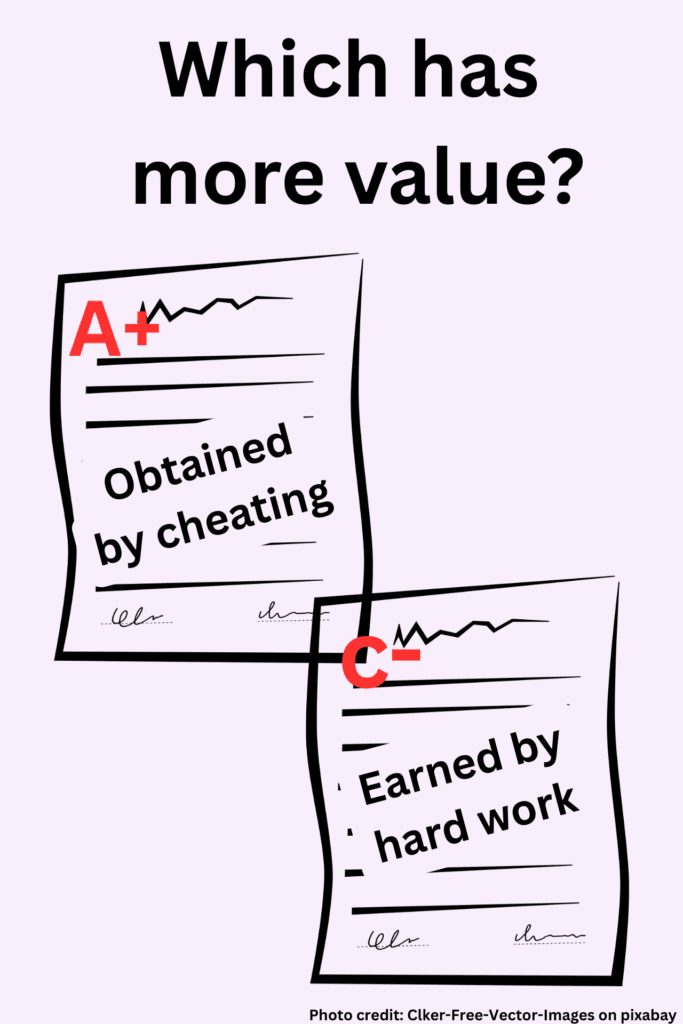
A Question We All Face
Imagine you’re walking down the street and you find a wallet full of cash. You know who it belongs to, but you also know your family really needs money right now. Maybe you could use it to buy groceries or pay an overdue bill. Would it be okay to keep the money because you need it for something good?
Or what if you could cheat on a test to get into a better college, knowing that better education would help you do more good in the world someday? What if you could tell a lie that would make someone feel better?
These situations all ask the same basic question: If we want something good, does that make it okay to do something bad to get it?
The answer is clear: No, the ends do NOT justify the means.
What Does “The Ends Justify the Means” Actually Mean?
Let’s break this phrase down into simple parts:
- The “end” = the goal or result you want to achieve
- The “means” = the methods or actions you use to get there
Some people believe that if your goal is good enough, it’s okay to lie, cheat, or even hurt others to reach it. They think the good result makes up for the bad actions along the way.
This sounds tempting. After all, who doesn’t want to accomplish good things? But this kind of thinking is deeply wrong, and it leads to terrible consequences.
Real-Life Examples of This Dangerous Thinking
Example 1: Jephthah’s Terrible Vow (Judges 11)
In the Old Testament, there’s a story about a military leader named Jephthah. He was fighting to protect his people from their enemies, a good and noble goal. But in his eagerness to win, Jephthah made a foolish promise to God. He vowed that if God gave him victory, he would sacrifice the first thing that came out of his house to greet him when he returned home.

Jephthah probably expected a farm animal – maybe a lamb or a goat. Instead, his daughter, his only child, came running out to celebrate his victory with dancing and tambourines.
Now Jephthah faced a horrible choice, all because he had made a careless vow to try to guarantee the outcome he wanted. He had wanted to ensure victory (a good end), but he used a rash and foolish promise (a wrong means) to try to get it.
The lesson: Even when we want something good, we can’t make foolish or wrong promises to get it. We can’t bargain with God or cut corners on what’s right.
Example 2: Jim Jones and the Fake Healings
Jim Jones started as a preacher who seemed to care about helping people. Early in his ministry, he faced a choice. A woman offered to donate $5,000 to an orphanage if Jones would sleep with her. That’s a lot of money, money that could feed and clothe many children.
Jones discussed it with his wife, and they decided together that it would be “selfish” to let the orphans go without help just to uphold his moral standards. He took the deal.
This decision became a turning point. Jones began teaching his followers that “the ends justify the means.” Soon, his church was staging fake healings to bring in more members. Followers would dress up in disguises, pretend to be sick or disabled, and then act like Jones had miraculously healed them. They convinced themselves these lies were okay because they brought more people into the church.
But once you accept that lies are okay for a “good reason,” there’s no stopping point. Jim Jones’s ministry eventually became a cult. His “ends justify the means” philosophy led to fraud, abuse, and finally to the mass murder-suicide in Jonestown, where over 900 people died.
The lesson: A compromise that seems small at first can grow into something monstrous. When you start accepting that lies and wrongs are justified for good goals, you lose your moral compass entirely.
Example 3: Violence in Politics

In recent years, there have been attempts to assassinate Donald Trump. To those who believed he was dangerous, killing him may have seemed justified, a way to “save” the country from what they saw as a terrible threat.
But here’s the truth: murder is always wrong, no matter what political outcome someone thinks it will achieve. We don’t get to decide that violence is acceptable just because we strongly disagree with someone or fear what they might do.
When people convince themselves that their political views are so important that killing is justified, they’ve crossed a line that should never be crossed. They’ve decided that their judgment of what’s “necessary” is more important than God’s clear command: “You shall not murder.”
The lesson: We don’t get to break fundamental moral laws – like the prohibition against murder – just because we think our cause is important enough. No political goal justifies violence.
Why This Thinking Is So Dangerous
It Creates a Slippery Slope
Once you say one lie is okay, where do you draw the line? Is two lies okay? Ten? What about stealing – is a little stealing acceptable if it’s for a good cause? What about a lot of stealing?
Jim Jones started with one sexual compromise to help orphans. Within years, he was staging elaborate fake healings. Eventually, he was responsible for the deaths of hundreds of people. Each step seemed justified by the “good” he was trying to accomplish, but each step took him further from the truth and deeper into evil.
It Makes Us the Judge
When we decide that the ends justify the means, we’re putting ourselves in charge of deciding which goals are important enough to break the rules. But who decides which goals are “important enough”?
Everyone thinks their own goals are the most important. The person who assassinates a political leader thinks they’re saving the country. The person who lies to bring people to church thinks they’re saving souls. The person who cheats thinks they’re just leveling an unfair playing field.
We’re not wise enough or good enough to make these judgments. We need a higher standard than our own opinions.
It Destroys Trust
When people resort to dishonest means, no one can trust them. If a preacher stages fake healings, why should anyone believe the message he preaches? If a politician lies to win an election, why should citizens trust anything he says in office?
Communities, friendships, churches, and nations all fall apart when people justify lying and cheating. Trust is the foundation of every relationship, and “ends justify means” thinking destroys that foundation.
God’s Way: Trust Him with the Results
For Christians, This Isn’t Even a Choice
If you’re a Christian, the question of whether ends justify means isn’t really open for debate. God is characterized by goodness, righteousness, and holiness. He calls us to reflect these qualities in everything we do, not just when it’s convenient.
We don’t get to set aside God’s standards just because we really, really want something. We don’t get to lie “for Jesus” or cheat “for the kingdom” or hurt people “for the greater good.”
Key Biblical Principles
The Bible is full of passages that make this clear:
- “Do not be overcome by evil, but overcome evil with good” (Romans 12:21). Notice it doesn’t say “overcome evil with a little bit of evil for a good cause.”
- God cares about HOW we live, not just what we accomplish. He’s more interested in our character than our achievements.
- We’re called to be faithful, not necessarily successful by the world’s standards. Our job is to obey God and trust Him with the results.
What This Looks Like Practically
So what does it mean to reject “ends justify means” thinking in real life?
Use every honest, legitimate method available to pursue good goals. If you want to help orphans, raise money honestly. If you want to win an election, campaign fairly. If you want to grow a church, preach the truth and let God bring the people He wants to bring.
When those methods don’t work, pray and trust God. Sometimes we do everything right and still don’t get the outcome we wanted. That’s when faith really matters. We trust that God is in control and that His plan is better than ours.
We do NOT switch to lying, cheating, manipulating, or harming others. When honest methods fail, the answer is not to abandon honesty. The answer is to keep trusting God, even when we don’t understand why things aren’t working out the way we hoped.
Remember: God is in control of the outcomes, and His way is always best. You might think you know exactly what result would be best, but God sees the whole picture. He knows things you don’t know. He can bring good out of situations that look hopeless to you.
The story of Abraham and Sarah proves this powerfully. God promised them a son, but years passed and nothing happened. Sarah was getting older. It seemed impossible. So they decided to “help” God by having Abraham father a child through Sarah’s servant, Hagar. They got a son – Ishmael – but they also got heartbreak, family conflict, and problems that echo through history even today.
Here’s what’s amazing: God didn’t need their help at all. When Sarah was 90 years old – long past the age when having a baby seemed even remotely possible – God gave them Isaac, exactly as He had promised. God’s timing was perfect. His method worked. Their “help” only created unnecessary pain.
This is the pattern we see again and again: God can handle our situations. He doesn’t need our dishonest shortcuts or our faithless schemes. When we try to force the outcome we want through wrong methods, we make things worse, not better.
(*Important note: In mentioning the conflict that came from Abraham and Sarah’s choice, I’m not suggesting that Ishmael or his descendants were somehow less valuable or worthy as people. God loved Ishmael too – He blessed him and promised to make him into a great nation (Genesis 21:13, 18). Every person, regardless of how they came into the world, has worth and dignity because they’re made in God’s image. The point here is simply that Abraham and Sarah’s lack of trust created unnecessary complications, not that the people resulting from that situation were mistakes or unworthy of respect.)
For Those Who Don’t Know God
The Problem
If you don’t know God or don’t believe in Him, this whole discussion might seem pointless. Without God’s truth to guide you, you only have human reasoning. And human reasoning often leads to “whatever works” thinking.
From a purely human perspective, lies, deceit, and even crimes can look like reasonable options when your goal seems important enough. If there’s no absolute standard of right and wrong, then everything becomes negotiable.
The Reality
But even people who don’t believe in God can see that “ends justify means” thinking destroys society. That’s why we have laws. We all need to agree on basic rules of behavior, or civilization falls apart.
However, laws can be changed or ignored. Only God gives us the unchanging standard we truly need, a standard based not on human opinion but on His perfect character.
Character Matters More Than Results
The Bottom Line
Here’s what it all comes down to:
Bad methods poison good goals. Even if you achieve what you wanted, you’ve damaged yourself and others in the process. The lie you told to get there taints the victory. The person you hurt along the way can’t be un-hurt by your success.
How we act reveals who we really are. Your character isn’t shown by what you want to accomplish. It’s shown by what you’re willing to do to get there. A person who lies for a “good cause” is still a liar. A person who cheats for a “noble goal” is still a cheater.
Christians must trust that God’s way—the way of honesty, integrity, and love—is always right, even when it’s hard. Even when we can’t see how things will work out. Even when doing the right thing seems to cost us something we really want.
Final Challenge
Think about your own life. Are there areas where you’re tempted to compromise “just this once”? Maybe it’s a small lie that would make things easier. Maybe it’s cutting a corner that no one would notice. Maybe it’s bending the rules because you think your situation is special.
Here’s what you need to remember: If you have to do something wrong to get it, you shouldn’t want it that way.
Trust God with the results. Commit to doing things His way, always, not just when it’s convenient or easy.
Closing Thought
God doesn’t need our lies. He doesn’t need our manipulation or our shortcuts. He’s powerful enough to accomplish His purposes through people who simply obey Him.
The question isn’t whether the ends justify the means – they never do. The real question is whether we’ll trust God enough to do things His way, even when we can’t see how it will all work out.
And the answer to that question reveals everything about who we really are and who we’re really serving.

***

The book of Esther in the Bible tells the story of a vicious man who used evil means to pursue what he believed was a worthy goal.
You can read or listen to Esther telling her own story in my ebook or audiobook, available from Sqrindle.
a
a
Here are links to my blog indexes, so please click one and keep reading!
My Books, Workbooks, and Fun Books
Knowing the Unknowable One
Opening the Treasure Chest
Walking Heart-to-Heart with God
Walking Heart-to-Heart with Each Other
Fighting the Good Fight of Faith
Christian Mysteries: Why I Love Them!
List of Some Nonfiction Books You Don’t Want to Miss
Index of Assorted Topics