
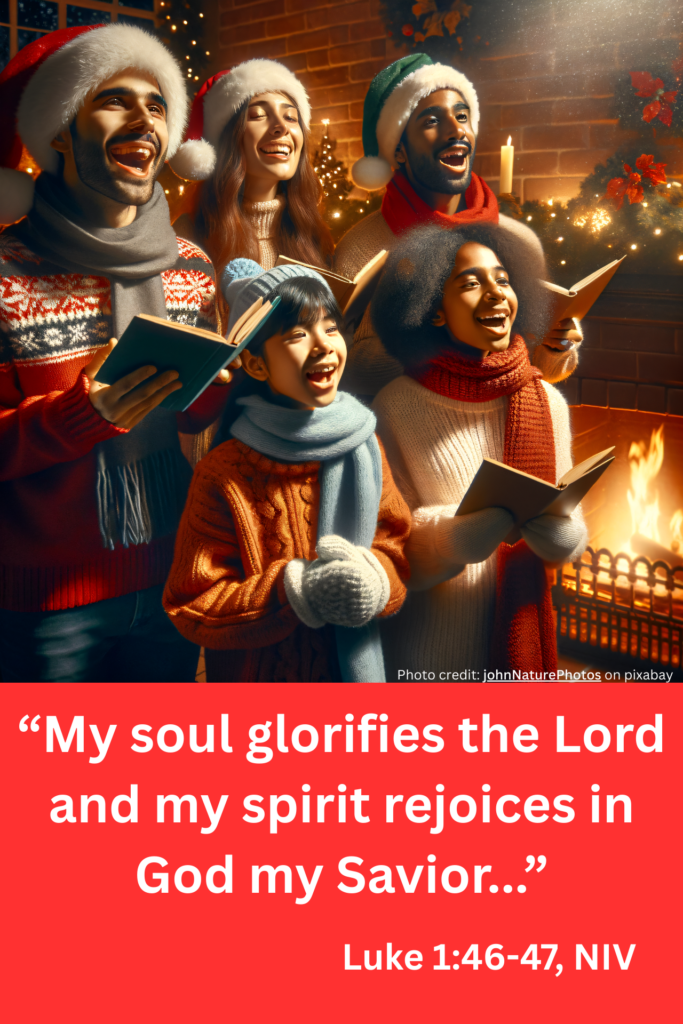
We sing “Silent Night” and “Joy to the World” every Christmas. We hum along to “O Holy Night” and “Hark! The Herald Angels Sing.” These are the Christmas carols that fill our sanctuaries and shopping malls, our living rooms and radio stations.
But there’s one Christmas song – the first Christmas song, actually – that we rarely sing. And when we do acknowledge it, we tend to sanitize it, soften it, make it safe and pretty and manageable.
It’s Mary’s song, known as the Magnificat. And it is radical, politically subversive, and economically revolutionary.
If Mary sang this song today – really sang it, with all its implications – she might be accused of promoting class warfare, threatening the economic order, and undermining the foundations of society.
Yet this is the song a teenage girl sang when she discovered she was carrying the Messiah in her womb.
The Song of a Teenage Revolutionary
Picture the scene: Mary has just received the most shocking news of her life from the angel Gabriel. She’s going to conceive a child by the Holy Spirit and give birth to the Son of God. Understandably overwhelmed, she hurries to visit her relative Elizabeth, the only other person she knows who’s experiencing an impossible pregnancy.
When she arrives, Elizabeth’s baby leaps in her womb, and Elizabeth, filled with the Holy Spirit, proclaims Mary blessed among women. And Mary’s response is not a demure “thank you” or a humble deflection.
She bursts into song. And what a song it is.
“My soul glorifies the Lord and my spirit rejoices in God my Savior, for he has been mindful of the humble state of his servant. From now on all generations will call me blessed, for the Mighty One has done great things for me – holy is his name.”
So far, so good. This sounds like appropriate worship, personal testimony, humble acknowledgment of God’s favor. We can handle this.
But then Mary keeps singing:
“His mercy extends to those who fear him, from generation to generation. He has performed mighty deeds with his arm; he has scattered those who are proud in their inmost thoughts. He has brought down rulers from their thrones but has lifted up the humble. He has filled the hungry with good things but has sent the rich away empty.”
Wait. What?
Rulers brought down from thrones? The rich sent away empty? The hungry filled and the humble lifted up?
This isn’t just personal worship. This is a manifesto. This is a declaration of economic and political revolution. This is the teenage mother of the Messiah announcing that God is about to flip the entire world order upside down.
What Mary Actually Said
Let’s break down what Mary’s song actually claims, because we’ve gotten so used to hearing it in stained-glass language that we’ve forgotten how shocking it is.
“He has scattered those who are proud in their inmost thoughts.” God opposes the proud. Not just in their actions, but in their very thoughts and attitudes. This isn’t about external religiosity or moral behavior. This is about the heart posture of those who think they’re self-sufficient, who trust in their own power and position.
“He has brought down rulers from their thrones.” This is not metaphorical. Mary is saying God actively removes the powerful from power. He topples kingdoms. He ends dynasties. He redistributes authority. No throne is secure when God decides it’s time for a regime change.
Think about singing this in first-century Judea, under Roman occupation, with Herod on the throne. This is revolutionary talk. This is the kind of thing that gets you labeled a subversive.
“But has lifted up the humble.” God’s pattern is to elevate the lowly. Not the qualified, not the powerful, not the prestigious, but the humble. The overlooked. The dismissed. The people society has pushed to the margins.
“He has filled the hungry with good things.” God is concerned with physical hunger, with material needs, with the distribution of resources. The hungry – not the spiritually hungry, but the actually hungry – will be filled. This is a promise of economic reversal.
“But has sent the rich away empty.” This is the line that really makes us uncomfortable. The rich don’t just stay rich while the poor also get blessed. The rich are sent away empty. There’s a reversal, a redistribution, a reckoning.
This isn’t prosperity gospel. This is exactly the opposite.
Why We Don’t Sing This Song
There’s a reason the Magnificat doesn’t show up on contemporary Christian radio or in most church worship sets. It’s too uncomfortable. It’s too political. It’s too economically subversive.
We prefer Christmas to be about warm feelings, family togetherness, and personal salvation. We want Mary to be sweet and gentle and nonthreatening. We want Jesus’ birth to be good news that doesn’t challenge our economic systems, our political allegiances, or our comfort.
But Mary’s song won’t let us do that. It insists that the coming of Jesus is good news specifically for the poor, the hungry, the powerless, and the humble. And it’s deeply unsettling news for the rich, the satisfied, the powerful, and the proud.
We’ve tried various strategies to domesticate this song:
Spiritualizing it: “Mary’s not talking about actual rich and poor people. She’s talking about being spiritually humble and spiritually hungry.”
Futurizing it: “This will happen eventually, in the kingdom to come, but it doesn’t apply to how we structure society now.”
Ignoring it: Just don’t talk about it. Stick to the safer Christmas passages. Focus on angels and shepherds and wise men.
But the song won’t be silenced. It’s right there in Luke’s gospel, chapter 1, verses 46-55. The first response to the news of Jesus’ coming is a song about economic revolution and the overthrow of the powerful.
Mary’s Radical Theology
Where did a teenage girl from Nazareth get such radical ideas?
From Scripture. Mary’s song is soaked in the Hebrew Bible. It echoes Hannah’s prayer in 1 Samuel 2. It reflects the psalms that speak of God defending the poor and opposing the oppressor. It resonates with the prophets who thundered against economic injustice and corrupt rulers.
Mary wasn’t innovating. She was remembering. She was reciting back to God His own revealed character and promises.
This is who God has always been. He heard the cry of Hebrew slaves in Egypt and brought down Pharaoh. He raised up David from shepherding sheep to sitting on a throne. He sent prophets to condemn kings who exploited the poor. He instituted a Jubilee year when debts would be forgiven and land redistributed.

The God of the Bible has always been on the side of the oppressed, the marginalized, the poor, and the powerless. Mary didn’t make this up. She just sang what the Scriptures had been saying all along.
And she recognized that Jesus’ coming was the ultimate expression of this divine pattern – God bringing down the mighty and lifting up the lowly, God filling the hungry and sending the rich away empty.
Rooted in Covenant Faithfulness
Before we look at how Jesus fulfilled Mary’s song, we need to hear how Mary concluded it—with words that are especially important in our current climate of rising antisemitism:
“He has helped his servant Israel, remembering to be merciful to Abraham and his descendants forever, just as he promised our ancestors.”
Mary doesn’t end with abstract revolutionary ideals. She ends by rooting everything in God’s covenant faithfulness to Israel. The coming of Jesus isn’t a departure from God’s promises to the Jewish people; it’s their fulfillment.
This matters enormously. Mary understood that the Messiah she was carrying was first and foremost the Jewish Messiah, promised to Abraham’s descendants, awaited by Israel for generations. The revolution she sang about wasn’t replacing God’s covenant with Israel; it was God keeping that covenant.
Jesus didn’t come to start a new religion disconnected from Judaism. He came as a Jewish baby, to a Jewish mother, in fulfillment of promises made to Jewish ancestors, as the culmination of Israel’s story.
Any Christianity that forgets this – that tries to separate Jesus from His Jewish roots, that treats the Old Testament as irrelevant, that views the Church as replacing rather than being grafted into Israel – has fundamentally misunderstood the gospel Mary sang.
In our day, when antisemitism is surging globally, when Jewish communities face increasing threats and violence, Christians must remember Mary’s words: God remembers His mercy to Abraham and his descendants forever. Not temporarily. Not conditionally. Forever.
The same God who brings down the mighty and lifts up the humble is faithful to His covenant people. And those of us who are Gentiles and have been brought into God’s family through Jesus must never forget that we’ve been grafted into a Jewish tree, adopted into a Jewish family, brought near to promises first made to Israel.
To honor Mary’s song is to honor Israel. To follow Mary’s son is to recognize and reject antisemitism in all its forms. The God who remembers His promises to Abraham still remembers them today.
Jesus: The Fulfillment of Mary’s Song
Everything Mary sang about came to pass in Jesus’ life and ministry.
He was born not in a palace but in a feeding trough. He grew up not in Jerusalem but in “Nazareth – can anything good come from there?” He associated not with the powerful and prestigious but with fishermen, tax collectors, prostitutes, and lepers.
When He launched His public ministry, His inaugural sermon in Nazareth echoed Mary’s song: “The Spirit of the Lord is on me, because he has anointed me to proclaim good news to the poor. He has sent me to proclaim freedom for the prisoners and recovery of sight for the blind, to set the oppressed free, to proclaim the year of the Lord’s favor.”
Good news to the poor. Freedom for prisoners. Liberation for the oppressed. This is Mary’s song put into action.
Throughout His ministry, Jesus consistently sided with the marginalized against the powerful. He touched the untouchable. He ate with the excluded. He defended the woman caught in adultery. He praised the poor widow’s offering and condemned the religious leaders who “devour widows’ houses.”
He told parables where the rich man ends up in torment while poor Lazarus is comforted in Abraham’s bosom. Where the first are last and the last are first. Where those invited to the feast refuse to come, so the invitation goes to the poor, the crippled, the blind, and the lame.
And ultimately, He demonstrated the deepest truth of Mary’s song by going to a cross. The rulers brought Him down, but God lifted Him up. He became poor so that we might become rich. He was humbled to death, so God exalted Him to the highest place.
The cross is Mary’s song embodied: God brings down the proud and lifts up the humble. God fills the hungry and sends the rich away empty. The last become first. The humble are exalted. The crucified is crowned.
What This Means for Us
If we take Mary’s song seriously – if we really believe this is what God is doing in the world – it has profound implications for how we live.
It means economic discipleship matters. How we use our money, how we respond to poverty, how we structure our economic lives – these aren’t peripheral issues. They’re at the heart of the gospel Mary sang and Jesus embodied.
It means God has a preferential option for the poor. Not because poor people are inherently more righteous, but because they’re hungry and God fills the hungry. Because they’re humble (often by necessity) and God lifts up the humble.
This doesn’t mean God doesn’t love the rich. It means the gospel comes to them as a call to repentance and redistribution, not as affirmation of their wealth.
It means we can’t worship God and cling to wealth and power. Mary’s song forces a choice. You can be on the side of the rulers on their thrones or the humble who are lifted up. You can be with the rich who are sent away empty or the hungry who are filled with good things. You can’t be both.
It means Christmas is inherently political. Not partisan – Mary’s song doesn’t tell us which party to vote for. But political in the sense that it speaks to power, wealth, and justice. The claim that Jesus is Lord is inherently a claim that Caesar (or any other earthly authority) is not the ultimate Lord.
It means the Church should look like Mary’s song. If we claim to follow the Jesus that Mary sang about, our communities should be places where the proud are humbled and the humble are lifted up. Where the hungry are fed and the rich learn to share. Where power dynamics are reversed and the last are treated as first.
The Uncomfortable Questions
Mary’s song poses uncomfortable questions that we’d rather avoid:
Are we on the side of the rulers or the humble? Are we among the rich being sent away empty, or the hungry being filled with good things? Are we proud in our inmost thoughts, or humble before God?
Have we sanitized Jesus into someone who affirms our economic comfort and our social status? Have we made Him safe, manageable, and nonthreatening to our way of life?
What would it mean to really sing Mary’s song, not just with our mouths, but with our lives? What would it mean to live as if we actually believed God is bringing down the mighty and lifting up the lowly?
Mary’s Song in Our Time
We live in a time of staggering economic inequality. The gap between rich and poor is wider than it’s been in generations. Essential workers struggle to afford rent while billionaires compete to fly to space. People work multiple jobs and still can’t make ends meet. Medical debt bankrupts families. Student loans crush young people under debt they can’t escape.
Meanwhile, many churches have become comfortable chaplains to the middle and upper classes, preaching a gospel of personal fulfillment and upward mobility rather than Mary’s song of reversal and redistribution.
What would it mean for the Church to reclaim Mary’s song? To really believe that God fills the hungry and sends the rich away empty? To structure our communities and our economic lives around these values?
It would mean we’d have to grapple with the fact that the God Mary sang about might not be interested in making us more comfortable, more successful, more wealthy. He might be calling us to voluntary downward mobility. To sharing. To redistribution. To solidarity with the poor.
It would mean recognizing that Christmas isn’t just about a baby in a manger. It’s about a revolution that baby came to launch. A revolution of values, of economics, of power. A revolution that turns the world upside down.
Or more accurately, right-side up.
The Good News of Mary’s Song
Here’s the irony: Mary’s song, as unsettling as it is to the comfortable, is actually spectacularly good news.
It’s good news because it means God sees the forgotten and overlooked. He hears the cry of the hungry. He notices the humble. He keeps track of those the world has written off.
It’s good news because it means no earthly power is ultimate. Every throne can be toppled. Every dictator’s days are numbered. Every oppressive system will eventually fall.
It’s good news because it means God is actively at work to set things right – to rebalance the scales, to redistribute resources, to elevate the lowly and humble the proud.
It’s good news because it means the current order is not permanent. The way things are is not the way things must always be. Change is possible because God is the God of reversal.
And it’s good news because it means there’s hope for all of us – rich and poor, powerful and powerless – to be transformed by the coming of Jesus. The rich can learn generosity. The powerful can learn to serve. The proud can learn humility. The revolution Mary sang about is one we’re all invited to join, not as victims but as participants in God’s great reordering of the world.
Singing Mary’s Song
This Christmas, maybe we should actually sing Mary’s song. Not just read it decorously from the pulpit, but sing it. Loudly. Joyfully. Subversively.
Sing it in neighborhoods where wealth concentrates while poverty festers nearby. Sing it in suburban megachurches and urban storefront congregations. Sing it in corporate boardrooms and food banks. Sing it until we believe it. Sing it until it changes us.
Because Mary’s song is the truest Christmas carol ever written. It tells us who Jesus really is, not a harmless baby we can coo over and domesticate, but a revolutionary King whose very birth signals the overthrow of the world’s power structures.
It tells us what Christmas really means – not just warm feelings and family gatherings, but the inauguration of God’s kingdom where the hungry are filled, the humble are lifted, the proud are scattered, and the rich are sent away empty.
Mary sang this song two thousand years ago, and it echoes still. The question is: Will we join her? Will we let this song reshape our values, our priorities, our economics, our lives?
Or will we keep it safely tucked away, acknowledged but not embraced, honored but not obeyed?
The teenage girl from Nazareth sang a revolution into being. And the revolution is still unfolding.
The only question is: Which side of Mary’s song are you on?
Read Mary’s song again (Luke 1:46-55). Which line makes you most uncomfortable? Why? What might God be inviting you to examine in your own life, your own economic choices, your own relationship with power and wealth?


Here are links to my blog indexes, so please click one and keep reading!
My Books, Workbooks, and Fun Books
Knowing the Unknowable One
Opening the Treasure Chest
Walking Heart-to-Heart with God
Walking Heart-to-Heart with Each Other
Fighting the Good Fight of Faith
Christian Mysteries: Why I Love Them!
List of Some Nonfiction Books You Don’t Want to Miss
Index of Assorted Topics