
We know everything about Jesus’ birth – angels, shepherds, wise men, the flight to Egypt, the return to Nazareth. The first two years of His life are documented in remarkable detail.
We know everything about Jesus’ ministry. Three years of miracles, teachings, confrontations with religious leaders, disciples called and trained, crowds fed and healed. Every significant moment is recorded across four gospels.
But between the manger and the ministry? Between the birth story and the baptism? Between the baby worshiped by shepherds and the man who walked on water?
Almost nothing. Just one story when He’s twelve, and then… silence. Thirty years of silence.
Luke summarizes it in one verse: “And Jesus grew in wisdom and stature, and in favor with God and man.” That’s it. That’s all we get for three decades.
Why? What was God doing during those thirty years? And what do those silent years teach us about the life of faith?
The Longest Preparation
Think about the proportions: Jesus spent roughly two years in infancy and early childhood that got documented. He spent three years in public ministry that changed the world and got documented extensively. But He spent thirty years doing… what, exactly?
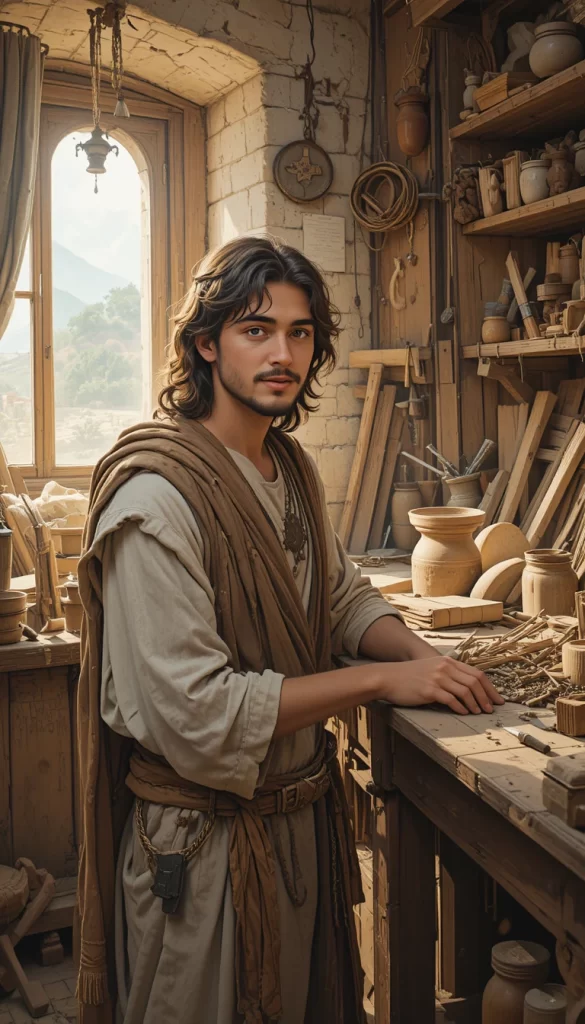
Working in a carpenter’s shop. Living with His family. Attending synagogue. Celebrating Passover. Doing ordinary things in an ordinary town.
For every year of public ministry, Jesus spent ten years in obscurity. For every miracle people witnessed, there were hours of sawdust and callused hands. For every sermon that challenged the religious establishment, there were years of simple obedience in a small-town workshop.
This is shocking when you think about it. The Son of God, the Savior of the world, the one whose birth prompted angels to sing and wise men to travel hundreds of miles – He spent most of His life doing ordinary work that nobody noticed or recorded.
Why would God do it this way?
Learning What It Means to Be Human
The incarnation wasn’t just about God taking on human flesh. It was about God experiencing the full human journey, not just the highlights, but the ordinary, daily, unremarkable reality of human life.
Jesus didn’t just appear as a thirty-year-old man, fully grown and ready for ministry. He was born as a helpless infant who needed His mother to nurse Him. He was a toddler learning to walk. He was a child learning to read, to pray, to work with His hands. He was a teenager navigating the awkward transition to adulthood. He was a young man learning a trade, contributing to His family’s livelihood, living in community.
He experienced everything that makes us human except sin. That includes the slow passage of time. The repetition of daily work. The ordinariness of most days. The hiddenness of faithful obedience when nobody’s watching and nothing dramatic is happening.
When Hebrews tells us that Jesus is able to sympathize with our weaknesses because He’s been tempted in every way we are, it’s not just talking about the three years of public ministry. It’s talking about thirty years of ordinary human experience. Thirty years of waking up, doing daily work, dealing with difficult people, facing temptations, practicing faithfulness in small things.
Jesus knows what it’s like to work a job that nobody considers important. He knows what it’s like to live in obscurity while you’re waiting for your “real” life to begin. He knows what it’s like to be faithful when nothing dramatic is happening and nobody’s paying attention.
The Carpenter’s Shop as Seminary
We tend to think of those thirty years as “wasted time” or merely “waiting” before the real work began. But were they?
What if the carpenter’s shop was where Jesus learned many of the lessons that would shape His ministry?
In that workshop, Jesus learned patience. You can’t rush wood. You can’t force grain to cooperate. You work with the material you’re given, respecting its nature, applying steady pressure over time.
He learned precision. A fraction of an inch matters when you’re building a door or crafting a yoke. Details matter. Excellence in small things matters.
He learned about serving others. Carpentry is service – you’re making things people need for their daily lives. Plows for farmers. Tables for families. Doors for homes. It’s honest work that makes other people’s lives better.
He learned about craftsmanship and pride in work well done. Whether anyone else noticed or not, the work had to be right.
He learned about the value of ordinary labor. Most people in Nazareth were working with their hands – farming, building, crafting, trading. Jesus spent three decades among working people, understanding their lives from the inside, not as an outside observer but as one of them.
When Jesus later taught using parables about farmers and shepherds, about building houses and making bread, about fishing and vineyards, He wasn’t just using convenient illustrations. He was drawing on decades of lived experience among people who did this work. He knew these lives intimately because He’d lived among them for thirty years.
The Hidden Life
There’s something profoundly countercultural about Jesus’ thirty years of hiddenness in our age of instant fame and constant self-promotion.
We live in a time when people become famous for being famous. When teenagers with no particular skill or accomplishment can have millions of followers. When the goal seems to be visibility at all costs, platform at any price, recognition as quickly as possible.
And here’s Jesus – the most important person who ever lived, with the most important message ever delivered – spending thirty years in obscurity.
Not building a platform. Not networking with influential people. Not positioning Himself for maximum impact. Not creating a personal brand or developing a marketing strategy.
Just living. Working. Praying. Obeying. Being faithful in small, unremarkable ways.
The hidden life isn’t the prelude to the real life. It is real life. For most people, for most of time, faithfulness looks like doing ordinary things well, day after day, without fanfare or recognition.
Jesus sanctified hiddenness. He made ordinary work sacred. He demonstrated that God’s approval doesn’t depend on visibility or public impact.
Submitting to Authority
One detail we know about those thirty years: Jesus lived under the authority of Mary and Joseph. Luke 2:51 tells us that after the temple incident when He was twelve, Jesus “went down to Nazareth with them and was obedient to them.”
The Creator of the universe submitted to the authority of His human parents.
The one who would command wind and waves first learned to obey His parents’ instructions to clean up the workshop or deliver a finished project to a customer.
The one who would teach with authority unlike anything the teachers of the law possessed first learned to listen, to submit, to respect the authority structures He lived within.
This is staggering. God in flesh, learning obedience through what He experienced. Learning submission. Learning to work within human systems and structures even though He transcended them all.
There’s no shortcut to spiritual maturity that bypasses submission to authority. There’s no fast track to leadership that skips learning to follow. Jesus, who had every right to demand immediate recognition of His divine authority, instead spent thirty years learning obedience in ordinary circumstances.
When Nothing Seems to Be Happening
Here’s what the thirty silent years say to everyone who feels stuck, who wonders when their “real life” will begin, who struggles with the hiddenness and ordinariness of their current circumstances:
God is working even when nothing dramatic is happening. Those thirty years weren’t wasted. They were preparation. They were formation. God was shaping Jesus’ human experience, building the foundation that would support three years of intense ministry.
Obscurity is not the same as insignificance. You are not less important to God because nobody knows your name. Your faithfulness in hidden places matters just as much, maybe more, than faithfulness in public places.
Most of life is ordinary, and that’s okay. We’re conditioned to believe that only the dramatic moments count, that life is made up of highlights and peaks. But most of life is valleys and plains – ordinary days, routine work, small choices, daily faithfulness. Jesus honored that reality by living it Himself.
There’s no such thing as “just” faithfulness. There’s no such thing as “just” being a good parent, “just” doing your job well, “just” serving faithfully in your community. These things aren’t the second-best option while you wait for something more important. For most people, this is the important thing. And Jesus showed us that by doing it Himself for thirty years.
Preparation takes longer than we think it should. We want instant maturity, instant impact, instant significance. But God often works slowly. The roots grow deep in darkness before the tree breaks through the soil. The foundation must be laid before the building rises. Jesus’s thirty years of preparation weren’t too long. They were exactly what was needed.
The Kingdom Growing in Secret

Jesus later taught that the kingdom of God is like a seed growing secretly. A farmer plants it and then goes about his normal life – sleeping, waking, eating, working – and the seed grows on its own. He doesn’t know how. First the stalk, then the head, then the full grain. It’s a process that can’t be rushed.
He was describing His own life. For thirty years, the kingdom was growing in secret in a carpenter’s shop in Nazareth. Nobody knew. Nobody noticed. But God was at work, preparing the Savior, forming the man who would transform the world.
The same is true in your life. When nothing seems to be happening, when you’re just doing the next ordinary thing in front of you, when you’re faithfully showing up day after day with no recognition or drama, the kingdom is growing. God is at work. Formation is happening. You just can’t see it yet.
The Gift of the Ordinary
One of the greatest gifts of Jesus’ thirty years of hiddenness is the validation it gives to ordinary life.
Most of us won’t be famous. Most of us won’t have dramatic, world-changing ministries. Most of us will live ordinary lives, doing ordinary work, known by a small circle of family and friends, making small impacts in small places.
And Jesus says: That’s not second-rate. That’s not settling. That’s not wasting your life.
For thirty years – the majority of His earthly life – that’s what Jesus did. And those years mattered just as much as the three years of public ministry. They formed Him. They shaped Him. They were the foundation on which everything else was built.
Your ordinary faithfulness matters. Your daily work matters. Your small choices matter. Your hiddenness doesn’t make you less significant in God’s eyes.
Jesus spent most of His life in a carpenter’s shop in Nazareth, and those years were just as much a part of God’s redemptive plan as the miracles in Galilee or the resurrection in Jerusalem.
When Your Time Comes
The thirty years of silence didn’t last forever. Eventually, Jesus’ time came. He left the carpenter’s shop, was baptized by John, and launched into three years of ministry that changed everything.
But He couldn’t have done those three years without the foundation of the thirty that came before. The patience He learned in the workshop sustained Him through opposition. The submission He practiced under His parents’ authority prepared Him to submit to the Father’s will in Gethsemane. The obscurity He lived in for three decades enabled Him to resist the devil’s temptation to take shortcuts to glory and power.
When your time comes – and it will come, in whatever form God intends – you’ll need the foundation that’s being built right now in the ordinary, hidden, unremarkable days. The character formed in obscurity is what sustains you when visibility comes. The faithfulness practiced when nobody’s watching is what makes you trustworthy when people are.
Don’t despise the day of small things. Don’t rush through the preparation to get to the “real work.” The preparation is real work. The hiddenness is significant. The ordinary is sacred.
Jesus showed us that by living it Himself.
The Silence That Speaks
The thirty years that Scripture doesn’t record speak volumes by their very silence.
They tell us that God values formation over fame, character over recognition, depth over speed, hiddenness over visibility.
They tell us that the majority of a meaningful life might consist of faithful, ordinary obedience that nobody notices or records.
They tell us that there’s no shortcut to maturity, no bypass around the slow work of growth, no way to rush the process that forms us into who God intends us to be.
They tell us that Jesus understands our ordinary lives because He lived one Himself – not as a brief visit to understand human experience, but as the primary reality of His earthly existence.
Waiting for Your Public Ministry?
Maybe you’re in your own season of hiddenness right now. Maybe you feel like you’re in a carpenter’s shop somewhere, doing work that doesn’t feel significant, living in obscurity, wondering when your “real life” will begin.
Here’s what Jesus’ thirty years say to you: This is your real life. Right now. Right here. In the ordinariness and hiddenness. This matters. You matter. What you’re doing matters.
God is forming you. Character is being built. Foundations are being laid. Lessons are being learned that you’ll need later. The kingdom is growing in secret, and you can’t see it yet, but it’s real and it’s happening.
Stay faithful. Do the ordinary things well. Show up. Serve. Obey. Love. Work with excellence even when nobody’s watching. Submit to authority. Learn from every experience. Trust that God is at work even when nothing dramatic is happening.
Because that’s what Jesus did. For thirty years. And those years weren’t wasted. They were essential. They were formative. They were exactly what needed to happen before the three years that changed the world.
Your hiddenness is not wasted time. It’s preparation. It’s formation. It’s the foundation for whatever God has planned for you next.
Trust the silence. Honor the ordinary. Embrace the hiddenness. Because the God who spent thirty years in a carpenter’s shop in Nazareth sees you, values you, and is at work in your life even when nothing seems to be happening.
The silence speaks. And what it says is: You are exactly where you need to be. This season matters. Your faithfulness counts. Keep going.
The thirty years weren’t too long. They were exactly right. And so is your season of preparation, however long it lasts.
Trust the process. Trust the silence. Trust the God who spent the majority of His earthly life doing exactly what you’re doing right now – living faithfully in ordinary circumstances, hidden from public view, preparing for a future only God could see.
What is God forming in you during your season of hiddenness? What if your current circumstances – ordinary, unremarkable, hidden – are exactly where God wants you to be right now? How would it change your perspective on this season if you believed it was just as important as any future “public ministry” you might have?



Here are links to my blog indexes, so please click one and keep reading!
My Books, Workbooks, and Fun Books
Knowing the Unknowable One
Opening the Treasure Chest
Walking Heart-to-Heart with God
Walking Heart-to-Heart with Each Other
Fighting the Good Fight of Faith
Christian Mysteries: Why I Love Them!
List of Some Nonfiction Books You Don’t Want to Miss
Index of Assorted Topics