
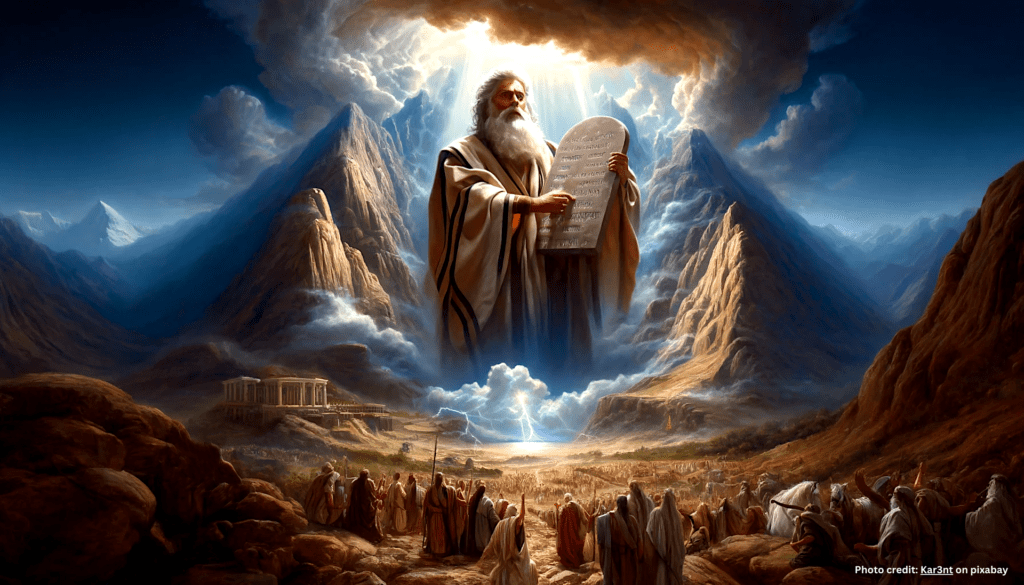
I have an opinion that perhaps no theologian in history would agree with, but I believe it’s worth considering: humankind’s ultimate responsibility is to obey the First Commandment.
The Heart of the Matter
The First Commandment is beautifully simple: “I am the LORD your God, who brought you out of Egypt, out of the land of slavery. You shall have no other gods before me” (Exodus 20:2-3, NIV). I like to make things simple, and the idea of having only one commandment to remember appeals to me.
Various verses throughout Scripture clarify exactly what this commandment means. Consider these passages:
Exodus 20:4-6 (the Second Commandment) warns against making idols and bowing down to them, reminding us that God is jealous for our devotion and shows love to those who love Him and keep His commandments.
Deuteronomy 10:12-13 uses a rhetorical question to explain that putting God first in our lives (or having no other gods before Him) means to fear Him, obey Him, love Him, and serve Him with all our heart and soul.
Matthew 22:34-40 records Jesus identifying the greatest commandment: “Love the Lord your God with all your heart and with all your soul and with all your mind.” He added that the second is similar: “Love your neighbor as yourself.” Then Jesus made this crucial statement: “All the Law and the Prophets hang on these two commandments.”
The Purpose of Scripture
Here’s my central thesis: the whole purpose of the rest of the Bible is to make it clear to humanity how we can love, worship, serve, and please God – in other words, how to obey the First Commandment. If we ever lose sight of this central truth, we will fail God and cheat ourselves out of the happiest, most fulfilling existence available to humankind.
Loving God Through Loving Others
The Bible is packed with laws, commands, and examples showing us how to live peacefully and joyfully with other people, because that kind of community is pleasing to God. This is how our vertical relationship with God expresses itself horizontally in our relationships with others.
Jesus taught, “So in everything, do to others what you would have them do to you, for this sums up the Law and the Prophets” (Matthew 7:12, NIV). He also gave us a new command: “Love one another. As I have loved you, so you must love one another. By this everyone will know that you are my disciples, if you love one another” (John 13:34-35, NIV).
The apostle John records Jesus saying, “This is my commandment, That ye love one another, as I have loved you. Greater love hath no man than this, that a man lay down his life for his friends” (John 15:12-13, KJV). Our love for one another flows directly from our love for God.
Understanding God’s Actions
Some modern voices try to make God sound harsh, evil, and unworthy of our worship. They may even try to separate the Old Testament Yahweh from the New Testament Jesus. Two of their common criticisms deserve thoughtful responses:
God’s judgment upon large numbers of people, such as in Noah’s flood and the conquering of the Promised Land. What’s often ignored is that we live in a hostile spiritual world. God must deal harshly with our spiritual enemies when they have gained ascendancy over large populations in order to protect the rest of humanity. Satan and his minions are utterly vicious and depraved. Power and violence are the only language they understand.
God’s imposition of capital punishment for certain sins, such as when Nadab and Abihu died for offering strange fire (Leviticus 10:1-2), and when Uzzah died for touching the Ark of the Covenant (2 Samuel 6:6-7). Both occasions involved disobedience, but I believe the deeper issue was making light of God’s holiness.
In today’s world, both the unseen demonic kingdom and the holiness of God are topics largely neglected among Christians. However, it’s difficult to love and trust God if we don’t understand why His actions sometimes seem harsh. We’re also missing out if we don’t appreciate the magnificent, majestic holiness of God.
A Parable of Purpose
Let me offer a story to illustrate an important truth:

Once upon a time, there was a master architect named Gwen who designed and built her dream home. It was beautiful, and she loved living there – until an electronic glitch in her robotic maid turned it into a fiend. While Gwen was at work one day, the robot reprogrammed everything in the house.
When Gwen arrived home, she couldn’t get in. She broke a window and climbed inside, only to find nothing worked. Lights wouldn’t turn on. Neither would the stereo, television, or kitchen appliances. Doors that should open remained shut.
An electronics expert revealed that reprogramming and repairing would cost more than the house was worth. Gwen hired an explosives professional and had the house destroyed. She had built it to enjoy it. Since she could no longer enjoy it, it was of no use to her.
This story echoes a profound truth: “Thou art worthy, O Lord, to receive glory and honour and power: for thou hast created all things, and for thy pleasure they are and were created” (Revelation 4:11, KJV, my emphasis).
Just as Gwen had every right to build her house for her own enjoyment and to remove it when it no longer served that purpose, God created all things for His pleasure. The difference, of course, is that God didn’t give up on His creation. He had a better plan.
Living by Sufferance and Grace
We only live on this Earth by sufferance. God doesn’t have to put up with us, our sin, our complaints, and our rebellion. He created this beautiful planet, its flora and fauna, and humankind for His own pleasure. We are here to please Him.
But here’s the beautiful paradox: if you have the slightest understanding of who God is, you realize that His desire is to please us as well. As the Psalmist wrote, “Thou wilt shew me the path of life: in thy presence is fulness of joy; at thy right hand there are pleasures for evermore” (Psalm 16:11, KJV).
Conclusion
The first commandment – to have no other gods before the LORD – is not a burden but an invitation to the life we were created for. When we love God with all our heart, soul, mind, and strength, we naturally love our neighbors, live in community, and experience the joy and fulfillment that come from aligning ourselves with our Creator’s purposes.
Everything else in Scripture flows from this one central truth. Keep your eyes fixed on it, and you’ll find that the complexities of faith become beautifully simple.
***

Here are links to my blog indexes, so please click one and keep reading!
My Books, Workbooks, and Fun Books
Knowing the Unknowable One
Opening the Treasure Chest
Walking Heart-to-Heart with God
Walking Heart-to-Heart with Each Other
Fighting the Good Fight of Faith
Christian Mysteries: Why I Love Them!
List of Some Nonfiction Books You Don’t Want to Miss
Index of Assorted Topics