

The statistics are sobering. Nearly 70% of Americans fear government corruption. More than half are afraid of loved ones dying, economic collapse, and mass violence. We live in what might fairly be called an Age of Anxiety, where threats – real and perceived – crowd our newsfeeds and our minds.
Yet throughout Scripture, one command appears more than any other: “Fear not.” Some count it 365 times, one for every day of the year. God tells Abraham, “Fear not, I am your shield” (Genesis 15:1). An angel tells Mary, “Do not be afraid” (Luke 1:30). Jesus tells his disciples, “Do not let your hearts be troubled, and do not be afraid” (John 14:27).
But how? How do believers actually live this out when the threats are real – when governments do fail, when loved ones do get sick, when violence does erupt?
The Command Isn’t Denial
First, it’s crucial to understand what “fear not” doesn’t mean. It’s not a call to pretend dangers don’t exist or to suppress legitimate concerns. The Bible never asks us to be foolish or to ignore reality. God doesn’t tell his people “fear not” because there’s nothing to fear. He tells them “fear not” precisely because there is something fearsome in front of them.
When God tells Joshua “be strong and courageous, do not be afraid” (Joshua 1:9), Joshua is about to lead a military campaign against fortified cities. When the angel tells the shepherds “fear not” (Luke 2:10), they’ve just witnessed something genuinely terrifying. The command acknowledges the reality of the threat while pointing to a greater reality.
Fear Not Because God Is Present
The biblical “fear not” almost always comes with a reason, and that reason is nearly always God himself. “Fear not, for I am with you” (Isaiah 41:10). “Do not be afraid… for the LORD your God goes with you” (Deuteronomy 31:6).
This isn’t magical thinking. It’s about where we locate ultimate security. Yes, governments can be corrupt, but there is a King whose throne cannot be shaken. Yes, loved ones can die, but there is a God who “will never leave you nor forsake you” (Hebrews 13:5). Yes, economies can collapse, but there is a Provider who feeds the birds and clothes the lilies (Matthew 6:25-34).
For believers, managing fear begins with cultivating an awareness of God’s presence. This might mean starting the day by reading Scripture that reminds us who God is. It might mean pausing when anxiety rises to pray, “God, you are here. You are sovereign. You are good.” It’s training our minds to see the seen threats within the context of the unseen but very real presence of God.
Fear Not Because God Is Sovereign

The Scriptures teach that God is not merely present but sovereign, ruling over history, nations, nature, and circumstances. “The king’s heart is a stream of water in the hand of the LORD; he turns it wherever he will” (Proverbs 21:1). “Are not two sparrows sold for a penny? Yet not one of them will fall to the ground outside your Father’s care” (Matthew 10:29).
This doctrine is profoundly practical. If God is sovereign over even corrupt officials, then my ultimate security doesn’t rest on who holds office. If he numbers the hairs on my head, then even in illness and death I’m not spinning into randomness but held within his purposes.
This doesn’t mean everything that happens is good. Evil is real; suffering is real. But it does mean nothing happens outside God’s awareness and ultimate control. As Corrie ten Boom, who survived a Nazi concentration camp, wrote: “There is no pit so deep that God’s love is not deeper still.”
Fear Not Because God Has Proven Faithful
The biblical writers constantly point to God’s past faithfulness as grounds for present trust. The Psalms overflow with this: “When I am afraid, I put my trust in you” (Psalm 56:3), followed by recounting how God has delivered before.
For believers today, this means cultivating a memory. Keep a record of prayers answered, of provision in tight spots, of comfort in grief, of strength in weakness. When new fears arise, we can say with confidence: God has been faithful before. He will be faithful again.
This is also why Christian community matters. When our own memory falters, we can lean on the testimony of others – hearing how God met them in their cancer diagnosis, their financial ruin, their loss. We remember together that God is trustworthy.
Fear Not Because God’s Purposes Are Good
Romans 8:28 is sometimes glibly quoted, but it’s genuinely profound: “We know that in all things God works for the good of those who love him.” Not that all things are good, but that God works through all things, even terrible things, for good.
This transforms how we face threats. Will my loved one get sick? Perhaps. But if so, God will be with us in that illness, working even through it for purposes of refinement, depth, compassion, and eternal glory that I can’t yet see. Will the economy collapse? Perhaps. But if so, God may be stripping away false securities to teach us truer dependence, deeper generosity, greater trust.
We don’t fear less because we know everything will go the way we want. We fear less because we trust that even when things go terribly, God’s purposes are good and his presence is sure.
Fear Not Because Death Is Not the End
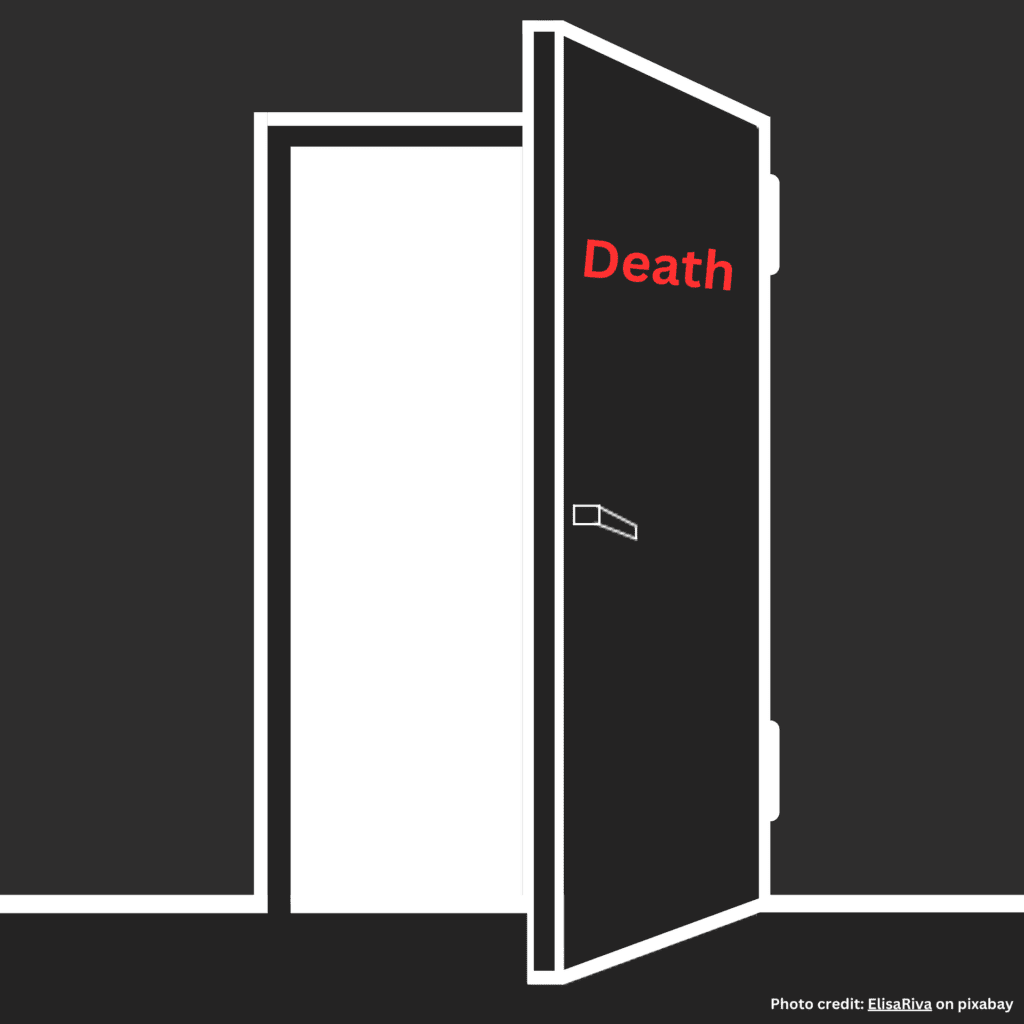
Ultimately, the Christian answer to fear is the resurrection. “Where, O death, is your victory? Where, O death, is your sting?” (1 Corinthians 15:55). If Christ is risen, then the worst thing that can happen – death – is not the end but a doorway.
This doesn’t make loss painless. Jesus wept at Lazarus’s tomb even though he was about to raise him. But it does rob death of ultimate terror. For believers, the fear of loved ones dying or of dying ourselves is met with the promise: “To live is Christ, to die is gain” (Philippians 1:21).
Paul could write from prison, facing execution, “I have learned the secret of being content in any and every situation… I can do all things through him who gives me strength” (Philippians 4:12-13). The secret wasn’t positive thinking. It was resurrection hope.
Practicing “Fear Not”
So practically, how do believers live “fear not”?

Saturate your mind with Scripture. You can’t believe what you don’t know. Read and memorize passages about God’s character, his promises, his faithfulness.
Pray honestly. Bring your fears to God. The Psalms model this – raw, honest, sometimes angry prayers that nonetheless end in trust. “Cast all your anxiety on him because he cares for you” (1 Peter 5:7).
Practice thanksgiving. Gratitude is fear’s antidote. When anxious, list specific things God has done. “Give thanks in all circumstances” (1 Thessalonians 5:18) retrains our attention.
Take reasonable action. Trust in God doesn’t mean passivity. Lock your doors, save money, see doctors, and engage civically. But don’t let action become anxiety in disguise. Do what you can, then rest in God for what you can’t control.
Live in community. We’re not meant to fight fear alone. “Encourage one another daily” (Hebrews 3:13). Share your fears; let others pray and remind you of truth.
Keep an eternal perspective. When this world feels terrifying, remember it’s not your final home. “Our citizenship is in heaven” (Philippians 3:20). This puts every temporal fear in perspective.
The Paradox
Here’s the paradox: believers who take “fear not” seriously often become the bravest, most clear-eyed people in frightening times. Not because they’re naive, but because they’ve found a security that circumstances can’t shake. They can acknowledge real threats without being controlled by them. They can grieve without despairing. They can act courageously because the worst-case scenario is not, ultimately, the worst thing.
In a world gripped by fear – of corruption, illness, collapse, violence – believers have access to a different kind of life. Not one free from trouble, but one anchored in a God who says, in the midst of every trouble: “I am with you. Do not be afraid.”
That’s not escapism. It’s reality – the deepest reality there is.

***

a
The beautiful Queen Esther lived in a time of turmoil and terror. But she looked to the Lord God of Israel to save her and all the Jews. God heard and answered the prayers of His people. Read Esther’s story in an ebook or listen to it on an audiobook.
a
a
a
Here are links to my blog indexes, so please click one and keep reading!
My Books, Workbooks, and Fun Books
Knowing the Unknowable One
Opening the Treasure Chest
Walking Heart-to-Heart with God
Walking Heart-to-Heart with Each Other
Fighting the Good Fight of Faith
Christian Mysteries: Why I Love Them!
List of Some Nonfiction Books You Don’t Want to Miss
Index of Assorted Topics