

Every February 14th, we exchange heart-shaped boxes of chocolate and bouquets wrapped in cellophane. We make reservations at crowded restaurants and buy cards covered in cartoon cupids. We’ve turned Valentine’s Day into a celebration of romance – roses and diamonds and sentimental declarations.
But here’s what we’ve forgotten: the day is named after a man who was executed.
St. Valentine – whoever he actually was, since history gives us several candidates – was beaten with clubs and beheaded on February 14th, around 269 AD, for defying imperial Rome. The early church commemorated him as a martyr. A witness. Someone who loved something more than his own life and paid the ultimate price for it.
Somewhere between the third century and the greeting card aisle at Walgreens, we lost the plot.
We took a day that commemorates death for the sake of love and turned it into a celebration that pretends love costs nothing more than $49.99 plus tax.
The Legends We’ve Sanitized
The historical details about St. Valentine are murky, typical for early church figures. But the legends that grew up around him all share a common thread: he defied power for the sake of love.
One tradition says Emperor Claudius II had banned marriage for young soldiers, believing single men made better warriors. Valentine continued performing marriage ceremonies in secret. When discovered, he was arrested.

Another legend claims that while imprisoned, Valentine fell in love with his jailer’s blind daughter, or healed her blindness, depending on which version you read. Before his execution, he allegedly wrote her a letter signed “Your Valentine,” giving birth to the tradition of Valentine’s Day cards.
The details may be apocryphal. But the core is consistent: Valentine was killed because he refused to let imperial power dictate the boundaries of love. He married couples the state forbade. He loved in a context that demanded compliance. He chose fidelity to love over safety.
And Rome killed him for it.
This is the man whose name adorns our chocolates and teddy bears. A man who understood that real love sometimes requires you to bleed.
The Love That Costs Everything
There’s something we’ve lost in our sanitized, commercialized version of love. We want love to be easy. Comfortable. The warm glow of candlelight dinners and weekend getaways. Love as enhancement to an already pleasant life.
But the deepest loves, the ones that actually matter, cost something.
The love of a parent sitting vigil in a hospital room with a sick child, watching hope and fear wage war across monitors and IV drips.
The love of a spouse caring for a partner with dementia, watching the person they married disappear by increments, choosing faithfulness when recognition is gone.
The love of a friend who shows up during the dark night of depression, sitting in silence because there are no words, staying when it would be easier to drift away.
The love of the foster parent who opens their home to traumatized children, absorbing their rage and grief, loving them toward healing even when it’s exhausting and thankless.
The love that adopts the orphan. Visits the prisoner. Welcomes the refugee. Sits with the dying. Forgives the unforgivable.
This kind of love doesn’t fit on a Hallmark card. It’s not photogenic. It doesn’t make for good Instagram content.
It’s the love that bleeds. That costs. That requires something of you that you’d rather not give.
It’s the love that looks a lot more like martyrdom than romance.
What Jesus Knew About Love
Jesus had a lot to say about love. But he didn’t talk about it the way we do.
He didn’t say, “Greater love has no one than this: that they find their soulmate and live happily ever after.”
He said, “Greater love has no one than this: to lay down one’s life for one’s friends.” (John 15:13)
Laying down your life. Not just romantically choosing someone, but dying to yourself for them. The language is violent. Costly. Terminal.
The night before his execution, Jesus told his disciples: “A new command I give you: Love one another. As I have loved you, so you must love one another.” (John 13:34)
As I have loved you.
And how did he love them? By washing their feet. By forgiving their betrayals. By sweating blood in a garden, praying for a cup to pass that wouldn’t pass. By enduring the cross.

Jesus’s definition of love isn’t “I’d die for you” as hyperbolic metaphor. It’s “I’m literally about to die for you, and this is what love looks like.”
The cross is the clearest picture we have of what love actually is. And it’s nothing like what the Valentine’s Day industrial complex wants to sell us.
The Martyrdom Hidden in Marriage
Even in romantic love, the kind we supposedly celebrate on Valentine’s Day, the real thing requires a kind of dying.
Marriage, when it’s working right, is a prolonged martyrdom of the self. Not in an unhealthy, codependent way. But in the sense that you’re constantly laying down your preferences, your convenience, your vision of how things should go, for the sake of another person.
You die to your desire to be right in the middle of an argument.
You die to your plans for a quiet evening when your spouse needs to talk.
You die to your fantasy of who you thought you were marrying and love the actual, flawed, complicated human you wake up next to.
You die to your ideal of what your sex life would be and work with the reality of mismatched libidos and bodies that age.
You die to your preference for peace and have the hard conversation anyway.
You die to your righteous indignation and forgive the thing you swore you’d never forgive.
This isn’t the death of your personhood or dignity. It’s the death of the tyranny of self. The daily choice to let love cost you something.
And here’s the paradox: this kind of dying is what makes you come alive. Just like the martyrs discovered. Just like Jesus promised. “Whoever wants to save their life will lose it, but whoever loses their life for my sake will find it.”
The couples who make it to fifty years and still genuinely love each other? They’ve died a thousand small deaths along the way. They’ve been martyrs to the marriage. And somehow, in all that dying, they found a kind of life that people who protect themselves never discover.
Love Beyond Romance
Of course, Valentine’s Day has become almost exclusively about romantic love. But the martyrs understood something bigger.
Real love – the kind worth dying for – extends far beyond your romantic partner.

It’s the love of the civil rights activist willing to be beaten and jailed for the freedom of people she’ll never meet.
The love of the doctor who goes to epidemic zones, knowing he might not come home.
The love of the teacher in the underfunded school who spends her own money on supplies and her weekends mentoring students who have no one else.
The love of the addict’s family member who sets boundaries that break her heart but might save his life.
The love of the Christian in the third century who refused to deny Christ even when it meant the lions or the sword.
This is St. Valentine’s kind of love. The kind that looks at the cost and pays it anyway. The kind that doesn’t calculate safety or convenience. The kind that says, “This is worth my life.”
The Question Valentine’s Day Should Ask
What if, instead of celebrating Valentine’s Day with candy and flowers, we let it ask us a harder question:
What are you willing to bleed for?
Not romantically, not metaphorically, but actually. What love in your life is worth genuine sacrifice? What relationship or cause or commitment would you pay a real cost for?
Who would you sit with in the cancer ward at 2 AM?
Who would you forgive even though it wrecks you?
What marriage would you fight for when divorce would be easier?
What child would you keep loving even when they hate you?
What truth would you defend even if it costs you your reputation?
What person would you run toward instead of away from?
The commercialized Valentine’s Day wants to sell us a version of love that requires nothing but a credit card. Flowers die in a week. Chocolate gets eaten. The warm glow fades.
But the love that St. Valentine died for – the love that Jesus demonstrated on the cross – that love is something else entirely. It’s fierce. Costly. Relentless. It pursues when pursuit is dangerous. It stays when staying hurts. It forgives when forgiveness seems impossible.
It’s the love that makes martyrs.
The Chocolate and the Cross
I’m not saying we should stop giving flowers or chocolates. Romance is good. Delight in your beloved is good. Celebrating love is good.
But maybe, on February 14th, we should remember that we’re celebrating something bigger and stranger than Hallmark wants us to know.
We’re commemorating a man who was beaten and beheaded because he wouldn’t let power dictate the terms of love.
We’re standing in a long tradition of people who understood that real love costs everything and decided it was worth it anyway.
We’re following a Savior who defined love not with poetry but with blood, who showed us that the deepest love looks like sacrifice, and who promised that this kind of dying is the only way to truly live.
So by all means, buy the roses. Make the reservation. Write the card.
But maybe this year, let Valentine’s Day ask you the harder question too.
What are you willing to die for?
Because until you can answer that, you don’t really know what love is.
And the man whose name is on this day – he knew.
He loved something more than his own survival.
And Rome killed him for it.
And the church has remembered him for seventeen hundred years.
That’s the kind of love worth celebrating.
Not in spite of the cost.
But because of it.

***
a
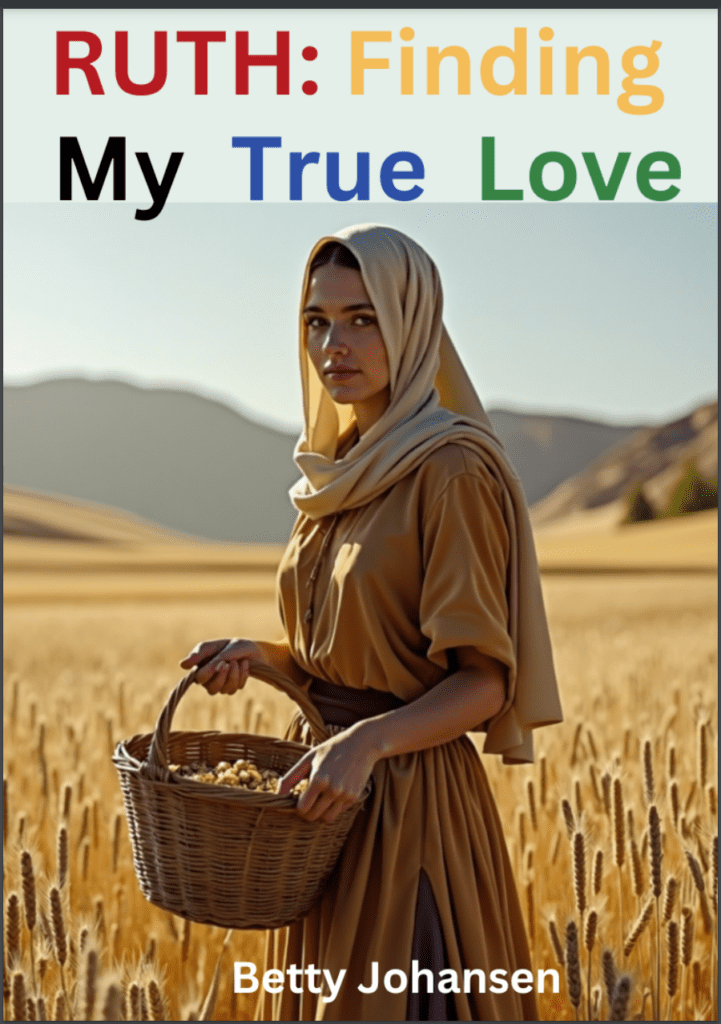
Ruth’s love story begins with her love for her mother-in-law and her mother-in-law’s God. It is because of these two great loves that she finds and marries the beloved man who will make her an ancestor of the Lord Jesus Christ. Read or listen to Ruth’s story in her own words.
a
a
Here are links to my blog indexes, so please click one and keep reading!
My Books, Workbooks, and Fun Books
Knowing the Unknowable One
Opening the Treasure Chest
Walking Heart-to-Heart with God
Walking Heart-to-Heart with Each Other
Fighting the Good Fight of Faith
Christian Mysteries: Why I Love Them!
List of Some Nonfiction Books You Don’t Want to Miss
Index of Assorted Topics
I love your blog.. very nice colors & theme.
Did you make this website yourself or did you hire someone to do it
for you? Plz answer back as I’m looking to design my own blog
and would like to find out where u got this from. thank
you
I’m so glad you like my blog! The website was created by Blue Host, and they also host it. Best wishes for success with your blog!