

Saying “thank you for your service” is a good start, but it often ends the conversation rather than opening one.
Veterans hear those five words constantly, and while the sentiment is appreciated, it rarely touches the weight they carry home from deployment. Scripture does something different. It doesn’t just acknowledge sacrifice; it speaks directly to the fear, guilt, sleepless nights, and quiet search for purpose that so many service members face after the uniform comes off. Some organizations have built entire ministries around this exact gap, pairing veterans with verses that address what gratitude alone cannot reach.
Key Takeaways
- “Thank you for your service” is appreciated but often feels generic to veterans who need deeper acknowledgment.
- Specific Bible verses like Joshua 1:9 and Psalm 34:18 speak directly to courage, grief, and the invisible wounds of war.
- Scripture offers language for PTSD, moral injury, and the difficult transition to civilian life that everyday conversation often misses.
- Later in this article, you’ll find practical ways to share these verses with a veteran in your life without making the moment feel forced.
Why “Thank You” Alone Doesn’t Reach the Soul of a Veteran
Gratitude is important, but it has limits. A veteran can hear “thank you” a thousand times and still feel unseen, because the phrase doesn’t acknowledge the specific battles they fight inside their own minds long after returning home.
What most civilians don’t realize is that military service changes how a person processes fear, loss, and identity. A simple expression of thanks doesn’t address any of that. It’s polite, but it’s surface-level, and veterans often sense the difference between genuine understanding and social obligation.
The Gap Between Gratitude and Understanding
Gratitude says, “I appreciate what you did.” Understanding says, “I see what it cost you.” That’s the gap scripture fills. The Bible doesn’t shy away from war, suffering, or the complicated emotions that follow conflict. It names them directly, which gives veterans something words of thanks simply can’t: validation.
Consider the Psalms. David, a warrior-king, wrote openly about anguish, fear, and feeling abandoned by God during battle. That kind of raw honesty resonates with veterans in a way that polite thank-yous never will.
What Scripture Offers That Words Cannot
Scripture provides three things a simple “thank you” cannot: language for pain, a promise of presence, and a path toward purpose. These aren’t abstract ideas. They’re specific verses that have comforted soldiers for centuries, from ancient battlefields to modern deployments in war zones and troubled areas globally.
A verse like Deuteronomy 31:6, which tells believers that God “will never leave you nor forsake you,” isn’t just a nice sentiment. For a veteran who felt isolated in a foxhole or abandoned during a difficult homecoming, that promise carries real weight.
7 Bible Verses That Speak Directly to a Veteran’s Heart
Each of these verses addresses a specific struggle common among those who’ve served. Rather than offering generic comfort, they speak with precision to fear, grief, identity, and healing.
1. Joshua 1:9 — Courage in the Face of Fear
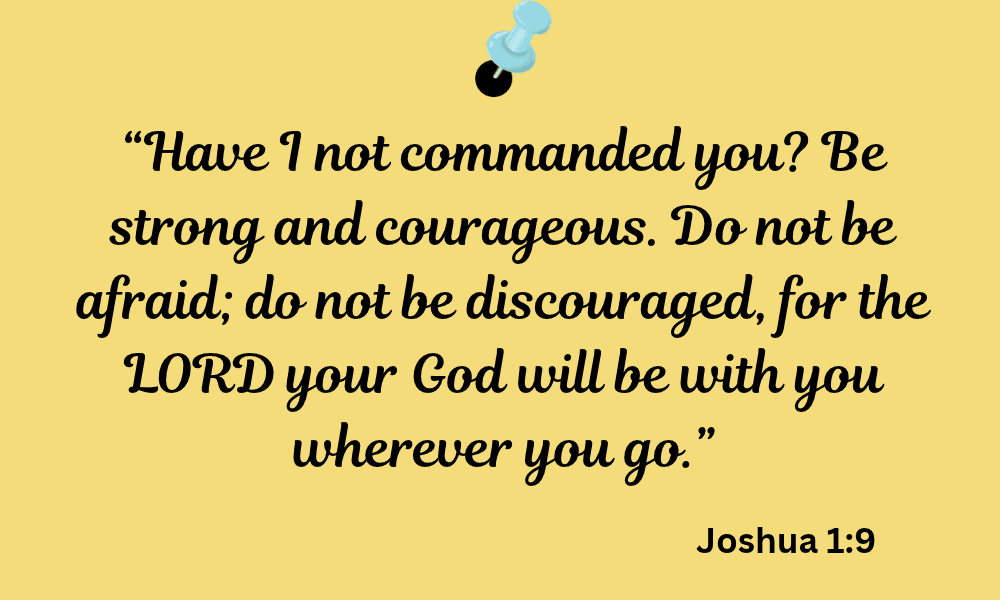
“Have I not commanded you? Be strong and courageous. Do not be afraid; do not be discouraged, for the Lord your God will be with you wherever you go.” This verse was spoken to Joshua as he prepared to lead Israel into unfamiliar, dangerous territory. It’s a verse many chaplains have shared with troops before deployment, precisely because it acknowledges fear without letting it win.
2. Psalm 23 — Walking Through Dark Valleys
“Even though I walk through the darkest valley, I will fear no evil, for you are with me.” This psalm doesn’t pretend the valley isn’t dark. It acknowledges danger and death directly, which is why it’s been read at military funerals and recited by soldiers under fire for generations. The imagery of walking through rather than around the valley matters; it implies survival, not avoidance.

3. Isaiah 41:10 — A Promise of Strength and Support
“So do not fear, for I am with you; do not be dismayed, for I am your God. I will strengthen you and help you; I will uphold you with my righteous right hand.” This verse works almost like a battlefield briefing from God himself. It names the fear, then immediately answers it with three distinct promises: presence, strength, and support. For a veteran facing a new kind of battle at home, that structure feels familiar and grounding.
4. Psalm 34:18 — Comfort for the Brokenhearted
“The Lord is close to the brokenhearted and saves those who are crushed in spirit.” This verse doesn’t ask anyone to perform strength they don’t feel. It simply states that proximity to God increases with proximity to pain, which reframes brokenness as a place where connection happens rather than a sign of failure.
5. 2 Timothy 1:7 — A Spirit of Power, Not Fear
“For God has not given us a spirit of fear, but of power and of love and of a sound mind.” Veterans dealing with hypervigilance or anxiety often describe feeling like their mind is working against them. This verse offers a different identity: one rooted in power, love, and clarity rather than fear.
6. Romans 8:18 — Present Suffering Versus Future Glory
“I consider that our present sufferings are not worth comparing with the glory that will be revealed in us.” This verse doesn’t dismiss pain. It places suffering on a timeline, suggesting that current hardship isn’t the final chapter. For veterans still in the thick of recovery, that forward-looking perspective can matter more than any present-tense comfort.
7. John 15:13 — The Greatest Love of All
“Greater love has no one than this: to lay down one’s life for one’s friends.” This verse often gets read at memorial services, but it carries different weight for living veterans. It names what they did, or what they were willing to do, in theological terms that honor the magnitude of the choice without romanticizing it.
Many veterans say this is the one verse that finally makes them feel understood, not just thanked. It doesn’t ask them to explain their service; it simply recognizes it as an act of love, which is often the truest description available.
How Scripture Speaks to the Invisible Wounds of War
Physical scars get noticed. Invisible ones rarely do, which is part of why PTSD and moral injury remain so isolating for so many veterans.
Finding Words for PTSD and Moral Injury

Moral injury differs from PTSD in a specific way: it’s not just fear-based trauma; it’s the weight of having done or witnessed something that conflicts with a person’s own sense of right and wrong. Scripture has language for this too. Psalm 51, written by David after a profound moral failure, doesn’t minimize guilt or rush past it. It sits in the discomfort, then moves toward restoration.
That sequence matters. Veterans dealing with moral injury often need permission to feel the weight of what happened before they can move toward healing. Scripture that skips straight to forgiveness without acknowledging the injury first tends to feel hollow. The psalms rarely make that mistake.
Scripture on Guilt, Forgiveness, and Letting Go
Guilt and shame operate differently in the body and mind, and veterans often carry both simultaneously. Guilt says “I did something wrong.” Shame says, “I am something wrong.” Scripture addresses both, but differently.
“If we confess our sins, he is faithful and just and will forgive us our sins and purify us from all unrighteousness.” — 1 John 1:9
This verse speaks directly to guilt, offering a clear process: confession leads to forgiveness. For shame, Romans 8:1 offers something different: “Therefore, there is now no condemnation for those who are in Christ Jesus.” That’s not about actions anymore; it’s about identity, which is exactly where shame tends to live.
Verses That Address Sleepless Nights and Anxious Thoughts
Psalm 4:8 reads, “In peace I will lie down and sleep, for you alone, Lord, make me dwell in safety.” For veterans dealing with insomnia or hypervigilance at night, that verse names a specific struggle most people never think to address in scripture. It doesn’t promise an easy fix; it offers a presence to rest in, even when sleep feels impossible.
Scripture for the Hard Transition Back to Civilian Life
Military service ends, but the adjustment afterward can stretch on for years. Many veterans describe feeling more lost in civilian life than they ever did overseas, partly because the structure, purpose, and camaraderie of military service disappear all at once.
Scripture speaks to this disorientation with surprising specificity. The story of Israel wandering in the wilderness after leaving Egypt mirrors this transition closely: freedom achieved, but identity still forming, purpose still unclear.
Several passages tend to resonate most during this season of transition:
- Jeremiah 29:11 — “For I know the plans I have for you,” declares the Lord, “plans to prosper you and not to harm you, to give you hope and a future.”
- Philippians 4:13 — “I can do all this through him who gives me strength.”
- Proverbs 3:5-6 — “Trust in the Lord with all your heart and lean not on your own understanding.”
- Isaiah 43:19 — “See, I am doing a new thing! Now it springs up; do you not perceive it?”
Finding New Purpose After Service
Military life runs on mission. Civilian life often doesn’t offer the same clarity, which leaves many veterans feeling adrift. Isaiah 43:19 speaks directly into that gap, suggesting that a new mission is forming even when it’s not yet visible. That’s a hard truth to sit with, but it’s an honest one.
Verses on Identity Beyond the Uniform
For years, a veteran’s identity was tied to rank, unit, and mission. Once that uniform comes off, the question “who am I now?” can feel unanswerable. Scripture offers a different anchor. Galatians 2:20 states, “I have been crucified with Christ, and I no longer live, but Christ lives in me.” That’s not a replacement identity pulled from a job title or a new role; it’s a foundation that doesn’t depend on external circumstances at all.
Trusting God With an Uncertain Future
Proverbs 3:5-6 asks for something difficult: trust without full understanding. For veterans used to having clear orders and defined objectives, that kind of open-ended trust can feel uncomfortable. Yet it’s often exactly what’s needed during a season where the next step isn’t obvious.
How Families Can Use Scripture to Support a Veteran
Family members often want to help but don’t know how. Scripture can offer a bridge when words run short.
Starting Spiritual Conversations Without Pressure
Timing matters more than most people realize. Bringing up Scripture during a tense moment or right after a difficult conversation about deployment can feel like pressure rather than support. Instead, sharing a verse during a calm moment, perhaps over coffee or during a quiet evening, tends to land better.
It also helps to frame it as an offering rather than an instruction. Saying “I read this and thought of you” invites conversation. Saying “you should read this” can feel like a directive, which often shuts the door rather than opening it.
Simple Ways to Share a Verse That Matters
A handwritten verse tucked into a care package carries more weight than a text message ever could. Something about the physical act of writing it out, choosing the words carefully, signals that the message mattered enough to slow down for. Many military families have found that a verse written on a notecard, left somewhere unexpected like a jacket pocket or a truck visor, gets read and reread in ways a quick message never does.
Another approach is simply asking. “Is there a verse that’s helped you before?” opens a door without forcing anyone through it. Some veterans already have a passage they lean on, maybe one a chaplain shared downrange, and asking about it shows interest in their story rather than assuming you know what they need to hear.
Practical Ways to Carry These Verses Daily
Scripture works best when it’s accessible in the moments it’s needed most, not buried in a Bible on a shelf. For veterans dealing with sudden anxiety, flashbacks, or grief, having a verse within arm’s reach can make a real difference in how that moment is processed.
Writing Scripture Cards for Your Wallet or Dashboard
Index cards work well for this. Writing out two or three verses, laminating them if possible, and keeping them in a wallet, glove compartment, or gym bag means they’re there during a panic attack at a stoplight or a rough morning before work. The goal isn’t memorization for its own sake. It’s having something true and steady to return to when thoughts start spiraling.
Several veterans’ support groups distribute printed scripture cards specifically designed for this purpose, often pairing a verse with a brief explanation of why it was chosen for that particular struggle.
| Struggle | Verse | Reference |
|---|---|---|
| Anxiety | “Cast all your anxiety on him because he cares for you.” | 1 Peter 5:7 |
| Anger | “In your anger do not sin.” Do not let the sun go down while you are still angry.” | Ephesians 4:26 |
| Grief | “Blessed are those who mourn, for they will be comforted.” | Matthew 5:4 |
| Isolation | “Never will I leave you; never will I forsake you.” | Hebrews 13:5 |
Keeping a card like this nearby means the right words are already chosen before the hard moment arrives. That preparation matters, because searching for the right verse in the middle of a panic attack rarely works out well.
Using Verses During Moments of Anger or Grief
Anger often shows up as the surface emotion covering something deeper, usually grief, fear, or helplessness. Ephesians 4:26 doesn’t ask veterans to pretend anger away. It simply asks that it not fester past sundown, which is a realistic, achievable boundary rather than an impossible standard.
Grief works differently and often needs more space. Matthew 5:4 doesn’t rush toward resolution; it simply promises comfort will come. For a veteran grieving a fallen friend, sometimes the most helpful scripture is the kind that doesn’t try to fix anything at all.
Frequently Asked Questions
These are some of the most common questions families and friends ask when looking for the right words to support a veteran spiritually.
What Bible verse is best for a veteran struggling with PTSD?
Psalm 34:18 tends to resonate most, since it directly addresses brokenness without requiring a veteran to hide or minimize what they’re feeling. Isaiah 41:10 works well too, particularly for moments of acute fear or panic, since it names the fear before offering reassurance.
There’s no single “correct” verse for PTSD, since each veteran’s experience differs. What matters more is choosing a verse that acknowledges the struggle honestly rather than glossing over it.
Is there a patron verse for soldiers in the Bible?
Joshua 1:9 functions almost like a patron verse for those in military service, given its direct address to someone preparing for a dangerous mission. Ephesians 6:10-18, which describes the “armor of God,” is another passage frequently associated with soldiers, since it uses military imagery (breastplate, shield, sword) to describe spiritual readiness.
Many military chaplains reference both passages during deployment ceremonies, which has cemented their association with service members over time.
How can I comfort a veteran without sounding preachy?
Tone matters more than content. Sharing a verse as a personal reflection, something like “this verse has stuck with me lately,” feels different than quoting scripture as a directive or correction.
“I’m not saying this to fix you. I just read this and thought you might connect with it.”
That kind of framing removes pressure from the moment. It also respects the veteran’s autonomy to take the verse or leave it, which tends to make them more receptive rather than less.
What does the Bible say about honoring those who served?
Romans 13:7 instructs believers to “give to everyone what you owe them: if you owe taxes, pay taxes; if revenue, then revenue; if respect, then respect; if honor, then honor.” While not written specifically about military service, this verse establishes honor as a spiritual obligation, not just a social nicety.
Can scripture really help with survivor’s guilt?
Scripture doesn’t erase survivor’s guilt, but it does offer language for it that many veterans find validating. Romans 8:1, which states there is “no condemnation for those who are in Christ Jesus,” speaks directly to the self-blame that often accompanies survival when others didn’t make it home.
Pairing that verse with ongoing support, whether through counseling, veteran support groups, or pastoral care, tends to work better than scripture alone. Survivor’s guilt runs deep, and while a single verse can offer a foothold, lasting healing usually requires sustained support over time.
The Real Thank You Is Pointing Them to Something Greater
Saying “thank you for your service” acknowledges a debt. Sharing scripture acknowledges a person, their pain, their fear, their need for purpose, and that distinction changes everything about how gratitude actually lands. Veterans deserve more than a polite phrase; they deserve words that meet them where they actually are.


Here are links to my blog indexes, so please click one and keep reading!
My Books, Workbooks, and Fun Books
Knowing the Unknowable One
Opening the Treasure Chest
Walking Heart-to-Heart with God
Walking Heart-to-Heart with Each Other
Fighting the Good Fight of Faith
Christian Mysteries: Why I Love Them!
List of Some Nonfiction Books You Don’t Want to Miss
Index of Assorted Topics