
Key Takeaways
- Voddie Baucham argues that biblical justice is rooted in God’s character and commandments, while social justice often relies on subjective experiences and cultural narratives
- Baucham’s critique of modern social justice movements stems from his belief that they create new “fault lines” within Christianity that can undermine gospel unity
- Critical Race Theory, according to Baucham, functions as a competing worldview that redefines fundamental Christian concepts like sin, salvation, and reconciliation
- Scripture offers comprehensive guidance for addressing genuine injustice without adopting secular ideologies, as highlighted by Baucham’s Biblical Justice Initiative
- Christians can pursue authentic justice while maintaining doctrinal integrity by grounding their approach in Scripture rather than contemporary social theories
The clash between biblical principles and modern social justice movements has created one of the most significant theological battlegrounds in today’s Church. Few voices have been as clear or controversial in this debate as Dr. Voddie Baucham, whose unflinching stance has drawn both fierce criticism and devoted support. His approach provides Christians with a framework for addressing legitimate concerns about injustice while remaining faithful to Scripture’s authority. The Biblical Justice Initiative founded by Baucham seeks to equip believers with tools to navigate these complex waters without compromising biblical truth.
At the heart of Baucham’s perspective lies a fundamental distinction: justice defined by God’s unchanging character versus justice shaped by shifting cultural values. This distinction isn’t merely academic—it has profound implications for how Christians engage with pressing social issues. “The problem isn’t that Christians want justice,” Baucham often notes. “The problem is that many have abandoned biblical justice for a counterfeit.”
Article-at-a-Glance

This article examines Voddie Baucham’s distinctive approach to questions of justice, exploring how his biblical perspective challenges popular narratives. We’ll investigate why he believes many social justice movements represent a significant threat to gospel unity, how he distinguishes biblical justice from its contemporary counterparts, and what practical alternatives he offers. By understanding Baucham’s critique, Christians can develop more biblically faithful responses to genuine injustice while avoiding ideological pitfalls that may compromise their witness.
Baucham’s voice matters because he speaks from a unique vantage point—a black pastor and theologian whose personal experiences with racism don’t lead him to embrace prevailing social justice narratives. Instead, his commitment to biblical sufficiency drives him to evaluate all cultural movements through a scriptural lens, even when doing so puts him at odds with popular sentiment. This approach exemplifies how faithful Christians can address difficult cultural issues without surrendering biblical authority.
Why Voddie Baucham Challenges Modern Social Justice Movements
Voddie Baucham’s critique of contemporary social justice movements stems from his conviction that they often function as comprehensive worldviews rather than isolated political positions. In his book Fault Lines, he argues that these movements don’t merely address specific injustices but offer alternative explanations for human nature, sin, and redemption that compete with biblical teaching. “What we’re dealing with is not just a series of isolated ideas,” Baucham explains, “but a comprehensive worldview that seeks to explain all of reality through the lens of power dynamics and oppression.”
His concerns center on how these movements redefine fundamental concepts. Terms like “justice,” “racism,” and “equality” undergo subtle but significant shifts in meaning when filtered through critical theory. For instance, Baucham points out that “racism” is increasingly defined not as personal prejudice based on race but as a systemic reality that exists independently of individual intentions. This redefinition, he argues, makes racism an almost mystical force that can be present even when no one harbors racist attitudes—a concept he finds deeply problematic and unbiblical.
Perhaps most troubling to Baucham is how social justice ideologies can create new categories of sin and virtue that aren’t derived from Scripture. “When we accept definitions of sin that come from outside God’s Word,” he warns, “we implicitly deny the sufficiency of Scripture.” This concern isn’t merely theoretical—it affects how Christians understand salvation, repentance, and reconciliation. When concepts like “white privilege” or “internalized oppression” become moral categories requiring confession and repentance, Baucham sees a dangerous shift away from biblical authority toward cultural authority.
Biblical Justice vs. Social Justice: Understanding the Key Differences
The foundation of Baucham’s argument rests on distinguishing biblical justice from its contemporary counterparts. Biblical justice, he explains, flows directly from God’s character and is revealed in His law. It is impartial, treating the poor and rich alike without favoritism (Leviticus 19:15). It focuses on individual actions rather than group identity, condemning the practice of punishing children for their parents’ sins (Deuteronomy 24:16). And it demands evidence rather than mere accusation before pronouncing judgment (Deuteronomy 19:15-21).
In contrast, Baucham argues that modern social justice often operates from different premises. Rather than being rooted in God’s unchanging character, it evolves with cultural values. Instead of treating individuals impartially, it frequently categorizes people by group identity, attributing moral status based on membership in “oppressor” or “oppressed” groups. Perhaps most troublingly, it sometimes dispenses with the need for specific evidence of wrongdoing, instead assuming guilt based on historical patterns or group association.
“Biblical justice is never divorced from righteousness. The two concepts are so intertwined in Scripture that they’re often used interchangeably. This means true justice must align with God’s moral law rather than merely seeking favorable outcomes for disadvantaged groups.” – Voddie Baucham
God’s Standard of Justice in Scripture
Scripture provides a comprehensive framework for understanding justice that transcends modern categories. The Hebrew word “mishpat,” commonly translated as “justice,” appears over 200 times in the Old Testament and refers to equitable treatment according to God’s law. It encompasses both procedural justice (fair processes) and distributive justice (fair outcomes), while remaining firmly anchored in God’s revealed will. Baucham emphasizes that biblical justice is inseparable from righteousness—the two concepts are frequently paired in Scripture through the Hebrew word “tzedek.” This connection reminds us that justice isn’t merely about achieving particular social outcomes but about alignment with God’s moral standards.
How Modern Social Justice Redefines Truth and Morality
A central concern in Baucham’s critique is how social justice frameworks often relativize truth by elevating personal experience above objective reality. “Lived experience” becomes the ultimate authority, with phrases like “speaking your truth” replacing the pursuit of objective truth. This epistemological shift represents a fundamental departure from the biblical understanding that truth exists independently of our perceptions or experiences. When personal narratives become unquestionable simply because they represent someone’s “lived experience,” Baucham argues we’ve abandoned the biblical command to “test everything” (1 Thessalonians 5:21).
This redefinition extends to morality itself. In many social justice frameworks, moral judgment is applied unevenly based on one’s position in perceived power hierarchies. Actions condemned when performed by “oppressor” groups may be excused or even celebrated when performed by “oppressed” groups. Baucham points to this inconsistency as evidence that such movements are not truly pursuing biblical justice, which applies God’s law impartially to all people regardless of their social standing or group identity.
Perhaps most concerning to Baucham is the way these movements often function religiously, complete with their own doctrines of sin (privilege, fragility), salvation (becoming “woke”), and evangelistic fervor. “What we’re seeing,” he explains, “isn’t just a political movement but a comprehensive worldview with religious characteristics that directly compete with Christian doctrine.” This religious nature makes uncritical acceptance particularly dangerous for believers, as it can subtly reshape their understanding of fundamental gospel truths.
The Danger of Replacing Biblical Authority with Lived Experience
When “lived experience” becomes the primary lens through which we interpret reality, Baucham warns that Christians risk undermining the sufficiency and authority of Scripture. The Bible claims to provide “everything we need for life and godliness” (2 Peter 1:3), including frameworks for understanding injustice and pursuing reconciliation. By elevating subjective experience above Scripture, believers inadvertently adopt a post-modern epistemology that stands at odds with biblical revelation.
This shift doesn’t merely affect abstract theological concepts—it transforms how Christians navigate practical ethical questions. When Scripture’s clear teaching conflicts with prevailing cultural narratives about justice, which authority will believers ultimately follow? Baucham challenges Christians to consider whether they’ve unconsciously adopted frameworks that place human wisdom above divine revelation, particularly in emotionally charged conversations about race and justice.
Critical Race Theory and Christianity: Baucham’s Critique
At the center of Baucham’s concerns stands Critical Race Theory (CRT), which he describes as “a worldview that is fundamentally incompatible with Christianity.” While acknowledging that CRT correctly identifies racism as sinful and recognizes the reality of systemic injustice, Baucham argues that its foundational assumptions and prescribed solutions conflict with biblical teaching. CRT’s focus on power dynamics as the primary lens for understanding human relationships differs markedly from Scripture’s emphasis on sin, redemption, and reconciliation through Christ.
Baucham contends that CRT’s analytical tools lead inevitably to conclusions that contradict biblical anthropology. Where Scripture teaches the fundamental unity of humanity as image-bearers of God, CRT often emphasizes unbridgeable racial experiences. Where the Bible proclaims the possibility of genuine reconciliation through Christ, CRT sometimes suggests that certain racial divides can never be fully overcome. And where Christian teaching emphasizes personal moral responsibility, CRT often focuses on group identity and complicity in systems.
The Religious Nature of Critical Social Justice
Baucham frequently describes Critical Social Justice as functioning like a religion, complete with its own doctrines, liturgies, and conversion experiences. He points to the language of “awakening” (becoming “woke”) and the confessional nature of “privilege acknowledgment” as evidence of its religious character. This religious dimension makes it particularly problematic for Christians, as it doesn’t present itself merely as a political position but as a comprehensive framework for understanding human experience—a role that should be filled by Scripture alone.

- Unquestionable doctrines that cannot be challenged (systemic racism, white privilege)
- Original sin (whiteness) that requires perpetual repentance
- Priestly class (oppressed groups) whose voices must be elevated and never questioned
- Sacrificial offering (becoming “allies” who amplify preferred narratives)
- Evangelistic zeal to convert others to the cause
This religious character explains why disagreements about social justice often generate such intense emotional reactions. “We’re not merely dealing with political differences,” Baucham explains, “but with competing faith commitments.” Understanding this helps explain why discussions about racial justice can quickly become so divisive within Christian communities—they often involve deeper questions about ultimate authority and worldview than participants initially realize.
Opposing Worldviews: Biblical Creation vs. Critical Theory
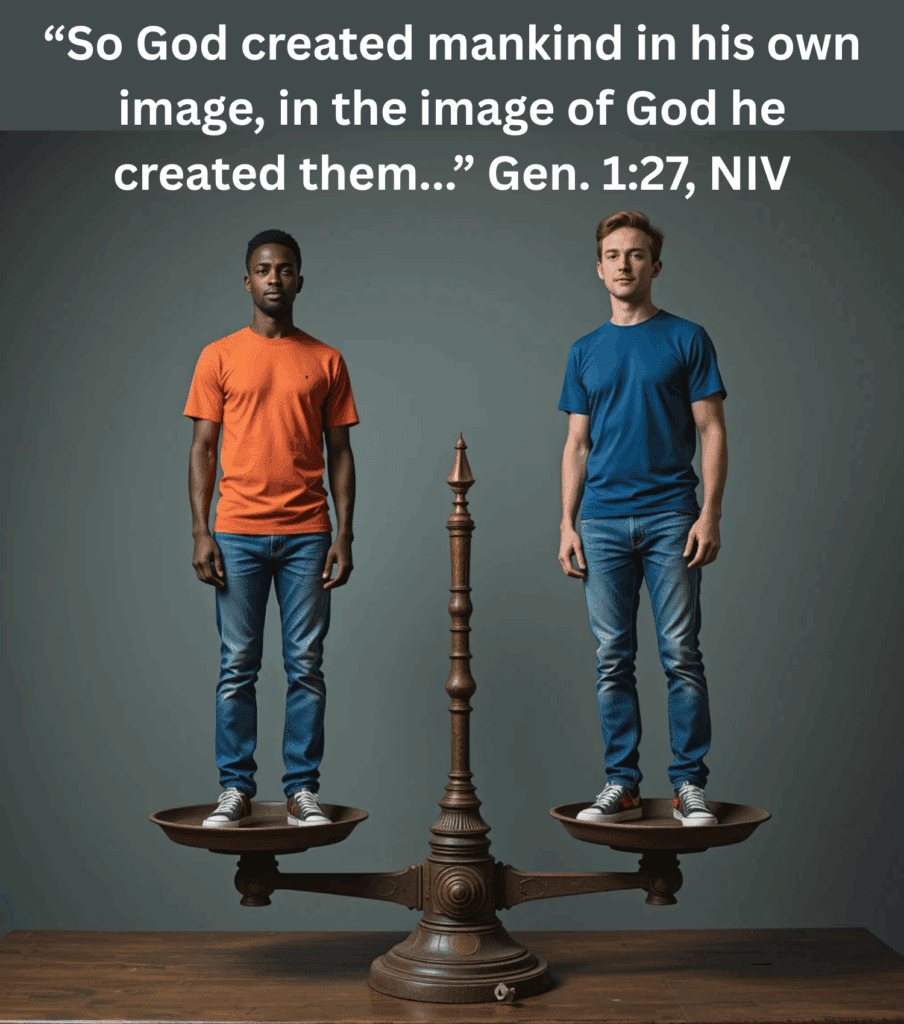
At the foundation of Baucham’s critique lies a contrast between how Christianity and critical theories understand human identity. Christianity begins with creation—humans made in God’s image with inherent dignity regardless of social location. Critical theories, by contrast, often begin with social construction—identity formed primarily through power relationships and group dynamics. This starting point leads to fundamentally different conclusions about how to address injustice.
Where Christianity sees reconciliation as possible through Christ’s atoning work, critical theories sometimes suggest that certain identity-based divisions can never be fully overcome. The biblical narrative of creation, fall, redemption, and restoration offers hope for genuine healing of social divisions, while some applications of critical theory imply that power imbalances will always define human relationships. This difference isn’t merely academic—it shapes how Christians approach practical questions of justice and reconciliation in their communities.
Why Baucham Calls CRT “Poisonous”

Baucham’s strong language about CRT stems from his concern that it fundamentally reorients how Christians understand sin, salvation, and human identity. Rather than seeing racism as one manifestation of humanity’s fallen nature requiring Christ’s redemption, CRT often presents it as a unique form of evil requiring its own particular solution. This reframing, Baucham argues, subtly shifts focus away from the gospel’s power to transform hearts and toward institutional reforms and power redistribution as the primary means of addressing injustice.
The Problem with “White Guilt” and Collective Sin
One of Baucham’s most pointed criticisms addresses the concept of “white guilt” – the notion that all white people bear responsibility for historical and ongoing racial injustice regardless of their personal actions or beliefs. This concept, he argues, contradicts the biblical understanding of sin as individual moral responsibility. Scripture consistently teaches that guilt is not transferred across racial or generational lines: “The son shall not suffer for the iniquity of the father, nor the father suffer for the iniquity of the son” (Ezekiel 18:20).
Baucham sees the emphasis on collective guilt as particularly problematic because it offers no path to genuine forgiveness or reconciliation. Unlike biblical repentance, which leads to restoration through Christ’s atoning work, confessions of “white privilege” or “complicity in systemic racism” often lead only to ongoing penance without resolution. “What we’re seeing isn’t genuine reconciliation,” Baucham observes, “but a never-ending cycle of accusation and confession that doesn’t bring healing because it’s not rooted in the gospel.”
This approach, he warns, actually undermines racial harmony by essentializing racial differences and making reconciliation conceptually impossible. When people are perpetually defined by their racial group’s historical position, the biblical vision of unity in Christ—where there is “neither Jew nor Greek” (Galatians 3:28)—becomes unattainable. True healing requires addressing specific injustices while affirming our shared humanity and the possibility of genuine forgiveness through Christ.
The Sufficiency of Scripture for Addressing Injustice
Central to Baucham’s perspective is his unwavering commitment to the sufficiency of Scripture. He argues that the Bible provides comprehensive guidance for identifying and addressing injustice without requiring supplementation from secular ideologies. From the Mosaic law’s protection of vulnerable groups to the prophets’ fierce denunciations of exploitation and the New Testament’s vision of reconciliation, Scripture offers a robust framework for pursuing genuine justice.
This commitment to biblical sufficiency doesn’t mean ignoring social realities or dismissing empirical evidence. Rather, it means interpreting all data and experiences through the lens of Scripture rather than interpreting Scripture through contemporary ideological frameworks. “The question isn’t whether we should care about injustice,” Baucham emphasizes. “The question is whether we need critical theory to tell us what justice is when God has already spoken clearly on the matter.”
Why Baucham Believes the Bible Is Enough
Baucham grounds his confidence in scriptural sufficiency in passages like 2 Timothy 3:16-17, which declares that Scripture equips believers “for every good work”—including the work of pursuing justice. This sufficiency extends beyond personal piety to addressing complex social issues. The Bible speaks directly to economic exploitation (Amos 2:6-7), partiality in judgment (James 2:1-13), ethnic prejudice (Acts 10:34-35), and the proper use of power (Matthew 20:25-28)—providing principles that can be applied to contemporary challenges.
This doesn’t mean Scripture offers simple formulas for complex policy questions. Rather, it provides the moral and conceptual framework through which Christians can evaluate competing claims and approaches. Baucham argues that when believers supplement Scripture with critical theories that fundamentally redefine concepts like justice, oppression, and reconciliation, they implicitly deny the Bible’s sufficiency and risk distorting its message. For more insights, you can explore his views in Fault Lines.
Biblical Examples of Confronting Real Oppression
Scripture doesn’t shy away from confronting genuine injustice. The Old Testament prophets fiercely condemned the exploitation of the poor, the perversion of justice in courts, and the abuse of power by the privileged. Jesus himself challenged religious hypocrisy and stood with the marginalized. The early church modeled radical community that transcended ethnic and social boundaries. Baucham points to these examples as evidence that Christians have robust biblical resources for addressing injustice without importing secular frameworks.
What distinguishes biblical approaches to injustice, in Baucham’s view, is their consistent grounding in God’s revealed character rather than changing cultural standards. The prophets appealed to God’s law, not contemporary consensus, when calling Israel to account. Jesus challenged cultural assumptions of his day by appealing to divine authority rather than prevailing opinion. This God-centered approach provides a fixed standard for evaluating claims about justice that transcends cultural shifts and political agendas.
How Scripture Defines True Reconciliation
Perhaps most importantly, Baucham emphasizes that Scripture offers a vision of reconciliation fundamentally different from that found in many social justice movements. Biblical reconciliation begins with a restored relationship with God through Christ, which then overflows into restored human relationships. It addresses both personal prejudice and unjust systems but recognizes that lasting transformation requires heart change that only the gospel can produce.
The Bible presents reconciliation as not merely possible but as already accomplished in Christ, who “has broken down in his flesh the dividing wall of hostility” between previously hostile groups (Ephesians 2:14). This accomplished reality becomes increasingly manifest as believers live out their new identity in Christ. Rather than defining people permanently by their racial or social location, Scripture calls believers to find their primary identity in Christ, where old divisions lose their defining power.
Practical Steps for Pursuing Biblical Justice
Baucham doesn’t merely critique contemporary approaches to justice—he offers constructive alternatives rooted in Scripture. He emphasizes that biblical justice involves both personal righteousness and structural fairness, addressing both heart attitudes and systemic issues. The difference lies not in whether Christians should care about justice but in how they conceptualize and pursue it.
At the heart of Baucham’s approach is the insistence that genuine justice flows from gospel transformation rather than political activism alone. While not dismissing the importance of policy changes, he argues that lasting justice requires changed hearts that only Christ can produce. This perspective shapes how Christians engage social issues, leading them to prioritize the proclamation of the gospel alongside practical efforts to address specific injustices.

Start with Gospel-Centered Relationships
Baucham emphasizes that genuine reconciliation begins not with abstract discussions about systemic issues but with concrete relationships within the body of Christ. He challenges churches to pursue authentic community across racial and social lines, demonstrating the reconciling power of the gospel in visible ways. This lived reality becomes both a testimony to the world and the context in which difficult conversations about justice can occur most productively.
These relationships must be grounded in shared commitment to biblical authority rather than shared political perspectives. Baucham warns against confusing gospel unity (based on common faith in Christ) with political uniformity (based on agreement about specific policies or approaches). Christians can and should disagree about particular strategies for addressing injustice while maintaining unity around the gospel and commitment to biblical standards of justice.
Address Legitimate Concerns Without Compromising Truth
Baucham acknowledges that social justice movements often identify genuine problems requiring Christian attention. Racism exists and should be condemned. Historical injustices have ongoing consequences that may require redress. Systems can perpetuate unfairness even when individual participants harbor no prejudice. Christians should lead in addressing these realities rather than dismissing or minimizing them.
The key distinction lies in how believers frame and address these concerns. Rather than adopting wholesale the assumptions and language of secular movements, Christians should evaluate specific claims and proposals against Scripture’s teaching. This discerning approach allows believers to affirm what is true in contemporary analyses while rejecting elements that contradict biblical teaching.
5 Questions to Ask When Evaluating Social Justice Claims
- Does this perspective align with Scripture’s teaching about human nature, sin, and redemption?
- Does it acknowledge both individual responsibility and structural factors in addressing injustice?
- Does it offer genuine hope for reconciliation rather than perpetual division?
- Does it distinguish between biblical commands and political preferences?
- Does it ultimately point people toward or away from the gospel of Jesus Christ?
How Churches Can Respond to Racial Division
Baucham offers several practical suggestions for churches seeking to address racial division from a biblical perspective. First, churches should teach clearly about the biblical understanding of human dignity, justice, and reconciliation, equipping members to evaluate cultural narratives biblically. Second, congregations should pursue genuine diversity not through programmatic initiatives but through faithful gospel ministry that welcomes all people. Third, church leaders should model how to have difficult conversations about sensitive issues with both grace and truth, neither avoiding uncomfortable topics nor compromising biblical fidelity.
Perhaps most importantly, Baucham encourages churches to demonstrate the reconciling power of the gospel by building genuine community across racial and social boundaries. This lived testimony speaks more powerfully than any statement or program, showing the world that Christ creates a new humanity that transcends cultural divisions. “The most radical thing the church can do,” Baucham often says, “is to be the church—a community where reconciliation is not just talked about but experienced.”
The Cost of Standing for Biblical Truth in Cultural Controversies
Baucham doesn’t minimize the personal cost of taking countercultural positions on issues of race and justice. As someone who has experienced significant criticism for his views, he understands the temptation to remain silent on controversial topics. Yet he argues that theological clarity on these issues is worth the relational discomfort and public criticism it often generates. The stakes are too high—involving the gospel itself—to surrender biblical truth for temporary peace.
Baucham’s Personal Experience with Criticism
As a black theologian challenging prevailing narratives about race, Baucham has faced particularly harsh criticism. He’s been called a “racial turncoat,” accused of denying his own experiences of racism, and dismissed as a token voice serving white interests. These attacks often come not just from secular sources but from fellow Christians who view his stance as harmful to racial progress.
Baucham acknowledges the pain these accusations cause but sees them as an inevitable consequence of upholding biblical truth in a polarized culture. He draws strength from the example of biblical prophets who faced rejection for delivering unpopular messages and from the apostles who counted it joy to suffer for their faithful witness. This perspective allows him to respond to critics with grace rather than bitterness while remaining firm in his convictions.
The experience has deepened his appreciation for the sufficiency of Scripture, which he finds more reliable than changing cultural consensus. “I’ve learned that when you stand on God’s Word,” he explains, “you may stand alone temporarily, but you stand on unshakable ground. Cultural acceptance is a poor substitute for biblical faithfulness.”
- Labeled as “not authentically black” for questioning dominant narratives
- Accused of providing cover for racism rather than fighting against it
- Misrepresented and quoted out of context by critics
- Excluded from conversations about racial reconciliation despite expertise
- Subject to ad hominem attacks rather than substantive engagement with arguments
Courage to Challenge Popular Narratives
Baucham encourages believers to develop “theological courage”—the willingness to stand for biblical truth even when it contradicts popular sentiment. This courage isn’t about being contrarian or insensitive but about loving truth more than approval. It recognizes that genuine love sometimes requires speaking unpopular truths rather than affirming what people want to hear.
This courage becomes especially important when addressing sensitive issues like race, where emotional investment runs high and disagreement is often interpreted as moral failure rather than intellectual difference. Baucham models how to speak truth with both clarity and compassion, neither compromising convictions nor forgetting the image-bearers those convictions are meant to serve. His example reminds believers that courage and kindness aren’t opposing values but complementary virtues needed for faithful witness in contentious times.
How Christians Can Engage Justice Issues Without Compromising Faith
Baucham offers a vision for Christian engagement with justice issues that neither withdraws from cultural challenges nor uncritically adopts secular frameworks. This “third way” approaches contemporary concerns through a biblical lens, allowing believers to address legitimate injustices while maintaining doctrinal integrity. It begins with the recognition that all justice questions are ultimately theological questions, touching on fundamental issues of human nature, moral authority, and redemption.
Frequently Asked Questions
As Baucham’s perspective has gained wider attention, certain questions consistently arise about his approach to social justice issues. Addressing these common questions helps clarify his position and its implications for Christian engagement with cultural challenges.
Who is Voddie Baucham, and why is his perspective on social justice significant?
Voddie Baucham is a pastor, author, and theologian. He is currently the Founding President of Founders Seminary in Cape Coral, Florida, after serving nine years as Dean of Theology at African Christian University in Zambia (according to Wikipedia). His perspective on social justice carries particular weight because of his combined academic credentials, pastoral experience, and personal background as a black man raised in Los Angeles. This unique combination allows him to speak to racial issues with both theological depth and experiential understanding, challenging simplistic narratives from both conservative and progressive voices.
Does Baucham deny the existence of racism or injustice in society?
No, Baucham readily acknowledges the reality of both individual racism and systemic injustice. He has spoken openly about his own experiences with racial prejudice and recognizes the ongoing effects of historical wrongs. His critique focuses not on whether racism exists but on how we conceptualize and address it—arguing that some contemporary approaches misdiagnose the problem and prescribe solutions incompatible with biblical teaching.
The distinction lies in how Baucham understands racism’s fundamental nature. He views it primarily as a sin issue requiring heart transformation through the gospel rather than primarily as a sociological phenomenon requiring reeducation or policy changes. While not dismissing the importance of addressing structural factors, he insists that lasting change requires the gospel’s power to transform hearts that no policy alone can reach.
How does Baucham’s view differ from other Christian perspectives on social justice?
Baucham’s approach differs from some Christian perspectives by emphasizing the sufficiency of Scripture for addressing justice issues without supplementation from critical theories. While some Christian voices suggest that secular frameworks provide necessary analytical tools for understanding systemic injustice, Baucham argues that these theories often smuggle in assumptions that contradict biblical teaching. His position calls for evaluating all cultural frameworks against Scripture rather than using those frameworks to reinterpret Scripture itself.
What is Baucham’s main concern about Critical Race Theory in churches?
Baucham’s primary concern about Critical Race Theory (CRT) in churches isn’t that it identifies racism as sinful or acknowledges systemic dimensions of injustice. Rather, he worries that it functions as a comprehensive worldview that redefines fundamental concepts like justice, oppression, and reconciliation in ways that contradict biblical teaching. He sees it as offering an alternative explanation for human problems and prescribing solutions focused more on power redistribution than heart transformation through the gospel. For a deeper understanding, you can explore Fault Lines by Voddie Baucham, which delves into these issues.
This concern extends to how CRT often functions religiously, with its own doctrines of sin (privilege), salvation (becoming “woke”), and evangelistic imperative (spreading awareness). Baucham warns that this religious nature makes it particularly dangerous for Christians, as it doesn’t present itself merely as a political position but as a comprehensive framework for understanding human experience—a role that should be filled by Scripture alone.
How can Christians pursue justice while remaining faithful to Scripture?
Baucham offers several principles for pursuing justice in biblically faithful ways. First, ground all justice efforts in Scripture’s clear teaching rather than changing cultural standards. Second, maintain the distinction between biblical commands (which bind all believers) and prudential judgments about specific policies (where Christians may legitimately disagree). Third, pursue both personal righteousness and structural fairness, recognizing that genuine justice involves both individual hearts and social systems.
Fourth, prioritize the local church as the primary context for demonstrating reconciliation across racial and social lines. Fifth, evaluate all claims and approaches against Scripture’s teaching about human nature, sin, and redemption. Finally, maintain gospel proclamation as central to justice efforts, recognizing that lasting transformation requires the heart change that only Christ can produce.
By following these principles, Christians can address genuine injustice without compromising biblical fidelity or gospel clarity. They can speak prophetically against both individual prejudice and structural unfairness while pointing to Christ as the ultimate source of reconciliation and healing. This approach allows believers to engage constructively with contemporary challenges while maintaining their distinct biblical witness.
Baucham’s perspective challenges all believers to develop a thoroughly biblical worldview that shapes how they understand and address social issues. By grounding justice concerns in Scripture rather than changing cultural consensus, Christians can maintain their prophetic voice while avoiding capitulation to ideologies that ultimately undermine the gospel. This faithful witness becomes increasingly vital as cultural pressures mount and simplistic responses—either uncritical adoption of secular frameworks or dismissal of legitimate concerns—prove inadequate to the challenges at hand.
For those seeking to navigate these complex waters with both compassion and conviction, Baucham’s work offers valuable guidance. While not claiming to have the final word on all justice questions, he provides a theological framework that helps believers evaluate competing claims and approaches against the unchanging standard of God’s Word. This biblically grounded perspective enables Christians to pursue genuine justice while maintaining their distinctive witness in an increasingly polarized culture.
***


Here are links to my blog indexes, so please click one and keep reading!
My Books, Workbooks, and Fun Books
Knowing the Unknowable One
Opening the Treasure Chest
Walking Heart-to-Heart with God
Walking Heart-to-Heart with Each Other
Fighting the Good Fight of Faith
Christian Mysteries: Why I Love Them!
List of Some Nonfiction Books You Don’t Want to Miss
Index of Assorted Topics
Great work! This is the type of information that should be shared around the internet. Shame on Google for not positioning this post higher! Come on over and visit my site . Thanks =)
Thank you for taking the time to comment. I hope Google heard you! I’m glad you share my appreciation of Voddie Baucham’s perspective. I will definitely take a look at your site.
you got a very superb website, Gladiolus I observed it through yahoo.
Thank you very much! And thanks to yahoo, too!