
Key Points to Remember
- Antichrist symbolism has moved beyond religious concepts to become part of political theories about a New World Order
- The Bible’s teachings about the Antichrist come mainly from Daniel, Revelation, and John’s letters
- The number 666 is the most well-known symbol linked to the Antichrist and has been connected to various technologies and leaders
- Modern concerns focus on fears of a one-world government, single currency, and global surveillance
- It’s important to think critically when evaluating claims about Antichrist symbols in today’s world
In the world of conspiracy theories, few ideas have lasted as long or had as much influence as the New World Order (NWO) and its connection to biblical prophecy about the Antichrist. This blend of Bible prophecy and political suspicion has shaped how people think, vote, and even organize social movements for generations. While many scholars dismiss these theories completely, understanding why they appeal to people gives us valuable insight into how religious beliefs can be used to make sense of complicated world events.
The combination of Antichrist prophecies with theories about secret global elites has created a powerful story that deeply resonates with many people looking for meaning during difficult times. These beliefs aren’t just fringe ideas held by extreme groups – they’ve entered mainstream discussions, political speeches, and popular culture. Bible scholars note that Antichrist symbolism has been applied to various people and institutions for nearly two thousand years, serving as terms of strong criticism and condemnation.
Understanding Antichrist Symbolism in New World Order Beliefs
The New World Order theory is a complex set of beliefs suggesting that a secret global elite is orchestrating world events to eventually establish a totalitarian world government. Within this framework, the biblical Antichrist figure serves as either the eventual leader of this system or the spiritual embodiment of its values. This narrative is powerfully appealing because it provides a comprehensive explanation for seemingly unrelated global events – from economic crashes to pandemics – by placing them within a coherent, if troubling, storyline with biblical significance.
Symbols play a crucial role in New World Order theories, serving as coded warnings supposedly hidden in plain sight. Believers point to everything from the layout of Washington D.C. to the imagery on the U.S. dollar bill as evidence of occult or satanic influence. The all-seeing eye, pentagrams, specific hand gestures, and the number 666 are frequently identified as indicators of Antichrist influence within organizations and leadership structures.
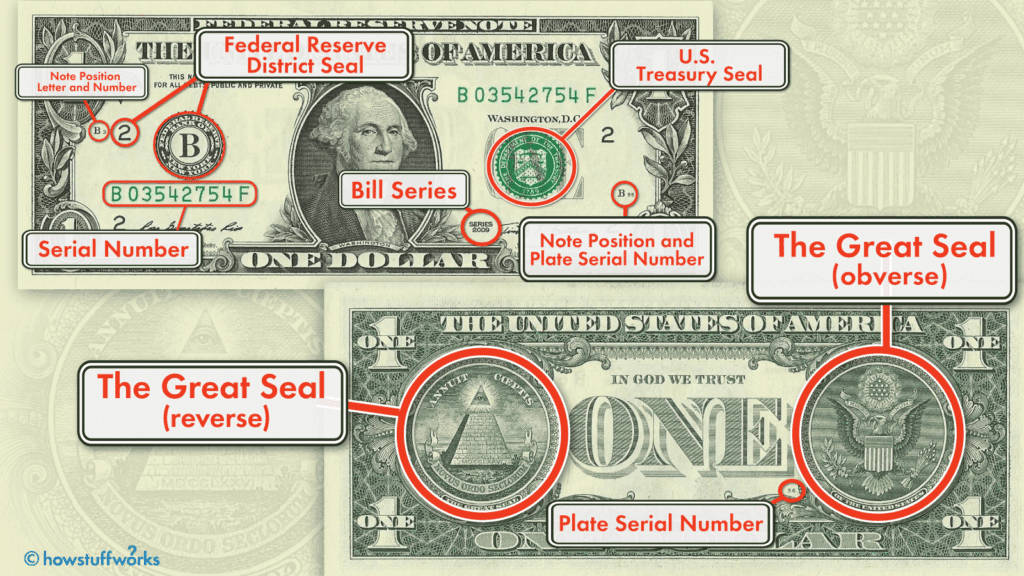
The psychology behind pattern recognition drives much of the symbolic analysis in NWO theories. Humans are naturally wired to identify patterns and assign meaning, particularly during times of uncertainty or crisis. When filtered through an end-times religious framework, coincidental design elements or numerical patterns can take on profound significance as supposed evidence of evil coordination.
Biblical Origins of the Antichrist
The concept of the Antichrist has deep roots in biblical literature, though the specific term “Antichrist” appears only in the Letters of John within the New Testament. In 1 John 2:18, the author warns, “Children, it is the last hour, and as you have heard that antichrist is coming, so now many antichrists have come.” This passage establishes both a singular Antichrist figure and a broader “spirit of antichrist” that opposes Christ’s teachings.
Key Passages in Revelation and Daniel

While John’s letters introduce the term, much of the imagery associated with the Antichrist comes from visions in Revelation and Daniel. Revelation 13 describes a “beast rising up out of the sea, having seven heads and ten horns,” who is given power by the dragon (often understood as Satan). This beast exercises authority, demands worship, and persecutes believers.
Daniel’s prophecies, particularly in chapters 7-12, provide additional symbolic framework that has been incorporated into Antichrist expectations. The vision of four beasts in Daniel 7, especially the “little horn” with “a mouth speaking great things,” has frequently been interpreted as foreshadowing the Antichrist’s rise. These passages describe a ruler who “will speak against the Most High and oppress his holy people and try to change the set times and the laws.”
What makes these biblical descriptions so adaptable to modern conspiracy theories is their symbolic and often mysterious nature. The imagery of beasts, horns, and cosmic battles can be interpreted literally or symbolically, allowing them to be applied to various historical periods and political situations.
The Number 666 and Its Interpretations
Perhaps no symbol has become more associated with the Antichrist than the number 666, described in Revelation 13:18 as “the number of the beast.” This mysterious reference has generated endless speculation and has been applied to countless individuals and systems throughout history. The verse itself suggests some form of calculation: “This calls for wisdom: let the one who has understanding calculate the number of the beast, for it is the number of a man, and his number is 666.”
How Antichrist Ideas Have Changed Throughout History
The interpretation of who or what constitutes the Antichrist has changed significantly throughout history. Early Christians living under Roman persecution often identified Emperor Nero as the Antichrist, using the numeric value of his name in Hebrew (Nero Caesar) which adds up to 666. As Christianity became the dominant religion in Europe, the Antichrist concept shifted to focus on religious opponents rather than political ones.
By the 20th century, the Antichrist concept had become increasingly political. Figures like Benito Mussolini, Adolf Hitler, and Joseph Stalin were all labeled as potential Antichrists by various religious commentators. This political application of biblical prophecy laid groundwork for modern New World Order theories, where religious end-times beliefs merge with political conspiracy.
How Antichrist Imagery Merged With Political Conspiracy
The integration of Antichrist prophecy with political conspiracy theories represents a powerful combination that gained particular momentum in the late 20th century. When President George H.W. Bush used the phrase “new world order” in a 1991 speech about international cooperation after the Cold War, it unintentionally aligned with terminology already established in end-times literature. This coincidence sparked a new wave of speculation about global governance plans and their potential relationship to biblical prophecy.
Core Elements of New World Order Theory
Contemporary New World Order theories typically include several consistent elements. Central to most interpretations is the belief in a hidden group of elite power brokers working across generations to implement a plan for global control. This group is believed to operate through existing institutions – governments, corporations, banks, media – while remaining largely invisible to the public.

The “Ten Kings” Prophecy and Global Governance
Revelation 17:12-13 describes “ten kings” who “receive authority as kings for one hour, together with the beast” and who “are of one mind, and they hand over their power and authority to the beast.” This prophecy has become a cornerstone of New World Order interpretation, frequently applied to regional political unions like the European Union or economic groups like the G7/G10/G20.
One-World Government Fears
At the heart of most New World Order theories lies concern about the erosion of national sovereignty in favor of global governance structures. Proponents point to the increasing power of international organizations, trade agreements that override local laws, and the growing influence of unelected bureaucracies as evidence of sovereignty’s erosion.
One-World Currency and the Mark of the Beast
Economic aspects of the New World Order theory center on prophecies about the “mark of the beast” described in Revelation 13:16-17: “Also it causes all, both small and great, both rich and poor, both free and slave, to be marked on the right hand or the forehead, so that no one can buy or sell unless he has the mark.”
As cash transactions have given way to digital payments, concerns about a cashless society have become prominent in NWO discussions. Central bank digital currencies, cryptocurrency developments, and proposals for universal digital IDs are frequently analyzed through the lens of the “mark” prophecy.
Technology as the Enabler of Antichrist Control
Modern technology plays a central role in contemporary Antichrist theories, providing plausible mechanisms for the prophesied global control systems. Surveillance capabilities, biometric identification, digital payment systems, and even artificial intelligence are viewed as potential tools for implementing the biblical “mark” system.
Organizations Frequently Linked to Antichrist Narratives
Certain organizations have become standard targets within New World Order theories, portrayed as either knowing participants in the Antichrist agenda or unwitting fulfillment of biblical prophecy. The United Nations, with its explicit goal of global cooperation and governance, is perhaps the most commonly identified candidate for the prophesied one-world government structure.
United Nations and World Economic Forum
The United Nations’ agenda items, particularly sustainable development goals and climate initiatives, are frequently analyzed for alignment with prophetic expectations. The World Economic Forum has emerged as a central focus in contemporary NWO theories, particularly through its “Great Reset” initiative launched in response to the COVID-19 pandemic.
Banking Institutions and Financial Elites
Central banking systems, particularly the Federal Reserve in the United States, occupy a special place in many NWO theories. Their ability to influence global economies through monetary policy, combined with their somewhat independent status from democratic processes, makes them appear as potential vehicles for implementing economic control systems.
Why These Beliefs Appeal to People
The enduring popularity of New World Order theories suggests they fulfill important psychological needs beyond mere speculation about global events. End-times frameworks provide narrative coherence to seemingly chaotic or threatening developments, offering an interpretive lens that makes sense of complex global systems.
These beliefs:
- Provide meaning and purpose during times of social upheaval
- Create clear moral boundaries between good and evil forces
- Offer reassurance that current suffering has cosmic significance
- Provide community with shared values and interpretations
- Transform powerlessness into special knowledge or insight
Making Sense of Complex Events
Human psychology naturally seeks patterns and meaning, particularly during periods of instability or threat. The end-times framework of Antichrist prophecy provides a comprehensive narrative that connects unrelated events – pandemics, economic crashes, political developments, technological changes – into a coherent storyline with spiritual significance.
The Role of Media in Spreading These Ideas
Mass media and entertainment have played significant roles in popularizing New World Order concepts beyond religious circles. Films, television shows, music videos, and video games frequently incorporate end-times themes, shadowy global conspiracies, and symbolism associated with secret societies.
The internet has revolutionized how conspiracy theories develop and spread, creating networks of interpretation that identify and analyze potential Antichrist symbolism across diverse contexts. Social media algorithms can amplify content by connecting users with progressively more extreme interpretations based on their viewing habits.
Critical Thinking Tools for Evaluating Claims
While dismissing all concerns about power concentration or surveillance as mere conspiracy theory would be simplistic, developing critical thinking tools can help evaluate specific claims about Antichrist symbolism or New World Order developments.
Separating Religious Belief From Historical Evidence
One essential distinction is between religious faith in prophetic texts and specific claims about current events or organizations. It’s entirely possible to believe in the biblical concept of an eventual Antichrist figure while remaining skeptical about specific accusations against contemporary individuals or institutions.
Consider these approaches:
- Look at multiple interpretations of prophetic texts within religious traditions
- Examine the historical context in which end-times texts were written
- Research how similar claims have been made about different figures throughout history
- Distinguish between theological beliefs and factual claims about organizations
- Recognize that symbolic interpretation is inherently subjective
Recognizing Pattern-Seeking Bias
The human brain excels at finding patterns, sometimes detecting meaningful connections and sometimes creating them where none exist. This pattern-seeking tendency becomes particularly pronounced when filtering information through a pre-existing framework like end-times prophecy.
Questions to Ask When Encountering New Claims
Developing a standard set of questions can provide structure for evaluating claims:
- Is there documented evidence for the claim beyond interpretation?
- Would the alleged symbolism be recognizable to those supposedly using it?
- Does the theory require assuming complex coordination among historically opposed groups?
- Are there simpler explanations that don’t require assuming hidden agendas?
- Are the claims falsifiable – is there evidence that could disprove them?
Real-World Impact of These Beliefs
Beyond their theoretical interest, New World Order beliefs have tangible effects on individuals and societies. These beliefs shape political decisions, influence attitudes toward technology and institutions, and sometimes motivate significant life choices.
At the community level, New World Order beliefs can shape economic behaviors, educational choices, and even geographic relocation decisions. Some adherents prioritize self-sufficiency, alternative currencies, or rural living as preparation for expected societal breakdowns or control systems.
Finding Balance Between Faith and Critical Analysis
It’s possible to maintain religious faith in biblical prophecy while approaching specific claims about Antichrist symbolism or New World Order developments with thoughtful skepticism. Many theological traditions emphasize humility regarding prophetic interpretation, acknowledging that end-times literature uses symbolic language that may not map directly onto contemporary events in obvious ways.
Frequently Asked Questions
Is the Antichrist mentioned directly in the Bible? The specific term “Antichrist” appears only in the Letters of John and not in the Book of Revelation as many assume. Other biblical passages describe figures like “the beast,” “the man of lawlessness,” and “the little horn” that have been interpreted as references to the same entity, but these connections represent theological interpretation rather than explicit biblical statements.
What evidence do New World Order theorists point to? Proponents cite statements from public figures about global governance, institutional documents outlining international coordination, symbolic imagery in corporate logos and architecture, and technological developments that could enable centralized control systems.
Can someone be religious and still question NWO theories? Many deeply religious individuals maintain faith in biblical prophecy while approaching specific New World Order claims with critical thinking. Questioning specific claims doesn’t necessarily indicate lack of faith, but rather may reflect theological humility about human ability to interpret prophetic timelines.
Why do these theories persist despite failed predictions? The resilience of end-times frameworks despite numerous failed predictions stems partly from their psychological and social functions. These narratives provide meaning, community, and a sense of special knowledge during uncertain times. When specific predictions fail, the interpretive framework typically adapts rather than collapses.
Understanding the enduring appeal of Antichrist symbolism in New World Order theories requires recognizing the legitimate human needs these narratives address. By acknowledging these deeper functions, we can engage more meaningfully with our faith while still maintaining critical thinking about specific claims and interpretations.

***
The fact is that a callous, brutal “beast” will arise, masquerading as a champion of peace. He will lead the whole world into terror and oppression, unlike any tyranny witnessed before in history. Is it any wonder that this diabolical character stirs imaginations and sparks curiosity? Read my whole Antichrist Series:
“The Antichrist Explained: What the Bible Really Says (And Why Peter Thiel’s Secret Lectures Matter)” – What might a billionaire tech giant say about the antichrist? And what does the Bible say about that man of lawlessness?
“Exploring the Role of Antichrist Symbolism in New World Order Theory” – this blog
“Tracking the Cultural Shift: Antichrist Imagery through the Ages” – perceptions of the antichrist have changed dramatically over the ages
“The Antichrist’s Playbook: How Ancient Tyrants Established the Template” – What if Satan has been honing his skills down through the ages? This blog studies five antichrist types and their diabolical methods of trying to deceive God’s people.
“Building the Beast System: How Modern Infrastructure Enables Ancient Strategies” – exploring modern systems the antichrist may use in controlling the Earth
“Field Testing the Playbook: Modern Movements Rehearsing Ancient Strategies” – exploring movements and ideologies already in place in our world and providing a “test run” for the antichrist system
“Lessons from the Faithful: How Believers Throughout History Resisted the Playbook” – finding encouragement from the faithfulness of Bible heroes
“Preparing for the Unknown: Practical Steps for Faithful Readiness” – a mini-survival guide to help you prepare for difficult times we may face in the near future
Here are links to my blog indexes, so please click one and keep reading!
My Books, Workbooks, and Fun Books
Knowing the Unknowable One
Opening the Treasure Chest
Walking Heart-to-Heart with God
Walking Heart-to-Heart with Each Other
Fighting the Good Fight of Faith
Christian Mysteries: Why I Love Them!
List of Some Nonfiction Books You Don’t Want to Miss
Index of Assorted Topics