

The shocking murder of conservative commentator Charlie Kirk at Utah Valley University on September 11, 2025, has left a nation reeling. Charlie Kirk, 31, was fatally shot while speaking to a crowd of about 3,000 people, and Tyler Robinson, 22, has been charged with his murder. As we process this senseless act of violence, our hearts go out to Charlie’s family, friends, and the millions who followed his work.
In times like these, when anger and grief threaten to overwhelm us, we face a profound choice: Will we allow bitterness to consume us, or will we choose the difficult but healing path of forgiveness?
The Weight of Loss
Charlie Kirk’s death represents more than the loss of a political voice—it’s the loss of a son, friend, and leader who touched countless lives. His family now bears an unimaginable burden, grieving not just their personal loss but doing so under the harsh glare of national attention. His friends remember not the public figure, but the private man whose absence leaves a void that cannot be filled.
For Charlie’s supporters and followers, the pain runs deep. Many felt a personal connection to his message and mission. The violent end to his life feels like an attack not just on him, but on everything he represented. This pain is real, valid, and deserves acknowledgment.
The Call to Forgiveness: Not Weakness, but Strength
Yet in the midst of justified anger and profound grief, there comes a gentle but persistent call to forgiveness—not because Tyler Robinson deserves it, but because we need it.
Dr. Everett Worthington, a renowned psychologist at Virginia Commonwealth University and a leading researcher on forgiveness, explains that forgiveness is not about excusing wrongdoing or pretending it didn’t happen. Rather, it’s about freeing ourselves from the emotional prison of resentment. “Six Steps to Self-Forgiveness” by Everett Worthington outlines how forgiveness becomes a pathway to emotional healing.

“Unforgiveness is like drinking poison and hoping the other person dies,” Dr. Worthington often says. When we hold onto anger and hatred, we don’t hurt the perpetrator—we hurt ourselves. The bitterness corrodes our peace, damages our relationships, and steals our joy.
Forgiveness for Our Mental Health
The psychological benefits of forgiveness are well-documented. Forgiveness in therapy promotes emotional healing & helps individuals release resentment & pain. Research consistently shows that people who practice forgiveness experience:
- Lower levels of anxiety and depression
- Reduced stress and blood pressure
- Improved sleep quality
- Stronger immune systems
- Better relationships
- Greater sense of purpose and peace
For Charlie Kirk’s followers, many of whom may be struggling with trauma from this event, forgiveness offers a path toward healing. This doesn’t mean forgetting what happened or minimizing its severity. It means choosing not to let Tyler Robinson’s actions continue to harm us through our own prolonged anger and hatred.
Forgiveness for National Unity
Beyond personal healing, forgiveness serves a larger purpose in our fractured society. Political violence threatens the very foundations of democratic discourse. If we respond to Tyler Robinson’s hatred with more hatred, we perpetuate the cycle that led to this tragedy in the first place.
The suspect who was arrested for allegedly killing Charlie Kirk had an “obsession” with the conservative influencer. This obsession, left unchecked, grew into something deadly. When we harbor intense anger—even justified anger—toward political opponents, we risk contributing to an atmosphere where such obsessions can flourish.
Forgiveness breaks this cycle. It demonstrates that we refuse to let violence define our political discourse. It shows that we’re committed to the principles of peaceful coexistence that make democracy possible.
This doesn’t mean compromising our convictions or failing to seek justice. Robinson is charged with aggravated murder and obstruction of justice, among other charges. Prosecutors announced they will seek the death penalty. Justice and forgiveness can coexist—in fact, they must.
Praying for Tyler Robinson
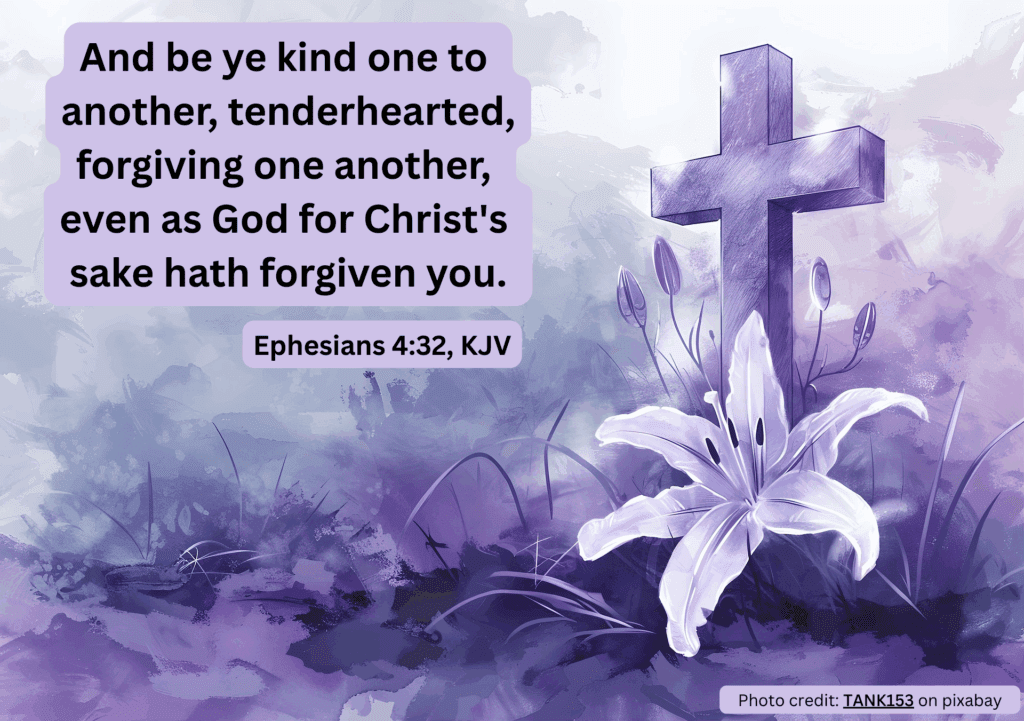
Perhaps the most difficult aspect of Christian forgiveness is extending grace to the perpetrator. Tyler Robinson made a choice that ended a life and devastated countless others. He will face the consequences of that choice in our justice system.
But as Christians, we’re called to something that seems impossible: to pray for our enemies, to seek God’s intervention even in the lives of those who have caused us great pain.
This isn’t about being holier-than-thou or pretending we’re somehow superior. It’s about recognizing our own need for God’s grace and extending that same grace to others, however undeserving they may seem.

When we pray for Tyler Robinson, we pray not that he would escape justice, but that God would work in his heart. We pray that he would come to understand the magnitude of what he’s done, that he would genuinely repent, and that somehow, even in this darkness, God’s light might penetrate.
These prayers are for Tyler’s transformation, but they’re also for our own hearts. They keep us from dehumanizing him, from allowing our anger to turn him into a monster rather than a human being who made a monstrous choice. They remind us that everyone—even Tyler Robinson—is made in God’s image and worthy of redemption.
The Professional Perspective
Dr. Everett Worthington, whose research has revolutionized our understanding of forgiveness therapy, emphasizes that forgiveness is not a feeling but a decision. As a committed Christian and a leading voice in psychology, Dr. Worthington’s work bridges faith and science in understanding how forgiveness heals.
His research shows that forgiveness literally changes our brains, reducing activity in areas associated with stress and increasing activity in areas linked to emotional regulation and empathy. From both a Christian and scientific perspective, forgiveness is one of the most powerful tools we have for emotional healing.
Dr. Worthington’s approach, detailed on his professional website and through his extensive research, demonstrates that forgiveness is not just a spiritual discipline but a practical pathway to mental health and wellbeing.
Moving Forward
Charlie Kirk’s legacy should not be defined by how he died, but by how he lived and the ideas he championed. The best way to honor his memory is not through perpetual anger at his killer, but by continuing the work he believed in while choosing a path of peace and forgiveness.
This doesn’t mean being naive about evil or failing to protect ourselves and others from future violence. It means refusing to let evil have the final word in our hearts.
For those struggling with anger, grief, and a desire for revenge, remember: forgiveness is not a destination but a journey. It’s not something you achieve once and never struggle with again. It’s a daily choice, sometimes an hourly choice, to release the poison of bitterness and choose peace instead.
In a world where political differences too often lead to personal hatred, let us choose a different path. Let us mourn what we’ve lost, seek justice for the wrongs committed, but also choose forgiveness—not because Tyler Robinson deserves it, but because we do.
Charlie Kirk’s death was a tragedy that should never have happened. But from this tragedy, we can choose to cultivate something beautiful: hearts free from bitterness, communities committed to peace, and a society that refuses to let violence have the final word.
The choice is ours. Let us choose forgiveness, for our own sake and for the sake of the nation Charlie Kirk loved and served.
For resources on forgiveness therapy and Christian counseling, visit Dr. Everett Worthington’s website where you can find free downloadable workbooks and explore the growing body of research on how forgiveness heals both individuals and communities.
***


Here are links to my blog indexes, so please click one and keep reading!
My Books, Workbooks, and Fun Books
Knowing the Unknowable One
Opening the Treasure Chest
Walking Heart-to-Heart with God
Walking Heart-to-Heart with Each Other
Fighting the Good Fight of Faith
Christian Mysteries: Why I Love Them!
List of Some Nonfiction Books You Don’t Want to Miss
Index of Assorted Topics
Thank you for the nice article you wrote about me that I just stumbled across. You said some very kind things. Keep up the excellent writing, Betty! We’re running out of time. He is coming soon.
I’m honored that you took the time to comment. I hope you saw the lovely comments that some of my readers posted about you. You are much loved and admired. Maranatha!
Magnificent goods from you, man. I’ve understand your stuff previous to and you’re just too excellent. I actually like what you have acquired here, certainly like what you’re stating and the way in which you say it. You make it entertaining and you still care for to keep it smart. I cant wait to read far more from you. This is really a great site.
Thank you for your gracious comment! It blesses me so much to know that you are finding my website helpful. Take care and may the Lord bless you richly!