
- Micro-SD cards no larger than a fingernail are quietly fueling a spiritual revolution inside the world’s most closed nation.
- North Korea ranks #1 on Open Doors’ 2024 World Watch List — possessing a Bible alone can result in execution or life in a labor camp.
- An estimated 400,000 secret Christians are believed to be practicing underground, surviving through hidden networks and smuggled digital content.
- Religious micro-SD cards containing Bibles, sermons, hymns, and discipleship materials are being passed hand-to-hand through covert supply chains running through China.
- Keep reading to discover exactly what’s on these cards, how they move across one of the most heavily guarded borders on earth, and what you can do to help.
Inside North Korea, a tiny piece of technology is doing what armies and diplomacy could not — delivering the Gospel to people who have never once held a Bible. Open Doors USA has been at the forefront of documenting and supporting the underground church movement that depends on these covert tools to survive.
The story of religious micro-SD cards in North Korea isn’t just a story about technology. It’s about a people so hungry for spiritual truth that they risk everything — their freedom, their family, their lives — to access it. Understanding how this works changes the way you see both faith and human courage.
Faith Survives Inside the World’s Most Closed Nation
North Korea is not simply a country with limited religious freedom. It is a nation where the state has systematically attempted to replace God with a man. The Kim family regime — beginning with Kim Il Sung, continuing through Kim Jong Il, and now Kim Jong Un — has constructed an elaborate personality cult that functions, in almost every structural way, like a state religion. Loyalty to the Supreme Leader is compulsory. Worship of the state is mandatory. Any competing spiritual allegiance is treated as treason.
What makes this particularly striking is the historical backdrop. Before the Korean War and the division of the peninsula, Pyongyang was known as the “Jerusalem of the East.” It was one of Asia’s most vibrant Christian cities, filled with churches, missionaries, and a deeply rooted faith community. That legacy did not simply vanish — it was systematically destroyed, then ironically absorbed. Scholars like Jae-Chun Cheng, author of Korean Messiah: Kim Il Sung and the Christian Roots of North Korea’s Personality Cult, have documented how the Kim regime co-opted the very language and rituals of Christianity to build its cult of personality.
Despite this, faith endured. It went underground, passed in whispers from parent to child, hidden in floorboards and memorized in secret. The church in North Korea didn’t die — it just learned to be invisible.
North Korea Ranks No. 1 on Open Doors’ 2024 World Watch List
For over two decades, North Korea has held the top position on Open Doors’ annual World Watch List — the global ranking of countries where Christians face the most severe persecution. The U.S. Commission on International Religious Freedom (USCIRF) also highlighted North Korea in its 2024 Annual Report, designating it a Country of Particular Concern. These are not symbolic designations. They reflect documented patterns of arrest, torture, forced labor, and execution targeting people of faith.
An Estimated 400,000 Secret Believers Practice Faith Underground
The number is staggering when you consider the environment: an estimated 400,000 Christians are secretly practicing their faith inside North Korea right now. They have no church buildings. No ordained pastors in any traditional sense. No access to Christian bookstores, seminaries, or worship apps. What they have is each other — and increasingly, micro-SD cards.
These believers exist in small, tightly compartmentalized cells. No one knows too many names. No one holds too much information. This isn’t paranoia — it’s survival architecture, refined over decades of living under one of the most sophisticated surveillance states ever built.
- Christians caught practicing faith face imprisonment in political labor camps (kwanliso)
- Entire families — including children — can be imprisoned for one member’s religious activity
- North Korean defectors who engaged with Christians abroad face severe punishment upon return
- Informants are embedded throughout communities, including within families
- Public executions are used as deterrents against foreign media and religious content possession
Even Possessing a Bible Is Punishable by Death
This is not hyperbole. Under North Korean law, possession of a Bible is treated as possession of enemy propaganda — a direct ideological threat to the state. Confirmed cases of execution for Bible possession have been documented by defector testimonies and human rights organizations. The physical Bible, that object millions of people leave on nightstands or carry casually in bags, is in North Korea a death sentence waiting to be discovered.
Why Micro-SD Cards Became the Tool of Choice
When the physical Bible became too dangerous to carry, believers and the organizations supporting them had to adapt. The solution didn’t come from a boardroom strategy session — it emerged organically from the same smuggling networks already moving food and medicine across the Chinese border. What changed was what got loaded onto the cards.
A standard micro-SD card measuring just 15mm x 11mm — smaller than a human fingernail — can store gigabytes of content. That means entire Bible translations, hundreds of sermons, worship music libraries, and theological training materials can be hidden inside a coat lining, sewn into clothing, or tucked under a floorboard. The physical footprint is nearly zero. The spiritual content is immeasurable.
Small Enough to Hide, Powerful Enough to Change Lives
The genius of the micro-SD card as a distribution medium is its intersection of extreme concealability and high storage density. A single 32GB micro-SD card can hold the equivalent of thousands of books. For a North Korean believer with no access to any outside religious material, receiving one of these cards is the equivalent of receiving an entire seminary library. It’s not an exaggeration to say that a card the size of a thumbnail has become one of the most powerful evangelism tools in the modern world.
Believers use modified Chinese-manufactured media players — devices that are more socially acceptable inside North Korea than smartphones — to access the content. The cards slot in discreetly, and the content can be shared by passing the physical card, copying files during brief meetings, or using small portable devices that allow group listening in trusted settings.
How SD Cards Bypass North Korea’s Information Blockade

North Korea operates one of the tightest information blockades ever constructed. Domestic internet access does not exist for ordinary citizens. State media is the only permitted source of news, entertainment, and culture. Foreign content — music, films, books, religious material — is illegal and actively hunted by a dedicated internal security apparatus. And yet, information gets in. It has always gotten in. The border with China, stretching over 1,400 kilometers, has never been fully sealed despite decades of effort.
Micro-SD cards exploit this gap. They are small enough to be swallowed, hidden in food containers, concealed in everyday goods, or carried by border traders who move between the two countries. Once inside, a single card doesn’t stay in one place — it moves through trusted networks, duplicated and redistributed in ways that make it nearly impossible to trace back to its origin point.
What Religious Content Is Actually on These Cards
The content loaded onto these cards is not random. Organizations working in this space have developed deliberate, discipleship-focused content strategies designed to meet the specific spiritual needs of isolated believers who may have never received any formal Christian education.
A typical religious micro-SD card distributed to North Korean believers might contain a full Korean-language Bible translation, audio Bible recordings for those who find reading risky, recorded sermons from trusted teachers, hymns and worship songs, basic theological training materials structured as self-guided courses, and evangelism resources believers can use to share faith with others in their network.
“We know that we lack in many skills and things; nevertheless, we will try our best to accomplish our mission. Our ministry is difficult, but we will not give up.”
— A North Korean underground Christian, in a secret message shared with Open Doors
The audio component is particularly critical. In a setting where written materials are dangerous to possess, audio content accessed through an earpiece on a small media player is far more concealable during consumption. A believer can listen to an entire sermon on a crowded bus and no one around them would ever know.
How the Underground Church Network Operates
The underground church in North Korea doesn’t look like any church you’ve ever seen. There are no buildings, no bulletins, no announced service times. What exists instead is a living, breathing organism of small cells — typically three to five people who trust each other completely — meeting in private homes, basements, and fields under the cover of ordinary life. A “church service” might be two people quietly listening to an audio sermon through a shared earpiece while appearing to share a meal.
The Role of Outside Missionary Organizations in Distribution
Organizations like Open Doors have spent decades building the infrastructure that makes this possible. Through covert supply chains operating primarily through China, they distribute not just food, medicine, and clothing, but Bibles, discipleship materials, and religious micro-SD cards loaded with carefully curated spiritual content. These operations require years of relationship-building, deep cultural knowledge, and an absolute commitment to protecting the identities of everyone involved. One security breach doesn’t just end a program — it ends lives.
How North Korean Christians in China Help Smuggle Content In
The most critical link in the distribution chain is often North Koreans themselves — specifically, defectors and border-crossers who maintain connections on both sides. Many North Koreans who escaped to China carry an intense burden for the family members and friends they left behind. Some of them, after encountering Christianity through missionary organizations operating in China, become active participants in getting religious content back across the border.
These individuals understand the terrain, the cultural codes, the border patrol patterns, and the social dynamics in ways that no foreign missionary ever could. A micro-SD card passed through this network doesn’t travel as a religious artifact — it travels hidden inside everyday goods, embedded in clothing, or concealed within food packaging. The person carrying it may not even know exactly what’s on it. Compartmentalization is everything.
One Mistake Can Cost Everything: The Real Danger Believers Face
The consequences of discovery are not merely personal. Under North Korea’s collective punishment system, entire families — three generations in documented cases — can be sent to political prison camps called kwanliso for the religious activity of a single member. This reality shapes every decision a North Korean believer makes. Who they tell. Where they meet. How long they keep a micro-SD card before passing it on.
North Korean defectors who were engaged in religious activities abroad — even simply attending a church service in China — have faced torture and severe punishment upon returning or being forcibly repatriated. The USCIRF’s 2024 Annual Report specifically documented this pattern, noting the regime’s treatment of anyone who came into contact with Christian missionaries as a matter of state security rather than religious policy.
And yet, believers keep meeting. They keep passing the cards. They keep listening in the dark with a single earpiece pressed to one ear, absorbing sermons and Scripture at enormous personal risk. The question that haunts every outside observer is simple: why? The answer, according to messages smuggled out through Open Doors’ networks, is equally simple — because the truth they’ve encountered is worth more than their safety.
“We are very thankful that we are able to encourage and strengthen North Korean believers. We pray that one day we can worship the Lord together with them.”
— An Open Doors spokesman working directly with North Korean Christian networks
North Korea’s State Religion: Kim Jong Un as “Living God”
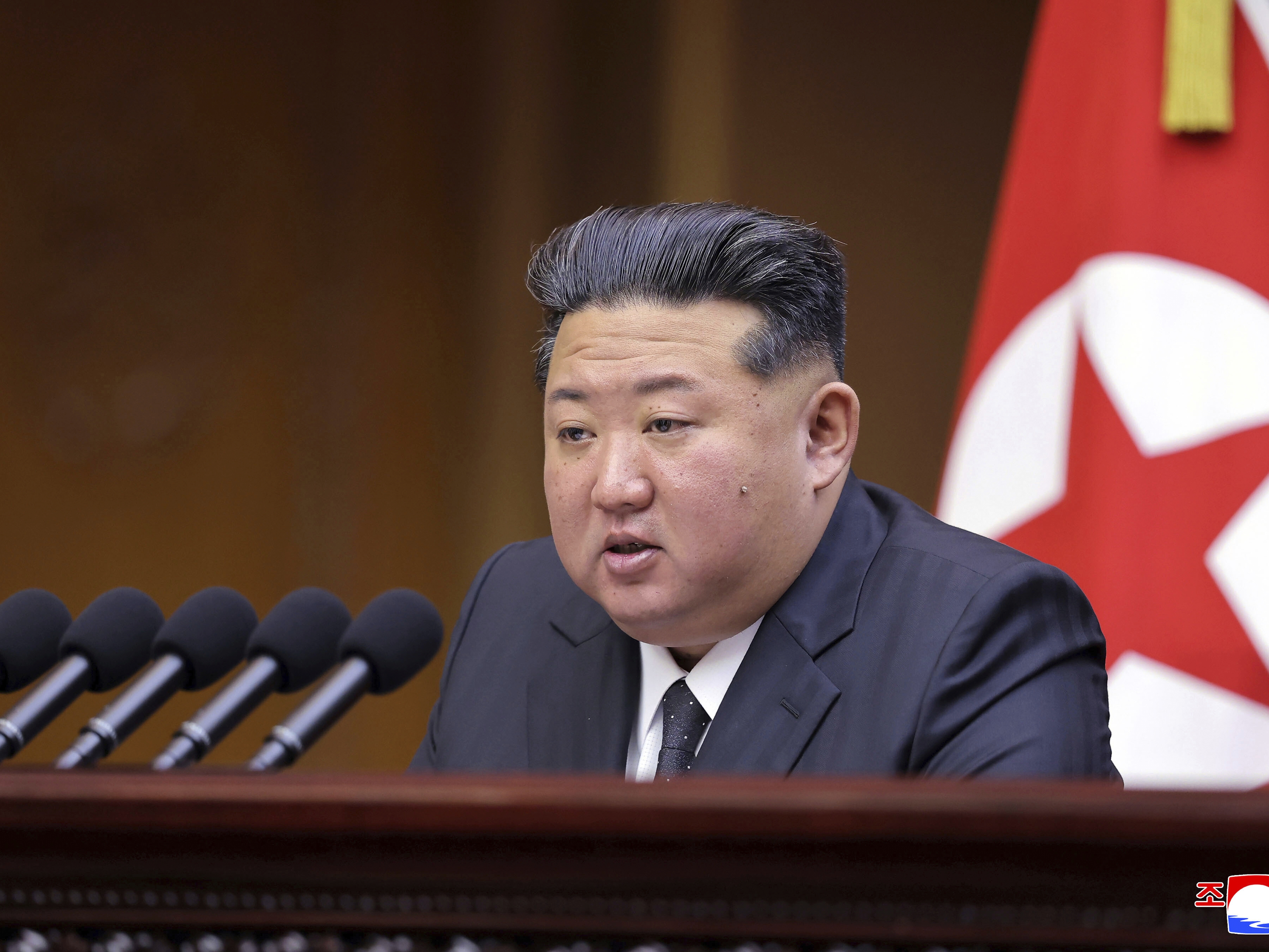
To understand why religious micro-SD cards are so threatening to the North Korean regime, you have to understand what they are competing against. The Kim family has not simply banned religion — they have replaced it. The state ideology of Juche, combined with an elaborate personality cult, functions with all the structural elements of a religion: sacred texts, holy days, pilgrimage sites, confession rituals, and an omniscient, omnipresent supreme being who demands total devotion. That being is Kim Jong Un.
a
a
| Religious Element | Christian Equivalent | North Korean State Version |
|---|---|---|
| Sacred Texts | The Bible | Kim Il Sung’s collected works (Juche ideology writings) |
| Holy Figures | Jesus Christ | Kim Il Sung, Kim Jong Il, Kim Jong Un |
| Pilgrimage Sites | Jerusalem, Rome | Kumsusan Palace of the Sun, Mansu Hill Grand Monument |
| Confession & Loyalty Rituals | Prayer, worship | Mandatory self-criticism sessions, public loyalty declarations |
| Afterlife Promise | Heaven | Eternal glory through loyalty to the Supreme Leader’s legacy |
This is not accidental. Scholars examining the Kim regime’s ideological architecture have noted clear, deliberate borrowings from Christian religious structure — particularly from the Pyongyang Christian culture that was once so dominant in the region. The regime understood instinctively that you don’t eliminate a deeply embedded spiritual impulse — you redirect it.
When a North Korean citizen listens to a sermon on a smuggled micro-SD card, they are not just accessing forbidden content. They are being introduced to a competing claim on ultimate loyalty — and that is precisely what makes the regime so desperate to stop it.
How Pyongyang Went From “Jerusalem of the East” to a Personality Cult
Before the Korean War, Pyongyang had more churches per capita than almost any city in Asia. Western missionaries had established deep roots there since the late 19th century, and a vibrant indigenous Christian community had grown around them. When Kim Il Sung rose to power and the peninsula divided, this Christian heritage didn’t simply get suppressed — according to scholar Jae-Chun Cheng’s research, it was systematically studied and then cannibalized. The structures of Christian devotion — the songs, the communal rituals, the concept of a messianic leader — were stripped of their original meaning and repurposed to serve the cult of Kim Il Sung. Pyongyang’s Jerusalem became Kim’s throne.
The Regime Frames Famine and Suffering as a Test of Loyalty to the Supreme Leader
During the catastrophic famine of the 1990s — known in North Korea as the Arduous March — an estimated hundreds of thousands to millions of people died from starvation. The regime’s response was not acknowledgment of failure. It was ideological reframing. Citizens were told that their suffering was a test of revolutionary loyalty, a trial that the truly devoted would endure and survive in service to the Supreme Leader’s vision.
This framing is not incidental — it mirrors the theological concept of suffering as spiritual refinement, drawn directly from the Christian heritage the regime had absorbed and weaponized. The difference, of course, is that in Christian theology, suffering points toward redemption through a God who suffers alongside humanity. In the Kim cult, suffering points only toward the glorification of the leadership.
For North Koreans who have accessed Christian content through micro-SD cards, the contrast is often described as staggering. Defector testimonies consistently include accounts of the profound emotional and spiritual impact of encountering the concept of a God who loves people — not a leader who demands loyalty in exchange for survival, but a being who offers grace unconditionally.
- The Arduous March famine killed an estimated hundreds of thousands to potentially over a million people
- State media framed the famine as an imperialist attack, not a policy failure
- Citizens were required to express gratitude to Kim Jong Il even as they starved
- Religious coping was criminalized — prayer and Scripture were classified as enemy ideology
- Defectors report that encountering concepts of grace and divine love created immediate and deep spiritual dissonance with state doctrine
The regime’s insistence on framing all suffering as a loyalty test reveals exactly why independent religious belief is so dangerous in their eyes. The moment a North Korean citizen encounters a theology that says their suffering has meaning outside of the Kim family’s narrative — that there is a God who sees them, loves them, and calls them by name — the entire ideological architecture of the state begins to crack.
Why Independent Religious Belief Is an Existential Threat to the Kim Regime
Every underground believer with a micro-SD card represents a direct challenge to the Kim regime’s foundational claim: that the Supreme Leader is the sole source of meaning, provision, and ultimate loyalty. Christianity, in particular, presents a direct ideological counter — a God who stands above all earthly rulers, whose authority supersedes the state, and whose followers are commanded to prioritize that allegiance above all others. In a nation built entirely on the premise of absolute human leadership, that is not a theological inconvenience. It is an existential threat. This is why the regime doesn’t just punish believers — it attempts to eradicate the very concept of competing spiritual authority, generation by generation.
The Global Prayer Network Keeping Underground Believers Alive
The underground church in North Korea does not survive on courage alone. Behind every believer risking their life to listen to a sermon on a smuggled micro-SD card is a global network of prayer, funding, and logistical support that makes the entire operation possible. Organizations like Open Doors have built what amounts to a parallel church infrastructure — invisible, decentralized, and remarkably resilient — that connects isolated North Korean believers to the broader body of Christ worldwide.
Open Doors runs regular, structured prayer campaigns specifically for North Korean Christians. These aren’t generic “pray for the persecuted” appeals. They are targeted intercessions tied to specific, current situations — believers recently arrested, distribution networks under pressure, families facing increased surveillance. When a secret message arrives from inside North Korea describing a specific need, that information is translated into prayer requests distributed to hundreds of thousands of supporters globally. The North Korean believer listening alone in the dark is, in a very real sense, surrounded by millions of people praying for them by name.
In one secret message that reached Open Doors, a North Korean Christian wrote: “We know that we lack in many skills and things; nevertheless, we will try our best to accomplish our mission.” Messages like this one don’t just inform the outside world — they fuel it. Every prayer campaign, every distribution run, every safe house maintained in China exists because people on the outside chose to stay engaged rather than look away. To learn more about these efforts, you can read about North Korean Christians’ thank you messages.
Real Change Starts With What You Do Next
Open Doors USA continues to be one of the most active organizations serving North Korean underground believers — providing food, medicine, clothing, Bibles, religious micro-SD cards, biblical training, and safe house support through its covert networks in China. If what you’ve read here has moved you, the most direct thing you can do is join that network — through prayer, financial support, or simply refusing to let North Korea’s underground church remain invisible in your world.
Frequently Asked Questions
The realities of faith and information smuggling inside North Korea raise urgent and practical questions. Here are the most important ones answered directly.
How Are Micro-SD Cards With Religious Content Getting Into North Korea?
Micro-SD cards with religious content enter North Korea primarily through covert networks operating along the Chinese border. Organizations like Open Doors work through trusted intermediaries — including North Korean defectors living in China who maintain connections on both sides of the border — to move cards concealed inside everyday goods, clothing, and food packaging. Border traders who regularly cross between China and North Korea are sometimes part of these networks, though compartmentalization means most participants know only their immediate contact, not the full chain.
Once inside the country, the cards move through the underground church’s cell structure. A single card is rarely kept by one person for long. It gets copied, passed on, and redistributed through layers of trusted relationships. The decentralized nature of this distribution makes it extremely difficult for North Korean security services to trace the origin or disrupt the entire network through a single arrest.
What Happens to North Koreans Caught With Religious Content?
The consequences are severe and extend far beyond the individual caught. Under North Korea’s collective punishment system, family members — in documented cases spanning three generations — can be imprisoned alongside the person found with religious material. Those caught face interrogation, torture, and sentencing to kwanliso political prison camps, where conditions are brutal and mortality rates are high. In cases where the religious content is deemed particularly threatening to the state — such as direct evangelism materials or content linked to foreign missionary organizations — execution is a documented outcome. North Korean defectors who were found to have engaged with Christians while abroad have faced these punishments upon repatriation, a pattern specifically noted in USCIRF’s 2024 Annual Report.
How Many Christians Are Secretly Practicing Faith in North Korea?
The precise number is impossible to verify given the nature of North Korea’s surveillance state, but the most widely cited estimate from organizations with active networks inside the country is approximately 400,000 secret believers. This figure comes from Open Doors, which has maintained covert contact with the underground church for decades. Given the extreme danger of self-identification as a Christian, the actual number could be higher — some analysts believe significant numbers of people are exploring faith privately without ever connecting to any organized network.
- Estimated 400,000 secret Christians currently active inside North Korea
- Believers operate in small cells of 3 to 5 trusted individuals
- No formal church buildings, ordained clergy, or public worship exists outside state-controlled institutions
- Many believers have never physically held a Bible
- Faith is passed intergenerationally through oral transmission and, increasingly, digital content on micro-SD cards
What makes this number remarkable isn’t just its size — it’s what it represents structurally. Each of those 400,000 people exists in near-total spiritual isolation by any conventional measure, without access to the community, resources, and institutional support that Christians in the rest of the world take entirely for granted. The fact that this community has not only survived but maintained enough coherence to receive and distribute smuggled content speaks to the extraordinary depth of conviction driving it.
Which Organizations Are Behind Smuggling Religious Content Into North Korea?
Key Organizations Actively Supporting North Korea’s Underground Church
Organization Primary Activity Method of Support Open Doors USA Bible & material distribution, prayer campaigns, safe houses Covert networks through China; trusted intermediaries U.S. Commission on International Religious Freedom (USCIRF) Advocacy & documentation Annual reports, policy recommendations, government engagement Voice of the Martyrs Scripture distribution & family support Border-crossing networks; defector community outreach Korean Church Coalition Advocacy & prayer mobilization Diaspora Korean church engagement; Capitol Hill lobbying
Open Doors remains the most deeply embedded organization in terms of direct support to North Korean believers on the ground. Their operations in China are specifically designed to serve North Koreans — providing food, medicine, clothing, Bibles, and micro-SD cards loaded with religious content, as well as biblical training and safe house accommodation for those who have crossed the border. The scale and longevity of their operation — built over decades — gives them a network depth that newer organizations cannot easily replicate.
It’s worth noting that many of the most effective distributors are not large organizations at all. Individual Korean-American missionaries, diaspora community members with family connections inside North Korea, and anonymous Chinese Christians living near the border have all played roles in moving religious content across. The decentralized, relationship-driven nature of this work is both its greatest vulnerability and its greatest strength — there is no single point of failure that a hostile government can target to shut the entire system down.
What binds all of these actors together is a shared conviction that the 400,000 believers inside North Korea are not a lost cause — they are a living church that deserves every resource the global Christian community can quietly, safely deliver to them.
How Can Someone Outside North Korea Support Underground Believers?
The most immediate and always-available form of support is prayer. Open Doors provides structured, specific prayer requests tied to real, current situations inside North Korea through their prayer campaigns and regular communications. Praying specifically and consistently for named needs — arrested believers, distribution network safety, the spiritual endurance of isolated Christians — is not a passive act. The underground church itself has communicated that awareness of global prayer support is one of their greatest sources of strength and encouragement.
Financial giving to organizations like Open Doors directly funds the physical materials that reach believers — the micro-SD cards, the media players to read them, the food and medicine that sustains distribution network members, and the safe houses that protect North Korean Christians who have crossed into China. Every dollar given to a reputable organization working in this space translates into tangible resources moving toward people who have nothing.
***

Purchase Audiobook
Here are links to my blog indexes, so please click one and keep reading!
My Books, Workbooks, and Fun Books
Knowing the Unknowable One
Opening the Treasure Chest
Walking Heart-to-Heart with God
Walking Heart-to-Heart with Each Other
Fighting the Good Fight of Faith
Christian Mysteries: Why I Love Them!
List of Some Nonfiction Books You Don’t Want to Miss
Index of Assorted Topics