
Decades ago, I read Peter Marshall and David Manuel’s two books, The Light and the Glory and From Sea to Shining Sea, when they were first published. Those books taught me to read American history a certain way, watching for the moments when a nation’s prayers, or its silence, seemed to shape what came next. It was like seeing history as a conversation with God.
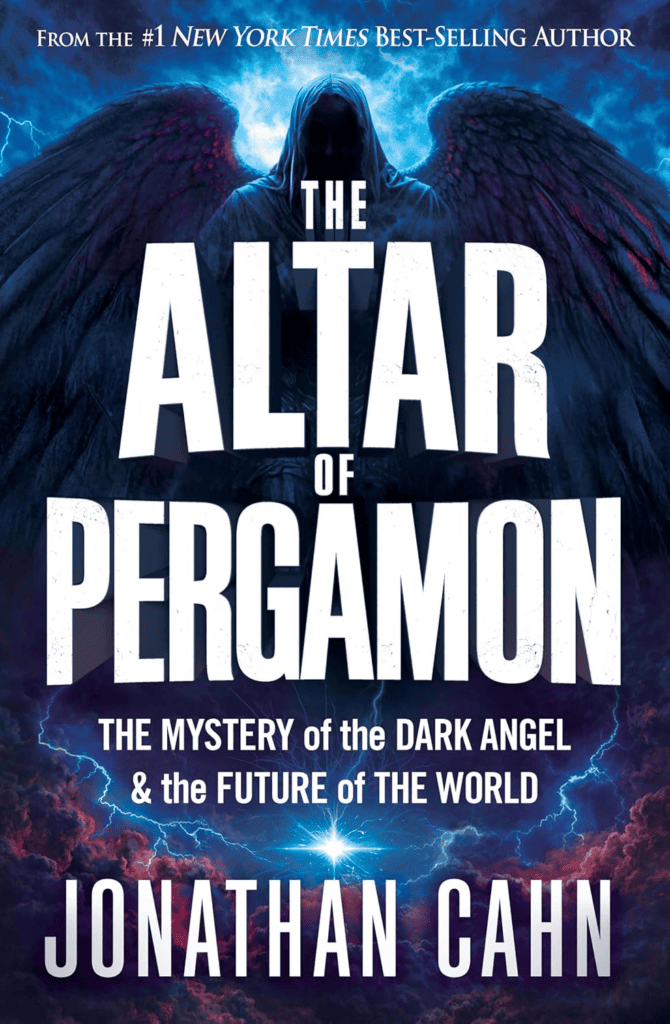
I recently listened to Jonathan Cahn’s new book, The Altar of Pergamon: The Mystery of the Dark Angel and the Future of the World, and found myself reading history the same way again, except this time, from the other side of the conversation.
Tracing the Throne of Satan
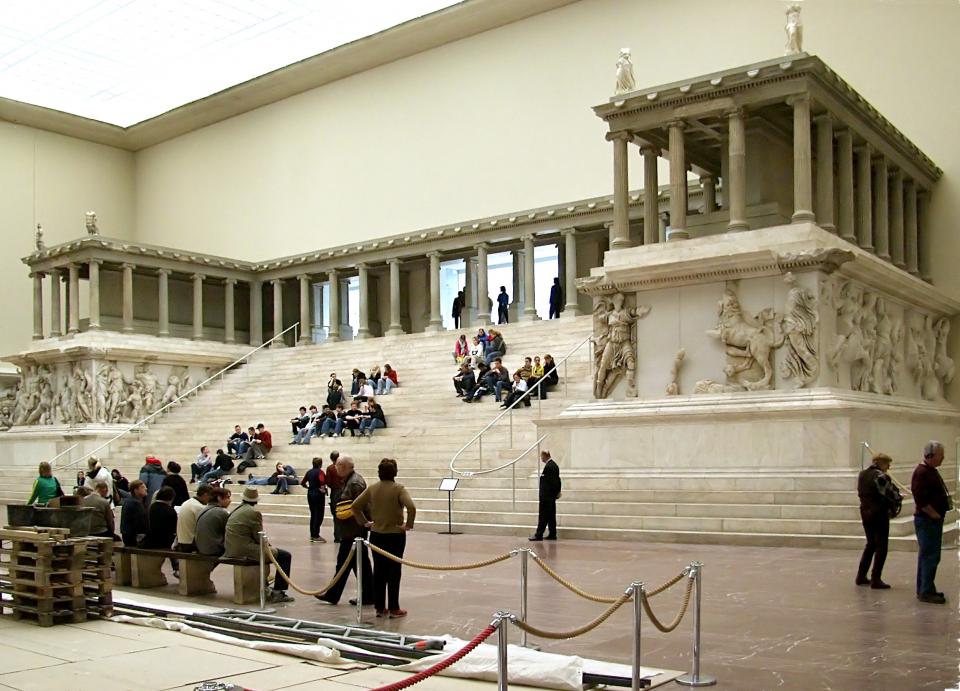
Cahn’s story follows Ariel Herzog, a professional skeptic, and Lara Winter, the unlikely ally who joins him after he receives a single cryptic page from a forbidden manuscript. That one page sends them from New York to Istanbul, Berlin, Moscow, and Jerusalem, chasing down the rest of the pages, and the story behind an actual ancient structure: the massive altar of Pergamon, which the Apostle John names in Revelation as “Satan’s throne.” (Revelation 2:13)
Cahn’s proposition is that this altar didn’t stay buried when it disappeared from Pergamon. He traces its shadow through the rise of the Third Reich, the spread of Marxism, the Soviet Union, and on toward what he believes is still ahead of us. Where Marshall and Manuel showed blessing following faithfulness, Cahn is tracing something more like a battle plan, the long, patient work of an enemy who has never stopped moving pieces on the board.
It’s worth saying plainly: this is fiction. Herzog and Winter are invented characters. Cahn is using a thriller to carry real historical events and a real archaeological object toward a spiritual argument he clearly means for us to take seriously. That’s not so different from what Marshall and Manuel did in nonfiction form. Both viewpoints are asking readers to see the last few centuries as something other than a string of unrelated political accidents. But where Marshall and Manuel wrote history as testimony, Cahn is writing it as warning.
Destination: the End of Time
I write about the end times on this site because I think most of us live as though history is something that happens to us – like weather, more or less, with better or worse forecasting. Cahn’s book, whatever you make of every individual connection he draws, is making the opposite case: that there is intention behind the chaos, moving toward a destination. His subtitle isn’t shy about it: the Future of the World.
That’s the real reason this book is worth your attention. Not because every historical thread Cahn pulls will hold up to equal scrutiny. Some readers will find certain connections more persuasive than others, and that’s a fair response to a book built on pattern-finding across centuries. But because the underlying claim – that the trajectory of nations is heading somewhere and that something unseen has been working toward that end for a very long time – is exactly the lens Scripture asks us to hold. Revelation doesn’t describe history as accident. Neither did Marshall and Manuel. Cahn is telling the same kind of story from the enemy’s side of the field. And if it unsettles you a little, that may be the point.
Feature image: Satan’s Throne | Beth Immanuel” from www.bethimmanuel.org and used with no modifications.


Here are links to my blog indexes, so please click one and keep reading!
My Books, Workbooks, and Fun Books
Knowing the Unknowable One
Opening the Treasure Chest
Walking Heart-to-Heart with God
Walking Heart-to-Heart with Each Other
Fighting the Good Fight of Faith
Christian Mysteries: Why I Love Them!
List of Some Nonfiction Books You Don’t Want to Miss
Index of Assorted Topics