
Key Takeaways
- Biblical end times prophecy teaches that Jesus Christ returns to establish His own kingdom, while NAR dominionism teaches believers must build that kingdom for Him first.
- The New Apostolic Reformation traces back to C. Peter Wagner’s 1994 coining of the term, but its theological DNA comes from the Latter Rain movement of the 1940s, which the Assemblies of God formally denounced in 1949.
- NAR’s “Seven Mountains Mandate” calls for Christians to conquer Religion, Family, Education, Government, Media, Arts/Entertainment, and Business rather than simply preaching the gospel.
- Scripture sets a strict test for apostleship in 1 Corinthians 9:1-2, a standard that disqualifies nearly every self-proclaimed modern apostle in the movement.
Two roads claim to lead toward the same destination: the return of Jesus Christ and the final establishment of His kingdom on earth. One road follows a literal, chronological reading of Scripture. The other, built by a movement known as the New Apostolic Reformation, insists Christians must seize control of society before Christ ever sets foot back on the Mount of Olives.
These aren’t minor theological footnotes. They shape how millions of believers vote, pray, evangelize, and interpret headlines about war, politics, and culture. Understanding the difference matters, and groups tracking end-times theology have spent years documenting exactly how far this divide has grown.
Two Opposing Views on How the World Ends
At the heart of this disagreement sits a single question: who brings in the kingdom of God? Traditional biblical eschatology says Jesus does, personally, visibly, and violently, at His Second Coming. Dominion theology says the church does, gradually, through cultural and political conquest, paving the way for Christ to return to a world already subdued in His name.
What Is the New Apostolic Reformation?
The New Apostolic Reformation, often shortened to NAR, has been described by critics as a pseudo-Christian splinter group that teaches believers are commanded by God to “take control” of earthly governments, financial systems, and institutions in order to “overcome the world” for King Jesus. Rather than waiting for Christ’s return as described in Revelation 19, NAR adherents believe they’re tasked with building His kingdom in advance.
This isn’t a fringe idea confined to obscure churches. NAR theology has influenced political preachers, media personalities, and even figures connected to recent presidential administrations, making it one of the more consequential theological movements operating under mainstream Christianity’s radar.
Origins in C. Peter Wagner’s 1994 Movement
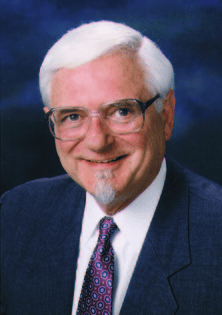
The term “New Apostolic Reformation” didn’t exist until 1994, when missiologist C. Peter Wagner coined it to describe what he saw as a fresh move of God restoring the offices of apostle and prophet to the modern church. Wagner claimed to take the Bible literally, but critics argue he did so without rightly dividing Scripture, a misstep that opened the door to doctrinal error dressed up as revival.
[Photo attribution: “C. Peter Wagner – Audio Books, Best Sellers, Author Bio | Audible.com” from www.audible.com and used with no modifications.]
Charismatic Roots Dating Back to 1900
Long before Wagner gave the movement its name, its roots were already growing. Charismatic Christianity in America traces back to 1900, and many of the practices now associated with NAR, speaking in tongues, prophetic utterances, and an emphasis on supernatural experience, developed out of that early twentieth-century soil.
“The way to achieve dominion is to have kingdom-minded people in every one of the Seven Mountains… so that they can use their influence to create an environment in which the blessings and prosperity of the Kingdom of God can permeate all areas of society.” — C. Peter Wagner
That single quote captures the entire dominionist project in miniature: influence first, kingdom second, Christ’s physical return almost an afterthought.
The Latter Rain Movement and Its 1949 Denunciation
Much of what NAR teaches today didn’t originate with Wagner at all. It came from the Latter Rain movement of the 1940s, a charismatic revival movement that emphasized new apostles, prophetic impartation, and restored supernatural gifts. The movement proved controversial enough that in 1949, the American Assemblies of God, a denomination hardly known for theological conservatism on charismatic issues, formally denounced Latter Rain teachings as unbiblical.
Core Doctrines of NAR Theology
NAR isn’t a single, unified denomination with a tidy statement of faith. It’s more like a theological current running through independent charismatic churches, media ministries, and political movements. Still, a handful of core doctrines recur wherever NAR influence takes root.
Postmillennialism as the Foundation
Dominion theology starts with postmillennialism, the belief that Christ returns after the church has established a golden age of righteousness on earth. Critics argue this premise is scripturally incorrect from the outset, since it requires reading Genesis 1:28’s command to “have dominion” as a mandate for believers to conquer society rather than simply steward creation.
Modern Apostles and New Revelation Claims
NAR teaches that God is still actively anointing apostles today and still delivering fresh revelation not found anywhere in the Bible. This claim runs directly into Paul’s own definition of apostleship in 1 Corinthians 9:1-2, where he lists having personally seen the risen Lord Jesus as a non-negotiable requirement. By that standard, no living person today qualifies, a problem NAR largely sidesteps rather than answers.
The Five-Fold Ministry Reinterpreted
Ephesians 4 lists five ministry gifts: apostles, prophets, evangelists, pastors, and teachers. NAR places heavy, arguably disproportionate, emphasis on the first two, elevating self-appointed apostles and prophets to positions of authority that look less like biblical church leadership and more like a hierarchical command structure answering to no outside accountability.
Prosperity Gospel and “Little Gods” Teaching
Wealth and status run through much of NAR’s messaging. Some leaders within the movement have promoted what’s known as the “little gods” doctrine, a gnostic-flavored teaching suggesting believers carry a form of divine nature themselves. Paired with prosperity gospel preaching, the “name it and claim it” approach to faith, this creates a theology where financial blessing becomes evidence of spiritual authority.
Biblical End Times Theology Explained
Set against this backdrop, traditional biblical eschatology reads almost shockingly simple by comparison. It doesn’t promise believers political conquest. It promises something closer to a brutal, unfolding reality followed by rescue.
A World Growing Worse, Not Better
According to this framework, the present world isn’t destined for revival or restoration through human effort. It’s going to grow worse and worse as the age progresses, a trajectory dominionists reject outright since it undercuts their entire premise of societal conquest. The only kingdom prophesied to rise before Christ’s return belongs to the Antichrist, emerging during the period Scripture calls the time of Jacob’s trouble.
Satan’s Current Rule as “Prince of the Power of the Air”
Scripture describes Satan as the current ruler over the kingdoms of this earth, a title the Bible assigns him as “the prince of the power of the air.” This isn’t rebellion against God’s authority; it’s a temporary arrangement God Himself has allowed. Critics of dominion theology argue that Christians attempting to seize earthly control may unintentionally play directly into Satan’s hands, setting the stage for his final world order and the Antichrist’s arrival rather than hindering it.
The Church Age Mission: Gospel, Not Government
During what theologians call the Church Age, the mission given to believers is narrow and specific: preach the gospel, lead people to salvation, and warn the lost about coming judgment. Nowhere in that mandate does Scripture command Christians to subdue the world or construct God’s kingdom through political or cultural force.
Christ’s Return and the Battle of Armageddon
The culmination of biblical end times prophecy arrives at the Battle of Armageddon, on what Scripture calls the Day of the Lord. Jesus returns personally, visibly, and decisively to establish His kingdom, not relying on human institutions to have prepared the way, but arriving as the one who conquers evil Himself.
The Seven Mountains Mandate Breakdown
NAR’s practical strategy for dominion is organized into what’s called the Seven Mountains Mandate, a framework that identifies seven spheres of cultural influence believers are called to infiltrate and control.
- Religion
- Family
- Education
- Government
- Media
- Arts and Entertainment
- Business
Each “mountain” represents a sector of society NAR teaches must come under kingdom-minded leadership before Christ’s return makes sense within their theological timeline.
1. Religion
The first mountain targets religious institutions themselves, including rival denominations and even other faiths, aiming to consolidate spiritual authority under NAR-aligned apostolic leadership.
2. Family
The family mountain focuses on shaping household structures, parenting philosophy, and generational discipleship according to dominionist values, positioning the home as a training ground for future kingdom warriors.
| Mountain | Primary Target |
|---|---|
| Religion | Denominations, interfaith influence |
| Family | Household structure, generational discipleship |
3. Education
Education becomes a battleground for shaping worldview from childhood onward. Dominionist strategy here involves influencing curriculum, school boards, and academic institutions so that future generations absorb kingdom-now theology as foundational truth rather than one perspective among many.
4. Government
Of all seven mountains, government draws the most public attention and controversy. NAR-aligned leaders have pursued influence inside legislatures, courts, and executive offices, believing political power itself functions as a tool for establishing God’s kingdom on earth ahead of Christ’s physical return.
5. Media
Control over information shapes public perception faster than almost any other mountain. NAR strategy targets news outlets, broadcast networks, and increasingly social media platforms, viewing each as a pulpit that can reach audiences far beyond what any single church building could manage.
This mountain also explains why so many charismatic leaders invest heavily in television ministries and online platforms. Reach equals influence, and influence, according to dominionist logic, equals kingdom advancement.
- Television networks and streaming platforms
- Social media influence and algorithm-driven content
- News outlets shaping political narratives
- Podcast and digital ministry expansion
Each of these channels serves the same strategic purpose: positioning dominionist voices as trusted authorities long before any theological claims face scrutiny.
6. Arts and Entertainment
Hollywood, music, and popular culture represent the sixth mountain, an arena NAR leaders view as uniquely powerful for shaping emotional and moral sensibilities. Winning this mountain means producing films, music, and media that normalize dominionist values within mainstream entertainment.
7. Business
The final mountain, business, ties directly to the prosperity-gospel threads running through NAR theology. Wealth generated through business success gets framed as evidence of kingdom favor, funding further expansion into the other six mountains and creating a self-reinforcing cycle of influence and income.
Taken together, these seven mountains form a comprehensive strategy for cultural transformation that looks remarkably similar to standard political and corporate influence-building, just repackaged with biblical language layered on top.
Apostolic Authority: Biblical Test vs. NAR Claims
Authority is the currency NAR leaders trade in, and that authority rests almost entirely on claims of apostleship. But Scripture doesn’t leave the definition of “apostle” open to interpretation or self-appointment.
Paul addresses this directly, and his standard is uncomfortably specific for anyone claiming the title today. It isn’t based on charisma, following, or perceived anointing. It’s based on a single historical qualification that no one living can meet.
This creates an immediate problem for NAR’s entire apostolic structure, one the movement rarely addresses head-on.
- Paul’s requirement: having personally seen the risen Lord Jesus
- Revelation 2:2 warns believers to test those claiming apostleship
- 2 Corinthians 11:13-15 describes false apostles disguising themselves as servants of righteousness
- Matthew 24:11 predicts many false prophets arising to deceive many in the last days
Each of these passages functions as a built-in safeguard, giving believers concrete tools for discernment rather than leaving them vulnerable to whoever claims the loudest spiritual authority.
Paul’s Requirement of Seeing the Risen Christ
In 1 Corinthians 9:1-2, Paul asks a rhetorical question that doubles as a doctrinal boundary line: “Am I not an apostle? Have I not seen Jesus Christ our Lord?” The requirement isn’t vague. It’s historical and physical, tied to a specific resurrection appearance that ended with the earliest apostles and cannot be replicated by anyone born after the first century.
Why Wagner’s Apostles Fail This Test
C. Peter Wagner’s entire apostolic framework depends on believers accepting a looser definition of apostleship than Scripture provides. None of the modern apostles he commissioned, nor the ones functioning within NAR circles today, can claim to have personally witnessed the risen Christ. By Paul’s own standard, the title simply doesn’t apply, no matter how it’s used in modern ministry branding.
Acceptable Error Rates in NAR Prophecy
Perhaps the most telling detail involves how NAR leadership handles prophetic failure. Rather than holding prophets to the biblical standard of complete accuracy, some NAR leaders have openly stated that accuracy rates of 30%, 60%, or 80% are acceptable for someone functioning in the prophetic office. Compare that to Deuteronomy 18:22, which treats even a single failed prophecy as evidence of a false prophet, and the gap becomes impossible to ignore.
Named False Prophets in the Movement
Specific names surface repeatedly in discussions of NAR’s prophetic track record, including Cindy Jacobs, Benny Hinn, and Rick Joyner. Each has made public prophetic claims that failed to materialize, yet each continues operating within influential ministry platforms, a pattern critics point to as direct fulfillment of Matthew 24:11‘s warning about false prophets multiplying in the last days.
Signs and Wonders vs. Walking by Faith
NAR theology leans heavily on visible, tangible proof, signs, miracles, wonders, and dramatic spiritual experiences, as evidence of divine authority and authentic faith. This emphasis sounds compelling on the surface, but it runs directly against a core instruction Paul gives the church.
Paul’s Teaching on Faith Over Sight
2 Corinthians 5:7 instructs believers to “walk by faith, not by sight,” a principle that stands in direct tension with a movement built around visible signs and physical manifestations as proof of spiritual legitimacy. Paul reinforces this elsewhere in 1 Corinthians 13:8, noting that prophecies will fail and tongues will cease, temporary gifts never meant to form the permanent foundation of Christian faith.
Why Signs Were for Israel, Not the Church Age
1 Corinthians 1:22-24 specifically identifies signs as something “the Jews require,” tying miraculous demonstrations to God’s covenant relationship with Israel rather than establishing them as a universal expectation for the Church Age. NAR’s heavy reliance on signs and wonders, critics argue, misapplies a biblical pattern meant for a different audience and a different redemptive purpose entirely.
The End Times Wealth Transfer Teaching
Few NAR teachings generate as much controversy as the idea of an “end times transfer of wealth,” a belief that riches currently held by the wicked will soon pass to the righteous, conveniently defined as those within the movement itself.
This teaching doesn’t stay confined to theology books or sermon illustrations. It shapes real financial decisions, giving patterns, and political alliances among followers who believe they’re positioned to receive this prophesied windfall.
Rafael Cruz and Prophecies of Riches
Rafael Cruz, father of former presidential candidate Ted Cruz and an active preacher within Dominion/NAR circles, publicly prophesied a coming “wealth transfer from the wicked to the righteous.” His platform gave this teaching reach far beyond typical charismatic church settings, placing it squarely within mainstream political conversation during the 2016 election cycle.
What makes this teaching particularly effective is how it flatters its audience. Believers aren’t told to simply trust God’s provision; they’re told they’re specifically positioned to inherit wealth currently belonging to people outside the movement, a framing that blends spiritual language with financial ambition.
Nearly all charismatics carry “an unbreakable fixation with acquiring wealth and making money,” a pattern visible across multiple prominent ministries within the movement.
Televangelists Profiting From the Message

The financial scale behind this teaching is substantial. Ministers including Kenneth Copeland, Rodney Howard-Browne, Jesse Duplantis, Paula White, and Joel Osteen generate millions of dollars monthly, much of it tied directly to prosperity gospel messaging and promises of coming financial breakthrough for faithful givers.
Critics describe this pattern as leaders tickling the ears of followers with sugar-coated promises of “deeper blessings,” a phrase that echoes Paul’s warning in 2 Timothy 4:3-4 about people heaping up teachers who tell them what their itching ears want to hear rather than sound doctrine.
Dominion Theology and Christian Nationalism
Dominion theology doesn’t stay confined to church sanctuaries. Over the past decade, it’s increasingly merged with political movements, creating a hybrid ideology that blends biblical language with nationalist identity politics in ways that can be difficult for outside observers to untangle.
This merger matters because it changes how millions of voters and activists interpret current events, treating political victories and defeats as direct spiritual battles rather than ordinary policy disagreements. For more insight, read about the New Apostolic Reformation and its influence on these interpretations.
Blending Kingdom-Now Theology With Political Power
Christian Nationalism, when connected to dominionist theology, often fuses several distinct traditions: kingdom-now theology, Roman Catholic social order concepts, Protestant reconstructionism, and nationalist identity politics. The result isn’t a coherent single theology so much as a patchwork ideology that borrows biblical imagery to justify political conquest.
The “Christ Is King” Movement’s Political Turn
The phrase “Christ is King” carries deep biblical truth on its own, but within Christian Nationalist circles it often functions as a present-tense political weapon rather than a reference to Christ’s future reign. Instead of pointing toward the gospel of grace, the phrase gets used to assert religious identity, reclaim national power, confront perceived enemies, and build what proponents call a “Christian civilization,” goals that look remarkably political despite their religious framing.
NAR Influence in Government Circles
This isn’t purely theoretical influence. Members connected to the White House Faith Office in 2025 were described by critics as representing NAR theology, demonstrating how deeply dominionist thinking has penetrated actual governmental structures rather than remaining confined to independent charismatic churches.
Theonomy and the Push for Religious Government
Theonomy takes dominion theology’s political ambitions a step further, advocating for civil law systems explicitly based on biblical commands rather than secular legal frameworks. Proponents argue this represents faithful obedience to God’s design for society; critics counter that it collapses the distinction between the Church Age and a future Kingdom Age that Scripture keeps carefully separate.
In its more extreme expressions, theonomy edges toward something resembling a Christian version of Sharia law, a comparison that makes many observers, including plenty of conservative Christians, deeply uncomfortable. The concern isn’t about rejecting biblical morality; it’s about confusing a theocratic system meant for Israel’s covenant relationship with God with a universal governing model for modern, pluralistic nations.
NAR’s Ties to Ecumenism and the Emergent Church
NAR doesn’t operate in isolation from other theological movements reshaping evangelicalism. One of its clearest overlaps shows up in its relationship with ecumenism, the push to unify Christian denominations, and sometimes other religions entirely, under a shared spiritual banner that often sacrifices doctrinal clarity for the sake of unity.
Reuniting With Rome: Ecumenical Leaders to Watch
Several prominent charismatic leaders have actively promoted reconciliation between Protestant and Catholic traditions, sometimes going so far as to downplay theological differences that sparked the Reformation in the first place. This push toward ecumenism treats doctrinal distinctives as obstacles to unity rather than matters worth preserving, a trade-off that concerns believers who see those distinctives as biblically essential rather than optional.
Kenneth Copeland stands out as one of the more visible figures promoting this blended approach, having participated in high-profile meetings aimed at healing centuries-old divisions between Catholics and Protestants. Critics argue this kind of unity comes at too steep a price, smoothing over genuine theological differences about salvation, authority, and scriptural interpretation that shouldn’t be minimized for the sake of a shared platform.
Rick Warren’s Chrislam Controversy

Rick Warren, pastor of Saddleback Church in California, has drawn sustained criticism for statements and partnerships that appeared to blend Christian and Islamic theology, a fusion critics labeled “Chrislam.” Warren has also been identified as someone who denies traditional Bible prophecy, a stance that places him outside the framework most conservative evangelicals use to interpret end times events.
Saddleback Church is repeatedly cited as a textbook example of Emergent Church philosophy in action. The ministry’s emphasis on cultural relevance and broad appeal often comes paired with a looser approach to doctrinal specifics, prioritizing accessibility over theological precision in ways that trouble more traditional evangelical observers.
This pattern matters because Warren’s influence extends far beyond his own congregation. Through bestselling books and global ministry networks, his theological approach has shaped how an entire generation of pastors thinks about church growth, often at the expense of doctrinal clarity.
Emergent Church Traits: Feelings Over Scripture
The Emergent Church movement is a loose collective of mostly Protestant, increasingly evangelical congregations united less by shared doctrine and more by a shared posture toward faith itself. Experience takes priority over reason. Feelings carry more weight than objective truth claims. Scripture becomes one voice among many rather than the final authority on belief and practice.
- Embraces experience over reason, feelings over biblical truth
- Promotes ecumenism and interfaith dialogue as core values
- Incorporates New Age ideas about divine consciousness
- Shows openness toward alternative lifestyles, including LGBT inclusion
- Uses Scripture loosely or treats it as largely optional
Taken individually, each trait might seem like a reasonable accommodation to modern culture. Taken together, they describe a movement that has quietly redefined what it means to be Christian, stripping away doctrinal boundaries that once distinguished biblical faith from broader spiritual sentiment.
This isn’t accidental drift. It’s a deliberate theological project that treats traditional doctrine as a barrier to relevance rather than a foundation worth defending.
Social Gospel Replacing the Real Gospel
Where biblical Christianity centers on personal salvation through faith in Christ’s death and resurrection, Emergent Church theology often shifts focus toward social justice, community transformation, and cultural engagement as the primary markers of authentic faith. Good works matter; Scripture is clear about that, but when social action replaces the gospel message itself rather than flowing from it, something essential gets lost in the translation.
Occult Practices Creeping Into Charismatic Circles
Perhaps nowhere does the departure from biblical Christianity become more visible than in specific practices that have crept into charismatic and NAR-aligned churches under spiritual-sounding names. These aren’t minor stylistic differences in worship. They represent direct borrowings from occult and Eastern religious traditions, repackaged with Christian vocabulary to make them more palatable.
Grave Soaking and Necromancy Concerns
“Grave soaking,” sometimes called “grave sucking,” involves believers lying on or near the graves of deceased spiritual leaders in hopes of absorbing their anointing. This practice bears unmistakable resemblance to necromancy, communication with or veneration of the dead, a practice Scripture explicitly condemns in passages like Deuteronomy 18:11. No biblical instruction exists for transferring spiritual gifts through physical proximity to a corpse.
Christian Tarot and Divination
Some charismatic circles have introduced “prophetic card” systems that function essentially as Christianized tarot decks, using illustrated cards to deliver personal “words” or guidance. This practice borrows directly from divination traditions the Bible explicitly forbids.
Leviticus 19:26 and Deuteronomy 18:10 both prohibit divination practices, regardless of how spiritual language gets layered on top to make them appear acceptable within a Christian context.
- Prophetic card decks marketed as spiritual discernment tools
- Personal “words” generated through card drawing rather than Scripture
- Direct parallels to secular tarot and fortune-telling practices
Rebranding an occult practice with Christian terminology doesn’t change its underlying spiritual source.
Christian Yoga’s Hindu Origins
Yoga’s physical postures and breathing techniques originated within Hindu spiritual practice, designed specifically to achieve union with Hindu deities and altered states of consciousness. Simply adding Bible verses to traditional yoga poses doesn’t strip away that spiritual framework; it layers Christian language over a practice built for an entirely different religious purpose.
This matters because spiritual practices aren’t neutral tools that work the same regardless of intention. The postures, breathing patterns, and meditative focus in yoga were specifically engineered within a non-Christian religious system, making “Christian yoga” a contradiction that concerns theologians across multiple denominational lines.
Prayer Labyrinths and Contemplative Mysticism
Prayer labyrinths, walking paths designed to guide participants through contemplative prayer, trace their roots to medieval mysticism and New Age meditation practices rather than biblical prayer models. Scripture presents prayer as direct communication with God through Christ, not a physical journey through a maze designed to induce altered spiritual states.
Why Rightly Dividing Scripture Matters
Nearly every doctrinal error examined throughout this comparison traces back to a single failure: not rightly dividing Scripture. 2 Timothy 2:15 instructs believers to “study to shew thyself approved unto God… rightly dividing the word of truth,” a command that assumes Scripture contains distinct dispensations, audiences, and instructions that shouldn’t be flattened into one undifferentiated mass.
NAR theology frequently applies promises and commands given to Israel directly onto the Church, or takes instructions meant for a future Kingdom Age and applies them to the present Church Age. This confusion isn’t a minor technicality; it’s the theological engine driving most of the movement’s distinctive errors.
Getting this distinction right changes everything about how believers interpret their mission in the present age.
- Promises to Israel shouldn’t be automatically transferred to the Church
- Kingdom Age instructions don’t apply during the Church Age
- Old Testament theocratic law doesn’t translate directly into modern government policy
- Signs given to confirm Israel’s Messiah don’t define normal Christian experience today
Separating the Church Age From the Coming Kingdom Age
The Church Age, the period between Christ’s ascension and His return, carries a specific mission: proclaim the gospel, make disciples, and wait expectantly for Christ’s appearing. The Kingdom Age, by contrast, begins only after Christ physically returns to establish His reign on earth. Collapsing these two distinct periods into one, treating Kingdom Age authority as something available now, produces exactly the kind of dominionist theology driving NAR’s political ambitions.
2 Thessalonians and the Great Falling Away
“Let no man deceive you by any means: for that day shall not come, except there come a falling away first, and that man of sin be revealed, the son of perdition” (2 Thessalonians 2:3-4).
Paul’s warning here isn’t vague speculation about some distant future problem. It’s a specific prediction that before the end times fully unfold, a widespread departure from sound doctrine would sweep through professing Christianity.
Many observers see both NAR and broader Dominion Theology as living fulfillment of exactly this prophecy, a great falling away happening in real time rather than some abstract future event.
That framing changes how believers should approach these movements. This isn’t simply a theological disagreement between equally valid interpretations; it’s precisely the kind of doctrinal drift Paul warned the church to watch for.
Jesus’ Four Warnings Against Deception in Matthew 24
When Jesus’ disciples asked about signs of the end times, His very first response wasn’t about wars, famines, or earthquakes. It was a warning: “Take heed that no man deceive you” (Matthew 24:4). He repeats variations of this warning throughout the chapter, specifically naming false christs and false prophets who would arise and deceive many, if possible, even the elect.
That repetition carries weight. Jesus didn’t warn about deception once and move on; He treated it as the defining characteristic believers needed to watch for above almost everything else as the age drew to its close.
Biblical Christianity and NAR Dominionism Compared
Laid side by side, these two frameworks reveal just how far apart they actually stand, despite both claiming biblical foundations. One waits for a King; the other tries to build a kingdom. One expects the world to grow darker before the dawn; the other expects believers to engineer the dawn themselves. One tests prophecy against Scripture’s perfect standard; the other accepts failure rates as part of the process. Understanding these differences isn’t academic; it’s the difference between discernment and deception in an age Jesus Himself warned would be marked by exactly that confusion.
Frequently Asked Questions
Is the New Apostolic Reformation Considered a Cult?
Many theologians and discernment ministries classify NAR as a pseudo-Christian splinter group or cult-like movement due to its reliance on extra-biblical revelation, unaccountable apostolic authority, and doctrinal departures from historic Christian teaching. While NAR doesn’t operate as a single unified organization with centralized leadership, the theological patterns across its various ministries share enough consistent error to warrant serious concern.
The movement’s resistance to traditional doctrinal accountability, combined with its acceptance of prophetic failure rates that would disqualify a prophet under biblical standards, places it outside mainstream orthodox Christianity according to most conservative theological assessments.
What Is the Difference Between Premillennialism and Postmillennialism?
Premillennialism teaches that Christ returns before establishing His thousand-year reign on earth, meaning the world grows progressively worse until He personally intervenes. Postmillennialism teaches that Christ returns after the church has established righteousness and the kingdom through its own influence and effort. Dominion theology and NAR both build their frameworks on postmillennial assumptions, while traditional biblical end times teaching generally aligns with premillennialism.
Does the Bible Support the Seven Mountains Mandate?
No specific biblical passage mandates that Christians conquer seven spheres of cultural influence before Christ’s return. NAR leaders like C. Peter Wagner developed the Seven Mountains framework based on extra-biblical strategic thinking rather than a direct scriptural command. The Church Age mandate given in Scripture focuses on gospel proclamation and discipleship, not cultural or political conquest.
Who Are the Most Well-Known NAR Leaders Today?
Prominent names associated with NAR theology and practice include Kenneth Copeland, Rodney Howard-Browne, Jesse Duplantis, Paula White, Cindy Jacobs, Benny Hinn, and Rick Joyner. Each has built significant ministry platforms incorporating apostolic claims, prophetic ministry, or dominion-oriented teaching about Christian engagement with culture and government.
How Can Christians Test Modern-Day Prophecy Against Scripture?
Scripture provides clear tests for evaluating prophetic claims rather than leaving believers guessing. Deuteronomy 18:22 establishes that a true prophecy must come to pass exactly as spoken, with no room for partial accuracy or acceptable failure rates. 1 John 4:1 instructs believers to “try the spirits whether they are of God,” comparing any new revelation against the unchanging standard of Scripture rather than accepting claims based on the speaker’s confidence or platform size.
Beyond accuracy, believers should examine whether a prophetic claim aligns doctrinally with Scripture’s established teaching, whether it points toward Christ or toward the prophet’s own authority, and whether it demands blind acceptance or welcomes scriptural scrutiny. Movements that discourage questioning or testing prophetic claims against the Bible itself raise immediate red flags, no matter how compelling the message initially sounds.
***
Here are links to my blog indexes, so please click one and keep reading!
My Books, Workbooks, and Fun Books
Knowing the Unknowable One
Opening the Treasure Chest
Walking Heart-to-Heart with God
Walking Heart-to-Heart with Each Other
Fighting the Good Fight of Faith
Christian Mysteries: Why I Love Them!
List of Some Nonfiction Books You Don’t Want to Miss
Index of Assorted Topics