
Have you ever watched a movie and found yourself puzzling over a scene that seemed random or even troubling – only to have it all make sense once you understood the bigger story? That’s exactly how most people read the Bible.
A psalm here. A Gospel there. A letter from Paul when life gets hard. We absorb individual stories without stepping back to ask: What ties all of this together?
The answer that “clicked” for me was this: The Bible is a war story.
In the introduction to my book, The Bible in Brief, I explain that the Bible is a frame story, a literary structure in which shorter stories are contained within one larger, overarching narrative. That narrative is Cosmic War.
Not a war between nations. Not a war between good people and bad people. A war between God and the forces of darkness – a conflict that began before human history, shaped every era of human civilization, and will not end until God’s final, decisive victory.
Once you see it, you can’t unsee it.
The Conflict You Didn’t Know You Were Reading
Most of us learned the Bible as moral lessons, prophecies, history, and poetry. But when read only that way, huge sections become puzzling or even disturbing. Why the global flood? Why such fierce commands about the inhabitants of Canaan? Why the elaborate sacrificial system? Why the Cross?
The answer to those questions comes into sharp focus against the cosmic backdrop.
In The Bible in Brief, I walk readers through the entire sweep of Scripture – Genesis to Revelation – with one eye always on that backdrop. My goal wasn’t to write a theology textbook or a devotional. It was to help ordinary readers see the shape of the story they’re actually living in.
And part of that shape is this: again and again throughout biblical history, the conflict erupts into open warfare. God moves decisively against the enemy’s forces. These moments only make full sense through the lens of Cosmic War.
Let me walk you through a few of the battles now.
Eden: The Opening Shot
A perfect garden. A perfect world. Two people in unbroken fellowship with God. Then a serpent appears.
We have domesticated this story almost beyond recognition. A cautionary tale about obedience. An explanation for why childbirth hurts and farming is hard. Those things are true. But the deeper reality is that an enemy invaded God’s creation and struck at its very heart – the image-bearers themselves.
This is not a story about fruit. It is the opening shot of a war.
And God does not shrug. He does not hand down punishments and walk away. He issues a declaration of war. He tells the serpent: I will put enmity between you and the woman, between your offspring and hers. He will crush your head, and you will strike his heel (Genesis 3:15). Theologians call this the protoevangelium, the first gospel. They could also call it the first battle cry. God announces the conflict will be fought, and He will win it.
Everything that follows flows from that moment.
Noah’s Flood: Cosmic Contamination
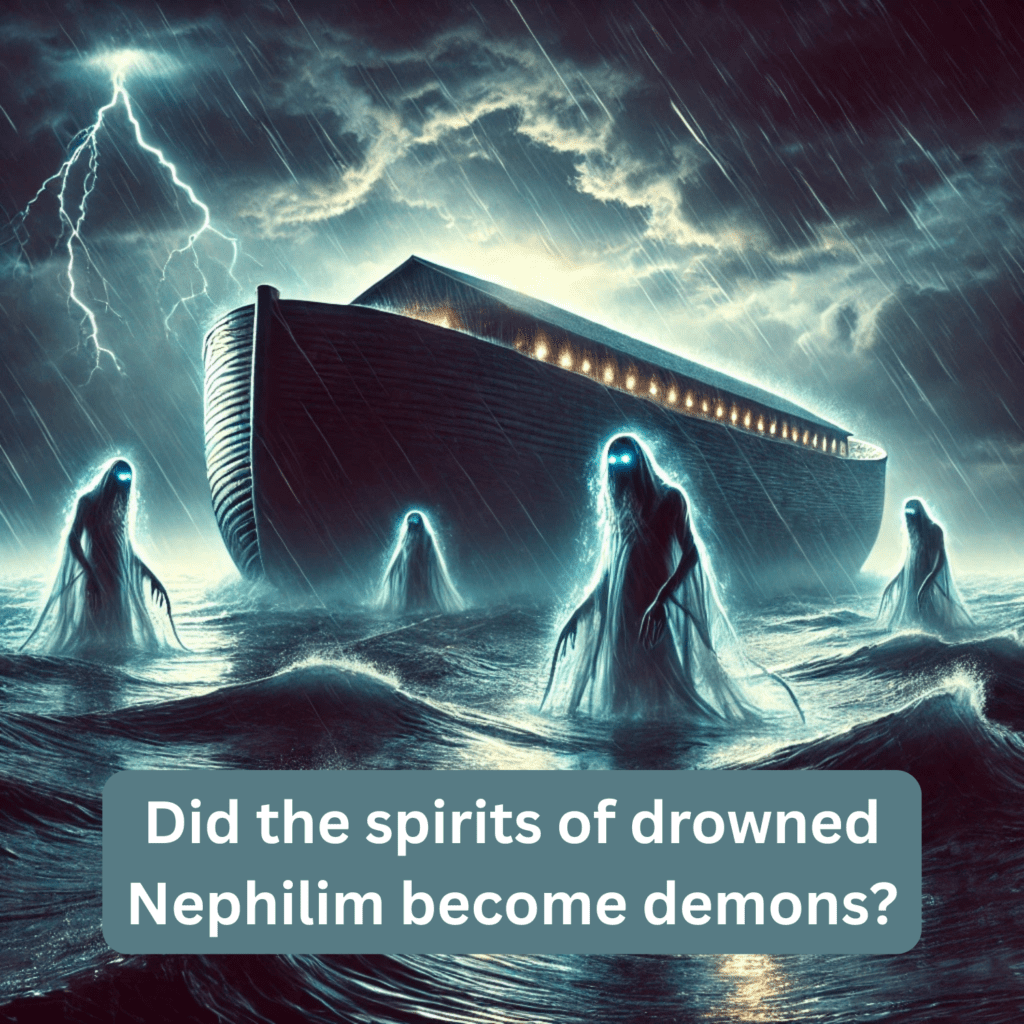
By Genesis 6, something has gone terribly wrong – something stranger and more sinister than most Sunday school lessons let on. The text speaks of “sons of God” intermingling with humanity, producing a corrupted race and a world so saturated with evil it was compromised at the genetic level.
Scholars debate the precise interpretation. But the cosmic dimension is unmistakable. This is not merely human wickedness running amok. Spiritual powers are involved in the corruption of creation itself. The Flood is God’s response: not a tantrum, but a surgical reset in the context of an ongoing war.
In The Bible in Brief, I flag these passages and point readers to the deeper conflict they represent. The Flood only makes sense as a battle move.
The Promised Land: Beachhead on Enemy Territory
If the Flood narrative is uncomfortable, the conquest of Canaan is positively scandalous to modern readers. God commanding the destruction of entire peoples? What can possibly justify that?
The cosmic war framework provides an answer that the moralizing framework simply cannot.
The Canaanite nations were not merely “bad neighbors.” They were deeply entangled with the very spiritual powers that had been at war with God since Eden. Their religious practices – child sacrifice, ritual prostitution, the worship of gods who were, in biblical cosmology, fallen divine beings – represented a demonic stronghold in the land God had designated as the beachhead for his redemptive plan.
Israel’s conquest of Canaan was God reclaiming territory from the enemy in the ongoing cosmic conflict.
I’ve written before about the existence of these spiritual beings and their role in the biblical story — in pieces like What Jonathan Cahn’s “The Avatar” Reveals About Biblical Cosmology and Is the God of the Bible Just Another Tribal Deity? They provide helpful background. But The Bible in Brief is where you’ll see how it all fits together as one continuous narrative.
The Cross: The Decisive Battle
Here is where the Cosmic War reaches its climax – and its strangest twist.
The enemy thought he had won. He had maneuvered the religious establishment. He had whispered in Judas’ ear. He had the crowd shouting for crucifixion. He had the nails and the cross and the tomb. For three days, it looked like his victory.
But the Cross was not the devil’s triumph. It was his defeat.
The apostle Paul puts it in stunning military terms in Colossians 2:15: God “disarmed the powers and authorities” and “made a public spectacle of them, triumphing over them by the cross.” The Greek word translated “triumphing” refers to a Roman general’s victory parade – the conquered enemies displayed in chains before the watching world.
What looked like the enemy’s greatest victory was, in cosmic reality, God’s. The Cross broke the power of sin and death, the very weapons the enemy had wielded since Eden.
In The Bible in Brief, the Cross is not just the emotional center of the narrative. It is the military turning point. The war is not over – the mopping-up operations continue, as we see in the New Testament letters and in the experience of every believer – but the outcome is sealed.
Revelation: The Final Victory
The Bible ends as it began – with war. But now the enemy’s forces are shattered, the deceiver is imprisoned, the dead are raised, and God makes all things new.
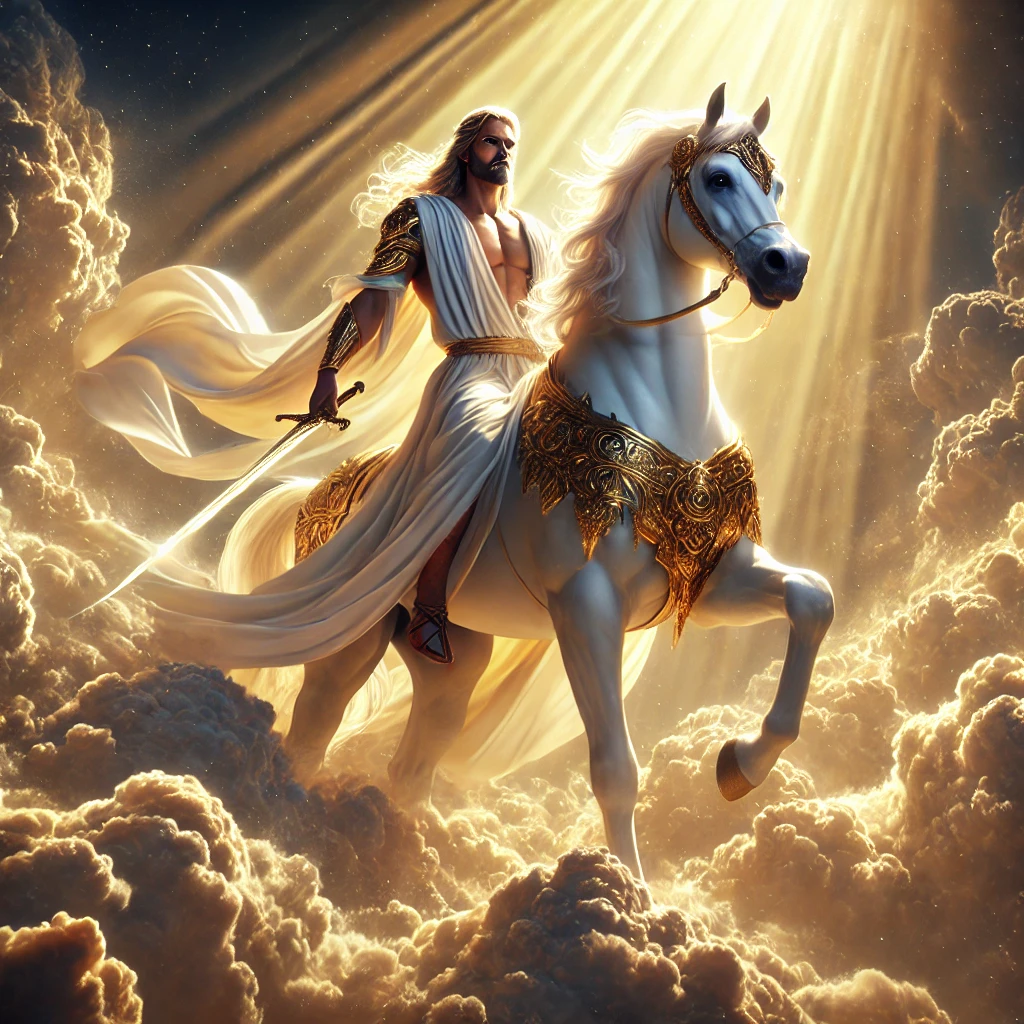
Revelation is a terrifying book to read without the cosmic war framework. Its beasts and bowls and battles seem like surreal nightmare imagery. But when you understand that these visions describe the final campaign of a war that has been raging since Genesis 3, everything snaps into focus.
The magnificent rider on the white horse in Revelation 19:11 is not a random image. He is the Divine Warrior, returning to finish the war that began in the garden.
In The Bible in Brief, I trace this thread all the way to its glorious conclusion.
Why This Matters for You
Why does it matter whether you read the Bible as a war story or as a collection of spiritual wisdom?
Because you are in the story.
As I’ve written in God’s Big Battle Plan and From Harry Potter to Haunted Houses, the spiritual conflict described in Scripture is not ancient history. It is a present reality. The powers at work in Eden, in Canaan, and at the Cross are still at work. Paul tells us in Ephesians 6 that our struggle is not against flesh and blood, but against “the rulers, against the authorities, against the powers of this dark world and against the spiritual forces of evil in the heavenly realms.”
You can’t fight an enemy you don’t believe in. And you can’t understand the battle you’re in if you don’t know the war you’re part of.
That is one reason I wrote The Bible in Brief. Not to give you a dry summary of Scripture’s contents, but to help you see the shape of the whole – so that when you open your Bible, you know where you are in the story, who the players are, and what is ultimately at stake.
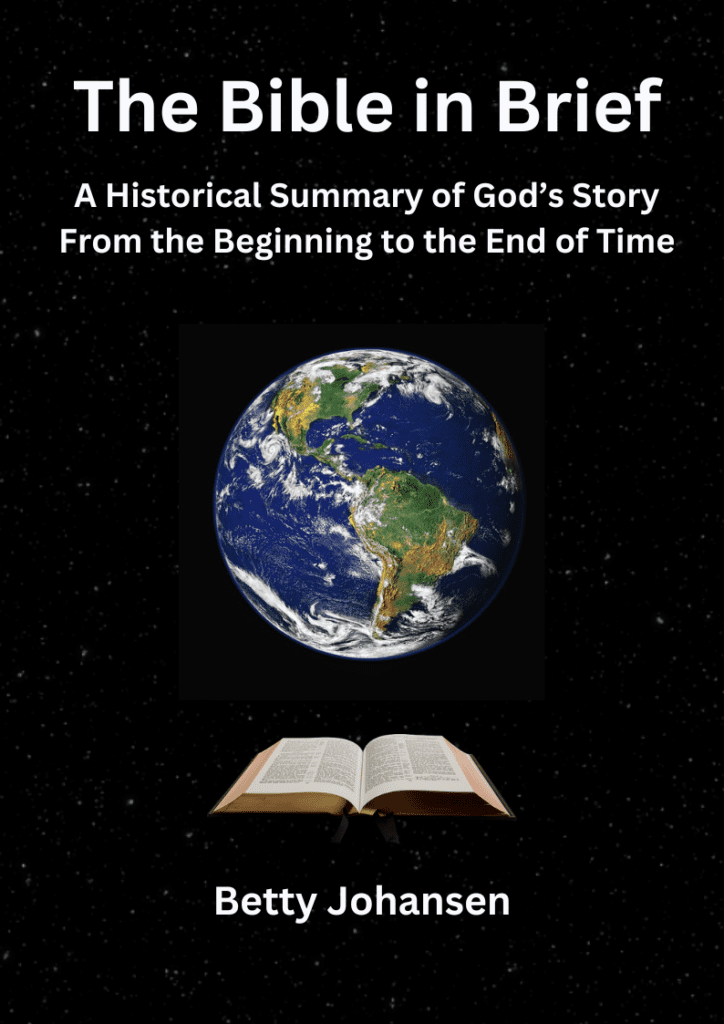
Paperback on Amazon
The Bible is one grand, sweeping, cosmic drama – and the ending has already been written.
God wins. The enemy loses. And those who belong to God get to be part of the victory.
Pick up The Bible in Brief and see for yourself.
a
a
***
End Notes:
1. To answer the question in my featured image: I don’t know if the spirits of drowned Nephilim became demons. It’s not even an issue I would have thought of. I came across the suggestion recently in Michael S. Heiser’s Reversing Hermon and Chuck Missler’s Alien Encounters. (See my blog on Missler’s Alien Encounters here.) I have great respect for both of these men because of their intelligence and their meticulous research. So, I lean toward agreeing with them. If you have an opinion on the subject, please leave a comment below.
2. The Bible is vast and rich enough to be approached through many overarching lenses — Redemption and Salvation, Sin and Grace, the Kingdom of God, and others. Each illuminates real truth.
I chose to frame The Bible in Brief around Cosmic War because it is so often overlooked — and that neglect has consequences. When readers encounter God’s most severe actions in Scripture without understanding the war He is fighting, His motivations can seem arbitrary, even monstrous. Many of the harshest accusations leveled against the God of the Bible arise from passages that make perfect sense in a cosmic war context, and almost no sense without it.

Here are links to my blog indexes, so please click one and keep reading!
My Books, Workbooks, and Fun Books
Knowing the Unknowable One
Opening the Treasure Chest
Walking Heart-to-Heart with God
Walking Heart-to-Heart with Each Other
Fighting the Good Fight of Faith
Christian Mysteries: Why I Love Them!
List of Some Nonfiction Books You Don’t Want to Miss
Index of Assorted Topics