

Could the science of the brain actually explain why God commands us to praise Him in hard times?
There are days when praise flows easily – when the sun is out, the news is good, and gratitude feels as natural as breathing. And then there are the other days. The days when the diagnosis comes back wrong, when the relationship frays, when the bank account doesn’t stretch, when the grief just sits on your chest and won’t move.
Those are the days when Hebrews 13:15 makes the most uncomfortable kind of sense:
“Through him then let us continually offer up a sacrifice of praise to God, that is, the fruit of lips that acknowledge his name.” ESV
A sacrifice of praise. Not a spontaneous outpouring of praise. Not a natural response of praise. A sacrifice. Something that costs you something. Something you choose to do even when every other part of you is pulling in the opposite direction.
I’ve often wondered why God would ask that of us. If you’ve read my blog “Is God an Egomaniac?“, you know I believe deeply that God’s commands to us are never arbitrary; they are always, at their root, for our benefit. He doesn’t need our praise. But we might need it – and need it far more than we realize.
And now, science is beginning to explain why.
Your Brain Is Not Fixed — It’s Listening to You
Here’s something that would have seemed like science fiction just a few decades ago: your brain physically changes based on what you repeatedly think, feel, and do. This is called neuroplasticity – the brain’s remarkable ability to rewire itself throughout your entire life, not just in childhood.
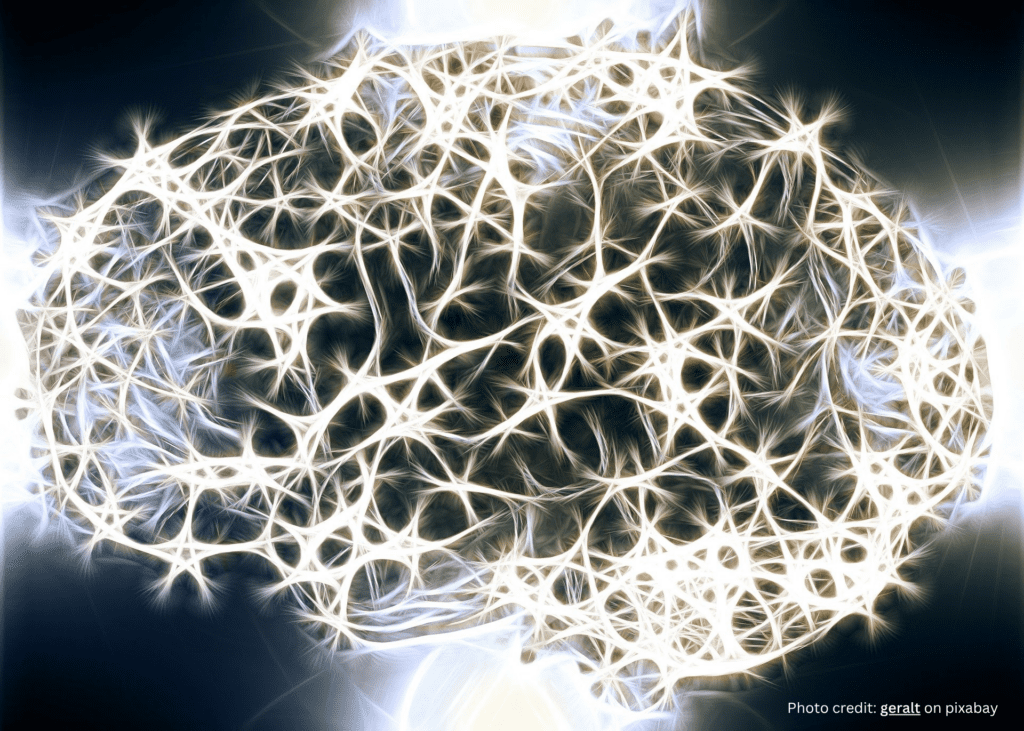
Every time you choose a thought, repeat a behavior, or practice an emotional response, you are literally strengthening certain neural pathways – the connections between brain cells – and allowing others to weaken. Neuroscientists sometimes summarize it as: neurons that fire together, wire together. The paths you walk most often become the roads; the ones you abandon become overgrown.
This means that when you choose praise, especially when it’s hard, you are not just making a spiritual gesture. You are exercising a neural pathway. You are making it wider, stronger, and easier to access the next time.
And the implications of that are extraordinary.
The Science Behind the Sacrifice
When you choose to praise God in a difficult moment, several things happen in your brain that researchers have been able to observe:
Stress hormones get interrupted. Choosing a posture of gratitude and praise – even when it’s forced – has been shown to reduce cortisol, the body’s primary stress hormone. It essentially signals your nervous system: We are not in crisis. We are not alone. We are okay.
Dopamine and serotonin pathways activate. These are your brain’s “reward and well-being” chemicals. Praise, particularly when expressed aloud or in song (as it often is in Scripture), engages the brain’s reward circuits in ways that lift mood and reduce anxiety.
The prefrontal cortex re-engages. When we’re overwhelmed, the emotional, reactive part of our brain (the amygdala) can hijack rational thought. Choosing to praise – a deliberate, intentional act – pulls the prefrontal cortex (your thinking, deciding brain) back online. You are literally thinking your way out of a fear spiral.
Over time, as you repeat this practice in hard moments, neuroplasticity means the pathway from “I feel terrible” to “I will praise anyway” becomes shorter. It becomes a reflex. The sacrifice gets a little less costly every time you offer it.
Now Add Epigenetics, and Things Get Even More Remarkable
If neuroplasticity is the brain rewiring itself, epigenetics is the discovery that our experiences can actually change how our genes express themselves. Not the DNA itself, but whether certain genes are switched “on” or “off.”
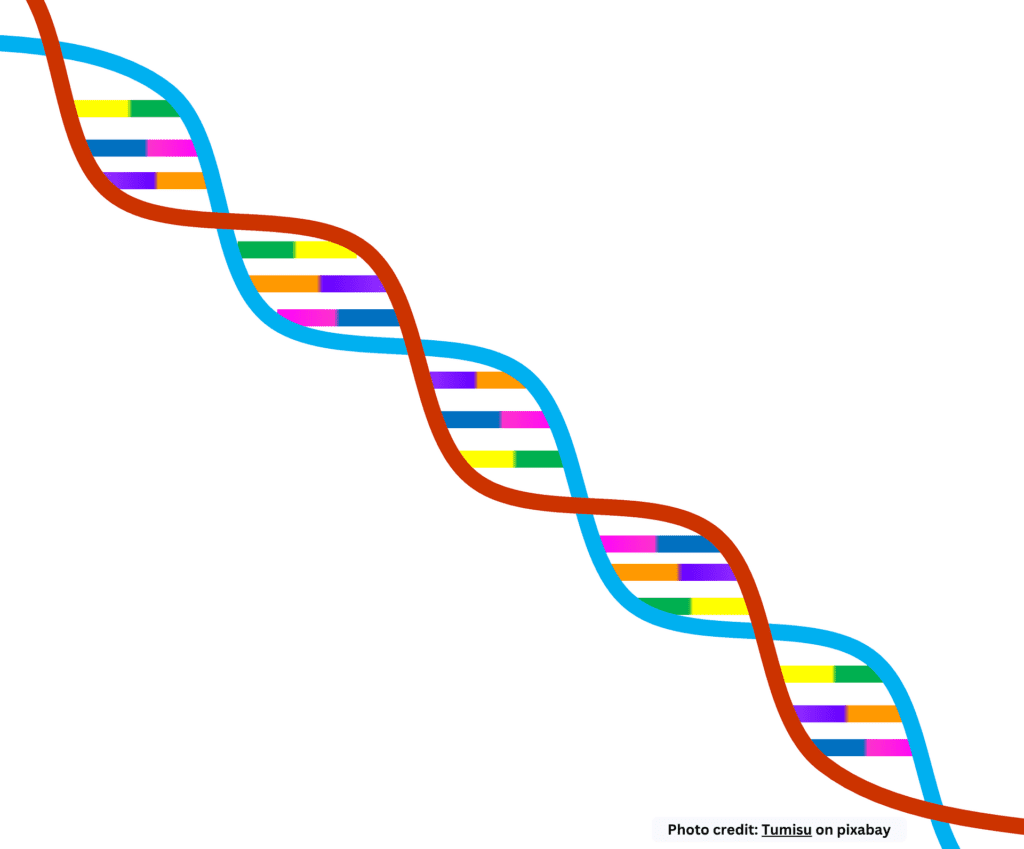
Stress, trauma, and chronic negativity have been shown to activate genes associated with inflammation, anxiety, and depression. But here’s the breathtaking counterpart: intentional practices like gratitude, mindfulness, and positive emotional regulation can activate genes associated with resilience, immune function, and emotional stability.
In other words, choosing praise in a hard moment isn’t just good for your mood today. It may literally be influencing which parts of your genetic makeup are expressing themselves over the long term.
You are, in a very real and measurable sense, becoming the person your choices are training you to be, all the way down to the cellular level.
God Knew This Before the Scientists Did
Hebrews 13:15 wasn’t written in a neuroscience lab. But it reflects a wisdom that neuroscience is only now catching up to.
Throughout Scripture, God’s people are commanded – not just encouraged, but commanded – to praise in difficulty:
- “Rejoice always” (1 Thessalonians 5:16)
- “Give thanks in all circumstances” (1 Thessalonians 5:18)
- “Count it all joy, my brothers, when you meet trials of various kinds” (James 1:2)
These were never meant to be commands to feel happy when life is hard. They are invitations to make a choice that rewires how we experience life itself. The sacrifice of praise is not God asking you to pretend. It’s God inviting you into a practice that will, over time, transform the architecture of your inner world.
What This Looks Like in Practice
You don’t have to understand neuroscience to practice this. But knowing the science might make you willing to try it when it feels most pointless.
The next time you’re struggling – really struggling – and the last thing you want to do is praise, consider what it would mean to offer that small, costly, imperfect sacrifice anyway. Say it out loud. Write it down. Sing it badly in your car. Name one thing about God that is still true even on this hard day.
He is still good.
He is still sovereign.
He still holds this moment.
And as you choose to say so, especially when it costs you something to say it, you are doing more than worshiping. You are participating in the reshaping of your own mind, your own emotional life, your own resilience.
The sacrifice of praise is not a burden God places on us. It is a gift He has wrapped in a difficult bow.
A Note for These Times We’re Living In
We are living in some of the most disorienting, difficult, and – for those of us watching prophetically – extraordinary moments in human history. The headlines are heavy. The uncertainty is real. And the temptation to spiral into anxiety, despair, or numbness is constant.
If you’ve found your way to Eagerly Waiting, you likely already sense that something significant is unfolding, that we may be among the generation standing on the near edge of the Rapture and the events of Revelation. That is not cause for fear. But it does mean we need the kind of inner strength that doesn’t come from good circumstances.
It comes from a practiced, trained, sacrificially-offered life of praise.
Start today. Even if it feels hollow. Especially if it feels hollow.
The science says your brain is listening.
The Scripture says God is too.
***

Here are links to my blog indexes, so please click one and keep reading!
My Books, Workbooks, and Fun Books
Knowing the Unknowable One
Opening the Treasure Chest
Walking Heart-to-Heart with God
Walking Heart-to-Heart with Each Other
Fighting the Good Fight of Faith
Christian Mysteries: Why I Love Them!
List of Some Nonfiction Books You Don’t Want to Miss
Index of Assorted Topics
Enjoy every single day
Great advice! I hope you’re enjoying your days. May God bless you.