
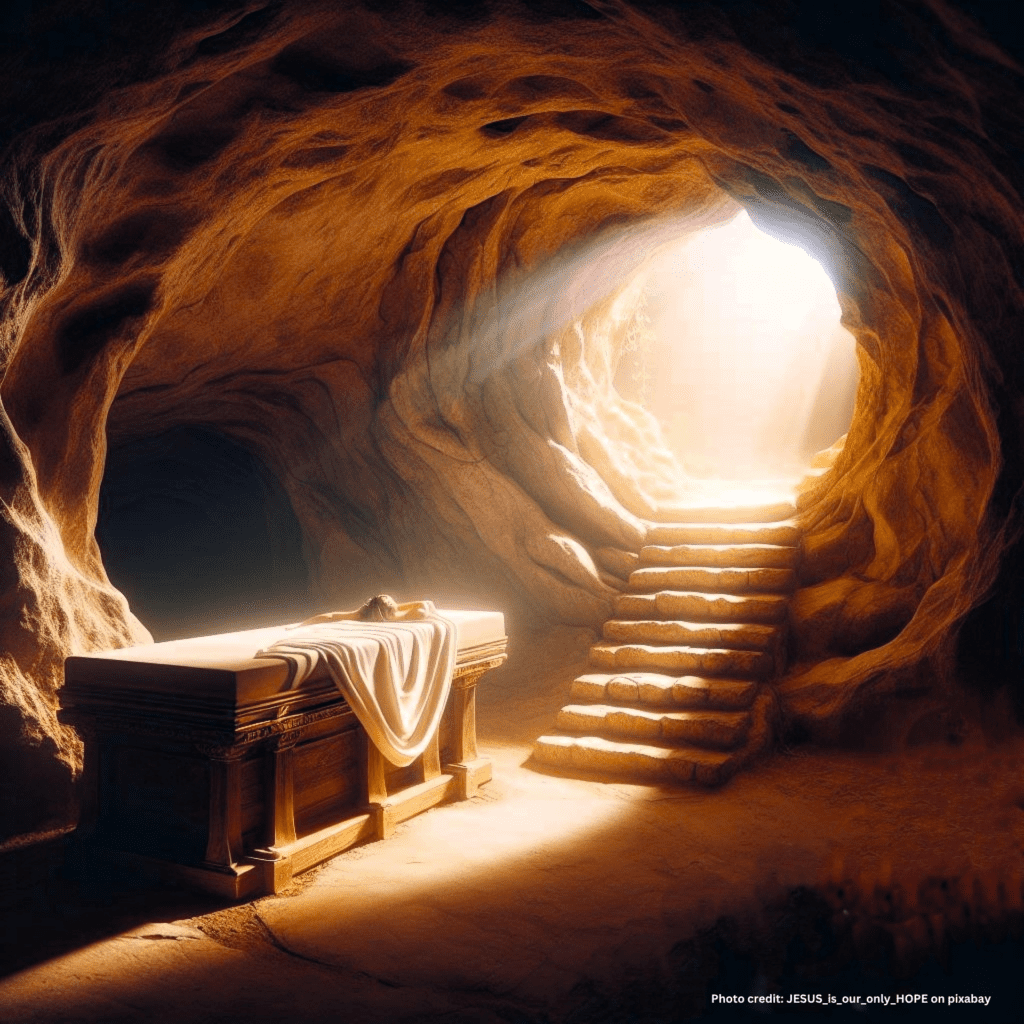
The war was over. The enemy just didn’t know it yet.
On May 8, 1945, the guns fell silent in Europe. Germany had surrendered. The Allied forces had won. But in isolated pockets – in hidden forests, in remote garrisons – some enemy soldiers kept fighting for weeks, even months, because no one had told them. The war was over. They simply didn’t know it.
Sound familiar?
Approximately two thousand years ago, on a Sunday morning outside Jerusalem, the most decisive victory in the history of the universe was won. The enemy of God, the one who had been scheming and fighting since Eden, was defeated. Not wounded. Not weakened. Defeated.
And yet the battle still rages around us today.
That is the strange, glorious reality of Easter. It is V.E. Day – Victory on Earth Day. The war has been won. The outcome is sealed. We are living in the in-between, waiting for the news to reach every corner of the cosmos.
If you haven’t read my earlier blog, Track the Cosmic War Between God and Satan with The Bible in Brief,“ this would be a good moment to do that. It provides the backstory. This blog picks up at the turning point.
The Cross Was Only the Beginning
In that earlier post, I described the Cross as “the decisive battle.” I won’t repeat all of it here, but one piece of Scripture is so important I have to include it:
“Having disarmed the powers and authorities, he made a public spectacle of them, triumphing over them by the cross.” – Colossians 2:15
That’s the Crucifixion. The decisive battle. The moment the enemy’s weapons – sin and death – were stripped from his hands.
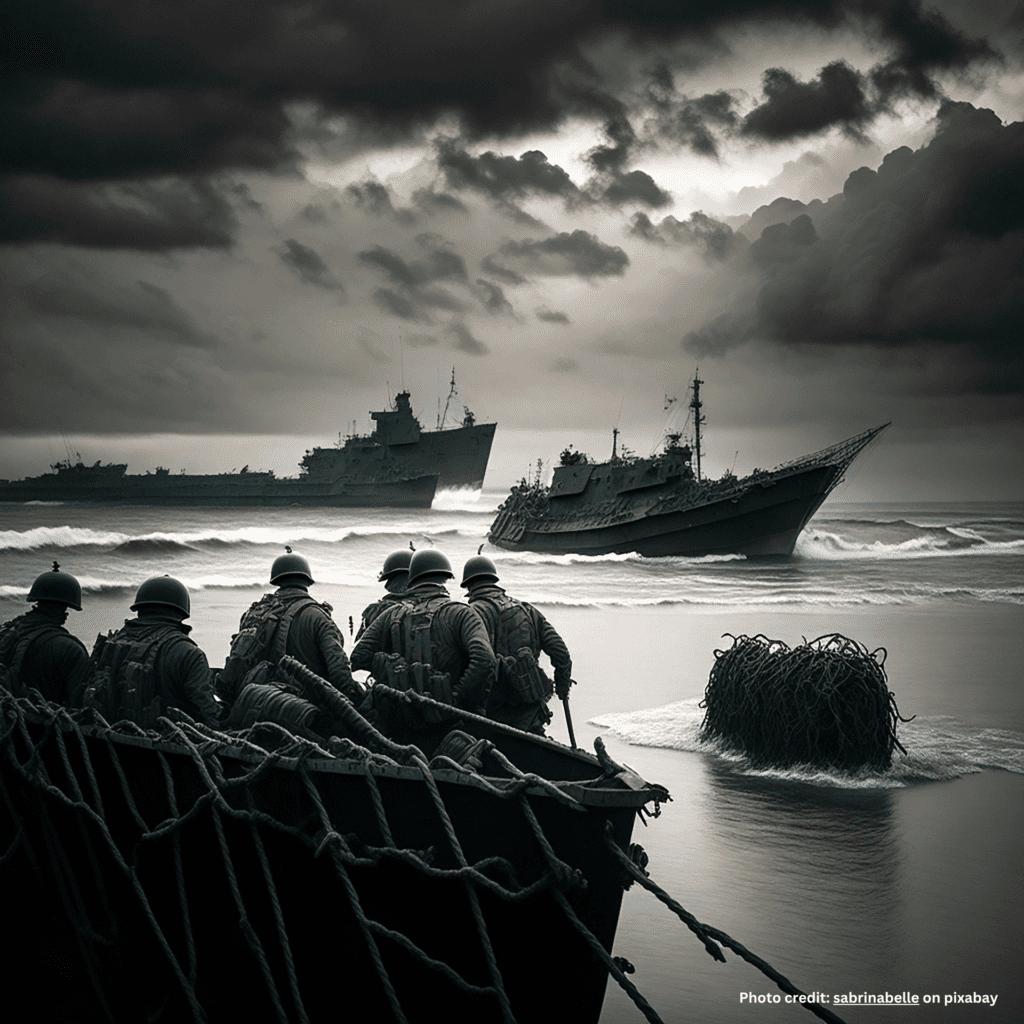
But in war, a decisive battle doesn’t always end the fighting. Normandy was the decisive battle of World War II in Europe. It was June 1944. V.E. Day wasn’t until May 1945. Between those two dates, some of the fiercest fighting of the war still lay ahead.
The Cross broke the enemy’s power. The Resurrection announced his defeat.
What the Empty Tomb Actually Means
Death was the enemy’s ace card. Since the Fall in Eden, death had been his trump – the final argument, the last word, the proof that he held dominion.
Then Jesus walked out of the tomb.
Paul captures the sheer audacity of this in 1 Corinthians 15:55: “Where, O death, is your victory? Where, O death, is your sting?” He is not asking a sad question. He is taunting a defeated enemy.
The Resurrection did not simply demonstrate that Jesus was divine. It dismantled death as a weapon. It proved that sin, the root of death, had been fully and finally dealt with. And it opened a door that had been locked since Eden – the door to restored fellowship with God, to resurrection life, to eternity.
In my book The Bible in Brief, I write about the dramatic signs that accompanied Jesus’ death: the Temple veil splitting from top to bottom, the earthquake, the rocks breaking apart, and the dead rising from their tombs and appearing in Jerusalem. These were not random catastrophes. They were God’s signature on the victory – His way of marking the moment, this is it. This is the turning point.
The Resurrection three days later was the victory announcement.
All of Time Knows His Name
Here is one of the most quietly staggering facts about Jesus of Nazareth: He divided time itself.
Every document you sign. Every check you date. Every history textbook ever written. They all orbit around a single birth in Bethlehem. B.C. Before Christ. A.D. Anno Domini – in the year of the Lord.
Even the secular world, which has replaced “B.C.” with “B.C.E.” (Before the Common Era) and “A.D.” with “C.E.” (Common Era), is still counting from the same fixed point. The era they are trying to make “common” is still His era. They changed the label. The hinge point remains.
What other life has done this? Not Caesar. Not Aristotle. Not Confucius. Not Napoleon. One life so altered the course of human history that the whole world, whether it wants to or not, measures time by it.
That is what the Resurrection unleashed on planet Earth.
What If He Had Never Been Born?
The theologian and pastor D. James Kennedy spent considerable effort exploring that very question in his landmark book, What If Jesus Had Never Been Born? The answers are more sweeping than most people expect.
Without Jesus, Kennedy argues, there would be almost certainly no:
- Hospitals. The impulse to care for the sick as a matter of sacred duty grew directly from His teaching.
- Universities. The earliest institutions of higher learning in the Western world were founded to train ministers and study Scripture.
- Abolition of slavery. The movement to end slavery drew its moral oxygen almost entirely from Christian conviction – that every human being bears the image of God.
- The scientific revolution. Many of history’s greatest scientists – Newton, Faraday, Pasteur – were driven by the conviction that a rational God had made a rational universe worth understanding.
- Concepts of human rights and human dignity. The idea that individual lives have inherent worth – not because the state grants it, not because you’ve earned it, but because you bear God’s image – is a distinctly biblical idea.
We swim in the cultural water that the Resurrection created, so thoroughly that we barely notice it anymore. But pull out that thread, and civilization as we know it unravels.
The Resurrection did not just change eternal destinies. It changed hospitals and universities and courtrooms and orphanages. It changed how art is made and music is written and the sick are treated and the vulnerable are protected. It changed everything.
That is the impact of V.E. Day.
We Are Living Between V.E. Day and the Final Surrender
But here we are — and the fighting continues.
Isolated soldiers who never got the memo. Scattered resistance that doesn’t yet accept defeat. That is what we see around us: a world that is, in some deep sense, still at war, even though the war has been won.
This is exactly where Eagerly Waiting readers find themselves. We are living, as the subtitle of this website puts it, in Bible times – the final chapter, the last pages before God brings the whole story to its conclusion. The Rapture. The Tribulation. The return of the King described in Revelation 19.
The decisive victory was Easter morning. The final surrender, the enemy’s complete and permanent defeat, is still coming.
Until then, we live as people who know the outcome. We grieve, yes. We struggle, yes. We face real spiritual opposition, yes. But we grieve as people who know the ending. We fight as people who know who wins.
This Easter, Celebrate V.E. Day

Most of us will spend Easter Sunday celebrating, and rightly so. But perhaps this year, as you sit in a church pew or gather around a dinner table, you can hold this thought alongside the lilies and the hymns:
We are celebrating the most important victory in history.
Not the end of a human war. The end of the cosmic war – at least in principle, in the realm where it matters most. Death is defeated. Sin is disarmed. The enemy is a beaten general still staging skirmishes, but his end is written.
The Resurrection is not just a miracle. It is a military announcement.
Victory on Earth Day.
a
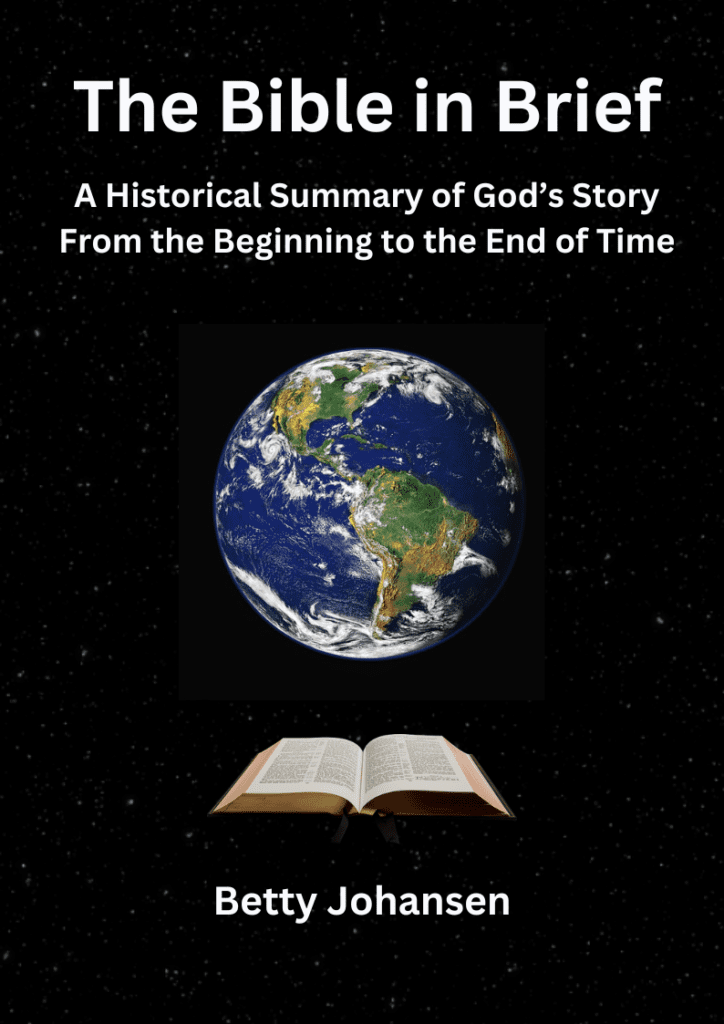
Want to understand the whole sweep of the war — from Eden to Revelation? That’s exactly what The Bible in Brief is written to do. Available as an eBook on Sqrindle and a Paperback on Amazon.
a
a
Here are links to my blog indexes, so please click one and keep reading!
My Books, Workbooks, and Fun Books
Knowing the Unknowable One
Opening the Treasure Chest
Walking Heart-to-Heart with God
Walking Heart-to-Heart with Each Other
Fighting the Good Fight of Faith
Christian Mysteries: Why I Love Them!
List of Some Nonfiction Books You Don’t Want to Miss
Index of Assorted Topics