

This year, America turns 250.
A quarter of a millennium. It’s the kind of milestone that invites reflection. Parades, fireworks, pride, and gratitude. But before we get to July, we pass through Memorial Day. And maybe that’s fitting. Because the story of how we got to 250 runs straight through a lot of graves.
The Weight of a Young Face
If you’ve ever walked through a military cemetery – Arlington, Normandy, or a small-town churchyard with a corner set aside for veterans – you may have noticed something that stops you mid-step.
The dates.
Born 1924. Died 1944. Born 1950. Died 1969. Born 1998. Died 2023.
So many of them were so young. Barely grown. Some had never held their own child. Most would never know the joy of a grandchild climbing into their lap. They hadn’t yet had the chance to build the thing they were meant to build, write the song that was forming in them, or become the person they were on their way to becoming.
We say their sacrifice wasn’t in vain, and it wasn’t. We say they died for something larger than themselves, and they did. But let’s be honest with each other for a moment, the way you can be honest at a graveside: those words, true as they are, don’t fully account for what was lost. Liberty is precious. But it doesn’t fill the empty chair at the family table. It doesn’t answer the question of what that young man might have discovered, or who that young woman might have loved, or what those unlived decades might have given to the world.
We wouldn’t be 250 years old – we wouldn’t have made it to our first birthday – without them. But some of them never got to be 250 months old. Some of them barely lived a quarter of a century.
That’s the grief we’re supposed to sit with on Memorial Day. Not rush past. Sit with.
The One Grave That Was Empty by Sunday
And then there is another grave.
A young man, also cut down before His time. No wife. No children. No grandchildren. No decades of ministry, no growing old among friends. By every worldly measure, a life interrupted, a story ended too soon.
Except it wasn’t.
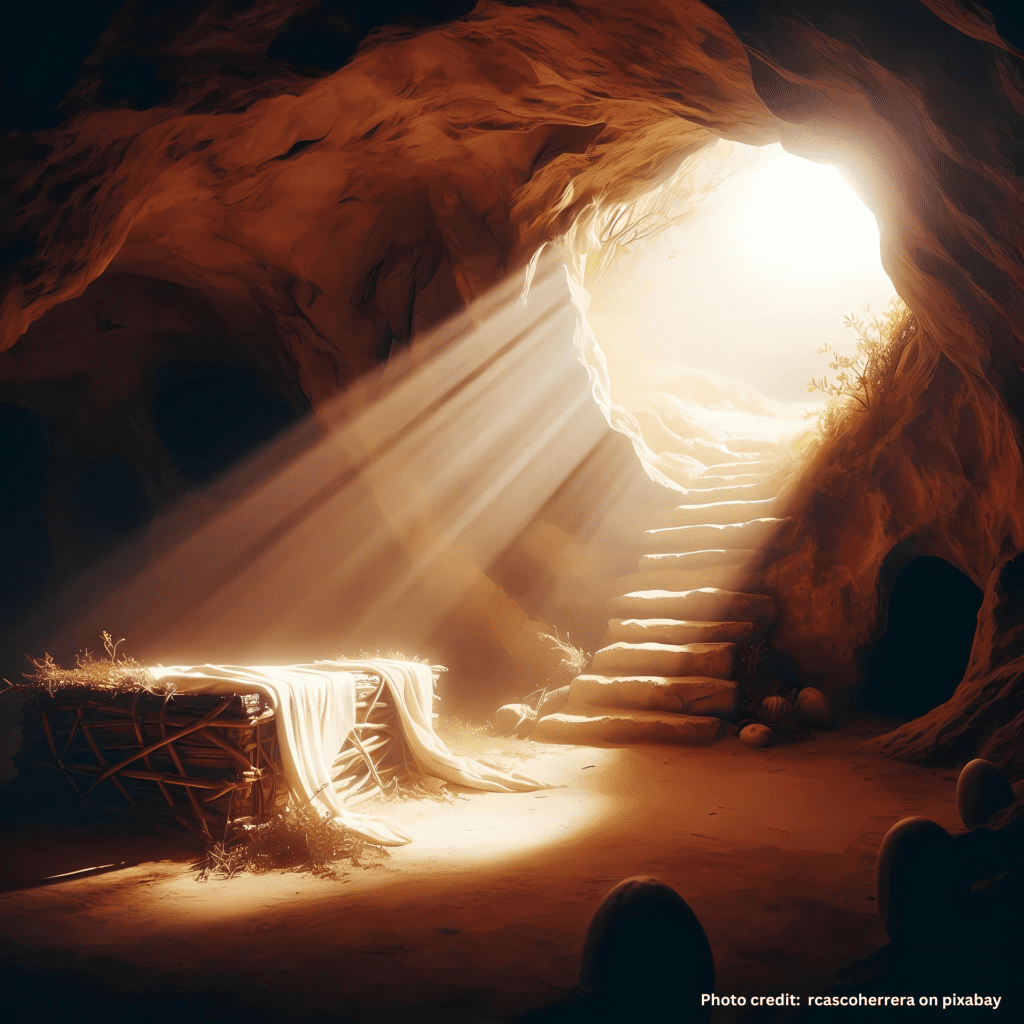
What looked like subtraction turned out to be the greatest gift in human history. His death wasn’t a detour from His purpose. It was His purpose. And three days later, the tomb was empty.
I don’t want to draw the parallel too tightly. The soldiers buried at Arlington did not die to purchase anyone’s forgiveness. Their deaths were not resurrection stories. We shouldn’t pretend the two are the same.
But I think the empty tomb has something to say to every other grave. Something that no flag, no medal, and no solemn ceremony can quite say.
What Resurrection Redeems
Here is what I believe, and what I think Scripture quietly but powerfully suggests: resurrection doesn’t only restore what was. It redeems what never got to be.
The grandchildren that young soldier never held – resurrection doesn’t erase that loss; it swallows it. The gifts he never gave, the contributions she never made, the love that was cut off at its beginning – eternity is large enough to hold all of it. “Eye has not seen, nor ear heard, nor have entered into the heart of man the things which God has prepared for those who love Him.” (1 Corinthians 2:9)
We don’t know exactly what that looks like. But we know the God who authored it is the same God who refused to let death have the final word, not for His Son, and not, He promises, for those who belong to Him.
The dead in Christ will rise. (1 Thessalonians 4:16)
That’s not a bumper sticker. That’s the ground we stand on.
Living in the Meantime
We are people who live between the graves and the empty tomb. We honor the fallen – really honor them, without papering over the loss. And we hold onto the hope that what death stole will one day be restored and exceeded beyond anything we can imagine.
Those of us on this side of that hope are living in remarkable days. The world is shifting in ways that would have been unthinkable a generation ago. The signs of the times are not subtle. We are, I believe, a generation that may not need to visit many more Memorial Days before everything changes in a moment, in the twinkling of an eye.
Until then: go to the cemetery if you can. Read the dates on the stones. Let it hurt the way it should. Say the names out loud if you know them.
And then remember the tomb that wouldn’t stay closed. And let that hurt turn, slowly, into hope.
He who testifies to these things says, “Surely I am coming soon.” Amen. Come, Lord Jesus. – Revelation 22:20
***
a

a
Here are links to my blog indexes, so please click one and keep reading!
My Books, Workbooks, and Fun Books
Knowing the Unknowable One
Opening the Treasure Chest
Walking Heart-to-Heart with God
Walking Heart-to-Heart with Each Other
Fighting the Good Fight of Faith
Christian Mysteries: Why I Love Them!
List of Some Nonfiction Books You Don’t Want to Miss
Index of Assorted Topics