

There’s a striking pattern woven through Scripture that reveals something profound about God’s grace: He has a history of dramatically interrupting the lives of His fiercest opponents. Two stories separated by centuries — one of a pagan emperor, the other of a zealous persecutor — tell remarkably similar tales of divine intervention, humiliation, and transformation.
Two Men Who Thought They Were Right
King Nebuchadnezzar ruled the most powerful empire on earth. He had conquered nations, destroyed Jerusalem, and carried God’s people into captivity. His pride knew no bounds — until God drove him into the fields to eat grass like an ox, stripped of his reason and his throne, living as a beast for seven years.
Saul of Tarsus was equally convinced of his rightness. A Pharisee of Pharisees, he believed he was serving God by hunting down followers of Jesus, dragging them to prison, and consenting to their deaths. Then, on a dusty road to Damascus, a blinding light knocked him to the ground, and the voice of the risen Christ shattered everything he thought he knew.
Both men were at the height of their power and certainty when God interrupted them. Both experienced profound humiliation — one reduced to an animal, the other struck blind and helpless, led by the hand like a child. And both emerged from their encounters utterly transformed, bearing witness to the very God they had opposed.
The parallels are too striking to ignore. These aren’t just individual conversion stories; they’re bookends of a biblical testimony that spans from the Babylonian exile to the birth of the church. Nebuchadnezzar’s confession in Daniel 4, distributed throughout his vast empire, reads like a preview of Paul’s letters that would be circulated to churches across the Roman world. Both documents are public declarations of God’s sovereignty, written by former enemies who had been brought low and then raised up as witnesses.
The Question That Haunts Us
When we read these accounts, a thought can creep in unbidden: If God would do that for them, why not for my loved one?
We know people who are just as lost, just as resistant, just as convinced they’re right. A spouse who has rejected the faith. A child who has walked away. A friend who seems beyond reach. And we wonder: couldn’t God simply knock them down on their own Damascus road? Couldn’t He give them their own seven years of humbling? Wouldn’t that work?
It’s a painful question, and beneath it lies another, more troubling one: Does God play favorites? Would He intervene so dramatically for a savage pagan king and a murderous persecutor of Christians, but not for the person I love?
If They Won’t Believe Moses…
Jesus told a story that speaks directly to this longing. A rich man in torment begged Abraham to send someone back from the dead to warn his five brothers. Abraham’s response cuts through our wishful thinking: “If they do not hear Moses and the Prophets, neither will they be convinced if someone should rise from the dead.”
The statement seemed almost absurd when Jesus said it. But then He proved it was true.

Jesus raised a man named Lazarus from the dead, the real Lazarus, not the character in the parable. The miracle was public, undeniable, spectacular. Lazarus walked out of a tomb after four days, still wrapped in burial cloths. People witnessed it. The news spread like wildfire.
And what happened? The religious leaders plotted to kill Jesus. Some even wanted to kill Lazarus too, because his living, breathing testimony was too inconvenient for their narrative. Nothing Lazarus said or did after his resurrection changed the minds of those who had already decided against Jesus. They saw the miracle and chose unbelief anyway.
The truth is sobering: dramatic intervention doesn’t guarantee transformation. The issue isn’t the size of the miracle; it’s the state of the heart.
The Deeper Pattern: Grace for the Guilty
But here’s what we must not miss in our pain over loved ones who remain lost: Nebuchadnezzar and Paul weren’t saved because they were special. They were saved because all of us are equally guilty, and God’s grace is equally available.
Nebuchadnezzar was a destroyer of nations. Paul was a persecutor of the church. And yet Scripture places them in a continuum with every other person who has ever come to faith. Abraham was an idol worshiper in Ur. Moses was a murderer hiding in the desert. David was an adulterer who arranged the death of a faithful soldier. Peter denied Christ three times. The thief on the cross had lived a life of crime.
None of them deserved their salvation any more than the others. None of them earned it. None were too far gone, and none were close enough on their own merit.
This is the unified testimony of Scripture, the thread that runs from Genesis to Revelation: we are all helpless, all guilty, all desperate for a grace we cannot manufacture or manipulate. Nebuchadnezzar’s story in Daniel 4 foreshadows Paul’s conversion, and both point us to the ultimate truth — that while we were still sinners, Christ died for us.
The Unity of God’s Story

The Bible is not a collection of disconnected stories. It’s a carefully woven tapestry where Old Testament shadows find their substance in New Testament light. Nebuchadnezzar’s humiliation in Daniel 4 becomes a type, a preview of what God would do with Saul of Tarsus centuries later. Both stories testify to the same reality: God opposes the proud but gives grace to the humble.
And here’s the wonder of it: we are all part of this same story. Every person who comes to faith experiences their own version of being knocked down and lifted up. The drama may be less visible, the timeline less compressed, but the essence is identical. We were blind, and now we see. We were dead, and now we live. We were enemies, and now we are beloved children.
God’s grace in saving Nebuchadnezzar and Paul is the same grace that saves anyone. It’s not about the method of intervention; it’s about the nature of the Intervener. He is patient, not willing that any should perish. He pursues rebels and makes them into witnesses. He takes those who stood against Him and seats them at His table.
Living in the Tension
This doesn’t make the waiting easier. It doesn’t erase the ache of watching someone we love remain far from God. We cannot force God’s hand or dictate His methods. We cannot demand a Damascus road experience for those we care about.
But we can remember this: the God who humbled a king in ancient Babylon and struck down a persecutor on a road in Syria is the same God who is at work today. His methods are His own. His timing is His own. But His character remains constant. He is the Hound of Heaven who pursues His own, the Shepherd who leaves the ninety-nine to find the one, the Father who watches the road for the prodigal’s return.
Our loved ones are not beyond His reach. But they are also not guaranteed salvation simply because we want it for them, any more than Nebuchadnezzar was guaranteed restoration or Paul was guaranteed sight.
What is guaranteed is this: God is who He says He is. His grace is sufficient. His ways are higher than ours. And the story He is writing — from Eden to exile, from Babylon to Damascus, from then to now — has always been about one thing: the lengths to which He will go to save the lost and make them His own.
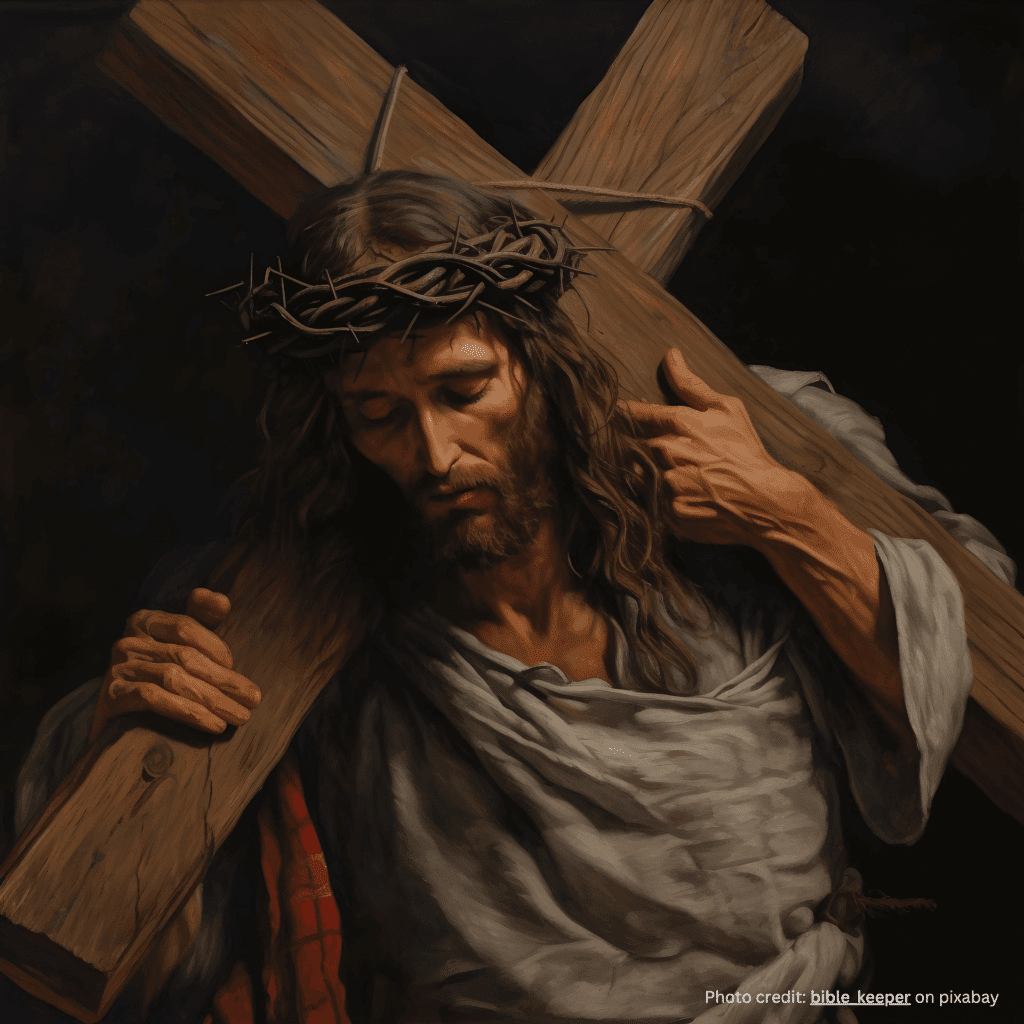
That’s the testimony of Nebuchadnezzar. That’s the testimony of Paul. And that’s the testimony of every person who has ever come to know the God who humbles the proud, lifts up the lowly, and calls the unworthy by name.
“The Lord is not slow to fulfill his promise as some count slowness, but is patient toward you, not wishing that any should perish, but that all should reach repentance.” — 2 Peter 3:9
Footnote: In his commentary on The Book of Daniel, Chuck Missler says he won’t be surprised if he meets Nebuchadnezzar in Heaven. Todd Hampson, on the other hand, in The Non-Prophet’s Guide to the Book of Daniel, agrees that Nebuchadnezzar might show up at the Pearly Gates, but he believes Nebuchadnezzar never fully committed to the God of Israel. He says the king recognized the Lord as the most powerful God among many gods, but he probably never surrendered his life to God. As you can see, each of these godly men recognizes that he is not the Judge. We won’t have the answer for sure until we’re walking the golden streets ourselves. (That means Chuck Missler has the answer now; he graduated to Glory in 2018.)

Here are links to my blog indexes, so please click one and keep reading!
My Books, Workbooks, and Fun Books
Knowing the Unknowable One
Opening the Treasure Chest
Walking Heart-to-Heart with God
Walking Heart-to-Heart with Each Other
Fighting the Good Fight of Faith
Christian Mysteries: Why I Love Them!
List of Some Nonfiction Books You Don’t Want to Miss
Index of Assorted Topics